


Hey, I’m Dr. Vikas Kumar, neurosurgeon and spine specialist trained at RIMS Ranchi and still working out of the same institute, seeing patients from Ranchi itself, different districts in Jharkhand, and quite a few who travel in when something starts feeling wrong up top. The brain is quiet when problems begin; it doesn’t shout. Instead it gives these small, easy-to-dismiss hints: maybe you blame stress, lack of sleep, or “I’m just getting older.” But a handful of changes are real red flags. Spotting them early can turn the story around for things like tumors, strokes, bleeds, infections, or slow-building pressure issues. Here are the ones I always tell people and their families to take seriously and get checked without delay.
Headaches That Don’t Feel Like Your Usual Ones
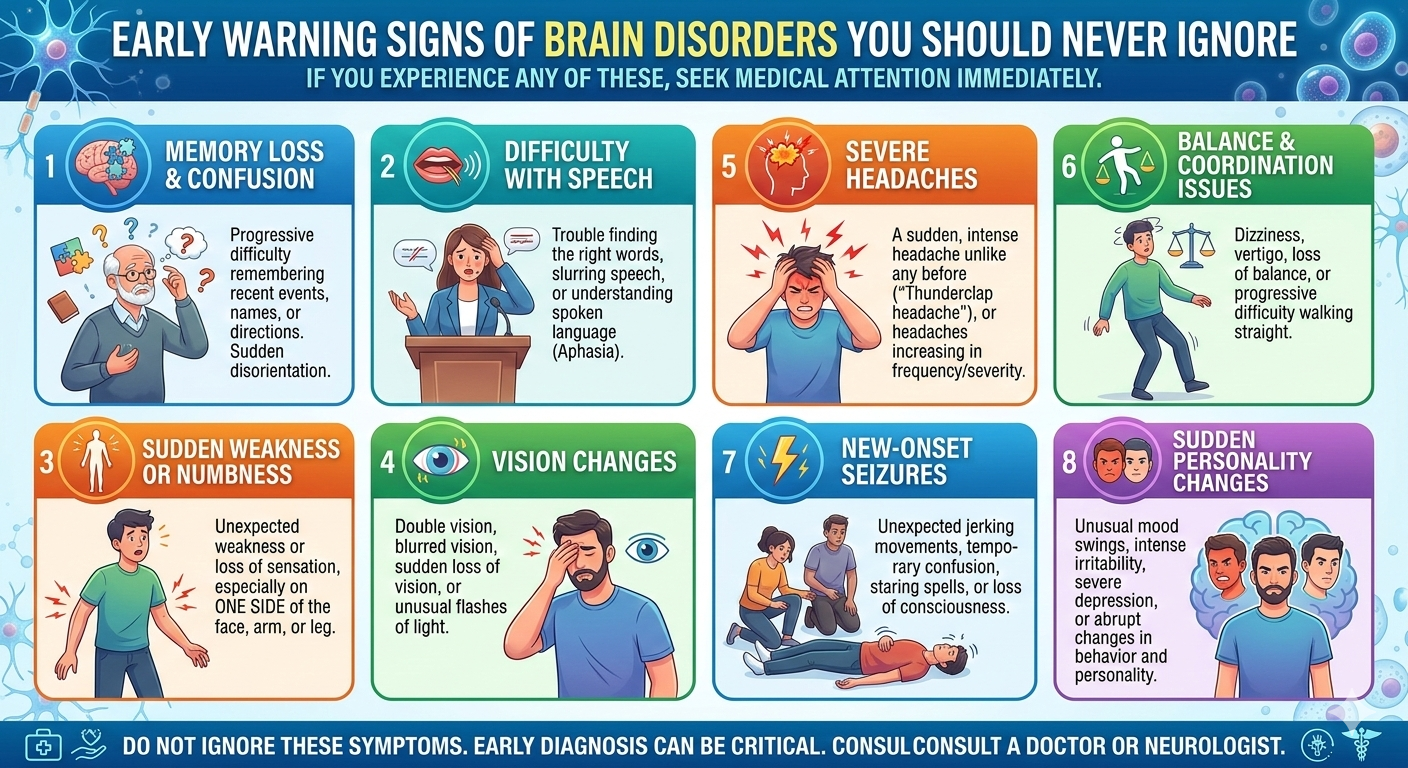
Everyone gets headaches, but pay attention when a new one hits hard and fast like the worst you’ve ever had, peaking in seconds or minutes (thunderclap headache). That’s a classic for subarachnoid hemorrhage from a burst aneurysm. Also worrying: headaches that wake you from deep sleep, are the worst first thing in the morning and come with vomiting, keep getting stronger over days or weeks, or flare up when you cough, sneeze, strain, or change position. Those patterns often mean pressure is building inside the skull from a mass, bleed, hydrocephalus, or blocked fluid pathways.
First-Time Seizures After Your Twenties
If you’ve never had a seizure before and one happens in adulthood, no history of epilepsy, no alcohol withdrawal, it’s not something to shrug off. It can be the very first clue of a brain tumor, scar from an old stroke, an abscess, encephalitis, or a small bleed. Even one witnessed fit with tongue biting, loss of bladder control, or long post-seizure confusion warrants urgent imaging. Don’t wait to see if another one comes; act on the first.
Weakness or Numbness Creeping In, Especially One-Sided
Sudden weakness, numbness, or droop on one side of the face, arm, or leg is stroke territory time is brain, so get to emergency within that 4.5-hour window for possible clot treatment if it’s ischemic. But even slow, progressive weakness over days or weeks one side dragging, dropping things more often, foot slapping the ground when you walk can signal a growing tumor, abscess, or slow bleed compressing motor pathways. Don’t chalk it up to fatigue.
Vision Changes You Can’t Explain Away
Sudden blackout in one eye (like a shade dropping), double vision that comes and goes, missing part of your visual field, or constant blur paired with headache can point to optic nerve pressure (pituitary region tumor), stroke in the visual pathways, or raised intracranial pressure hitting the nerves. Brief episodes of dimming or graying out (amaurosis fugax) are often mini-warnings of carotid artery narrowing and a bigger stroke on the way.
Personality Shifts, Memory Slips, or Behavior That’s “Off”
When someone becomes unusually apathetic, irritable, impulsive, or just not themselves, especially alongside headaches or seizures, it can come from frontal or temporal lobe tumors, chronic subdural hematoma, or normal-pressure hydrocephalus. Memory problems that actually disrupt daily life forgetting conversations from yesterday, getting lost on familiar routes, repeating questions are not always normal aging. These need a proper look.
New Trouble With Balance, Walking, or Falls
Sudden or worsening unsteadiness, drifting to one side when you walk, difficulty on stairs, or falls without a clear trip can stem from cerebellar tumors, brainstem pressure, or strokes. In older folks, the combination of shuffling small steps, new urinary urgency or accidents, and foggy memory is the textbook picture of normal-pressure hydrocephalus very treatable with a shunt if we catch it before too much damage.
Vomiting That Doesn’t Make Sense
Morning projectile vomiting without feeling nauseous first, or vomiting tied to headache and drowsiness, frequently means intracranial pressure is up. It’s a strong push to get scanned soon.
Speech or Word-Finding Problems, Sudden or Slow
Sudden slurring, trouble getting words out, or not understanding what people say is a stroke red flag. Gradual changes mixing up words, struggling to name common things, reading or writing getting harder can come from left-hemisphere tumors or other slow lesions in language zones.
Why Ignoring These Can Cost You
The skull is a fixed box. When anything inside starts taking up extra space growing mass, swelling, bleed, blocked CSF the pressure climbs, healthy brain gets shoved aside or loses its blood supply. Early symptoms are often reversible; wait too long and deficits can become permanent. Tumors, bleeds, hydrocephalus, abscesses all do much better when we find them before they’ve caused major harm.
If any of these changes are new, sudden, or getting worse don’t wait for your next routine appointment or hope it goes away. Patients from all over Jharkhand regularly consult with Neurosurgeon in Ranchi or visit Neuro Expert doctor in Ranchi at RIMS for good scans, plain-language explanations, and the right plan whether it’s reassurance, meds, or something more urgent. Catching it early keeps choices open and results way better. If something in your head or a loved one doesn't feel right, reach out, I’m here to help sort what it could mean and what to do next. Look after yourself.

 Arabic
 French
 Spanish
 Portuguese
 Deutsch
 Turkish
 Dutch
Dutch
 Italiano
 Russian
 Romaian
 Portuguese (Brazil)
 Greek
Greek