


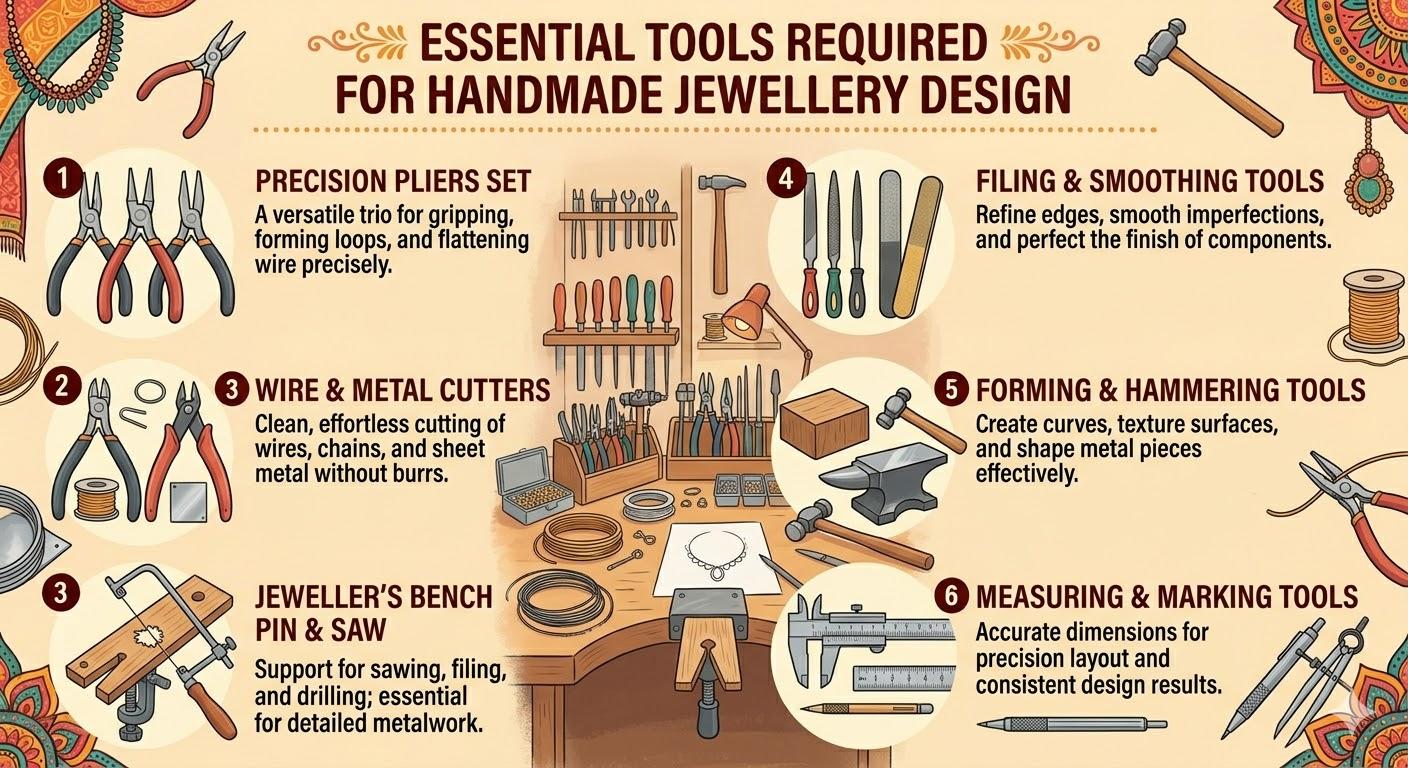
Handmade jewellery design has become increasingly popular as more people embrace creativity and personalization in their accessories. Whether you are a beginner exploring DIY accessories or an experienced artisan refining your craft, having the right tools is crucial. The quality, precision, and efficiency of your work largely depend on the tools you use. In this blog, we will explore the essential tools required for handmade jewellery design and how they can help you create stunning pieces.
Why Tools Matter in Handmade Jewellery Design
Creating beautiful jewellery is not just about creativity—it also requires the right set of jewellery making tools. These tools help you shape, cut, bend, and assemble materials with accuracy and ease. Investing in proper tools not only enhances your craftsmanship but also ensures safety and durability in your designs.
Basic Jewellery Making Tools for Beginners
If you are just starting your journey into handmade jewellery design, there are a few fundamental tools you should have in your kit.
Round Nose Pliers
Round nose pliers are essential for creating loops and curves in wires. They are commonly used in making earrings, clasps, and decorative wire designs. Their rounded tips allow for smooth bending without damaging the material.
Chain Nose Pliers
Chain nose pliers are perfect for gripping and bending wire. They have a flat surface that provides better control, making them ideal for opening and closing jump rings or holding small components securely.
Wire Cutters
Wire cutters are indispensable in jewellery making. They allow you to cut wires cleanly and precisely. A good pair of cutters ensures that your edges are neat and safe, reducing the need for excessive filing.
Flat Nose Pliers
Flat nose pliers are used for holding and straightening wire. They are especially useful when working with larger components or when you need to apply firm pressure without slipping.
Advanced Tools for Handmade Jewellery Design
As you progress in your handmade jewellery design journey, you may want to expand your toolkit with more advanced tools.
Jewelry Hammer
A jewelry hammer is used for shaping and hardening metal. It can also add texture to your designs, giving them a unique and professional finish.
Bench Block
A bench block is a flat, sturdy surface used in combination with a hammer. It provides a stable base for flattening and shaping metal pieces.
Mandrels
Mandrels are cylindrical tools used to shape rings, bangles, and loops. They come in various sizes and are essential for achieving consistent shapes.
Files and Sandpaper
Files and sandpaper help smooth rough edges and refine your jewellery pieces. They are crucial for giving your designs a polished and professional look.
Tools for Beading and DIY Accessories
Beading is a popular aspect of DIY accessories, and it requires specific tools to achieve precision and creativity.
Beading Needles
Beading needles are thin and flexible, making it easier to string beads, especially when working with small holes.
Bead Mats
Bead mats prevent beads from rolling away and help keep your workspace organized. They are especially useful when working with tiny components.
Crimping Tools
Crimping tools are used to secure clasps and fasteners. They ensure that your jewellery is durable and holds together properly.
Tweezers
Tweezers are handy for picking up small beads and placing them accurately. They improve precision and reduce frustration when working with intricate designs.
Measuring and Marking Tools
Accuracy is key in handmade jewellery design, and measuring tools help maintain consistency.
Ruler and Measuring Tape
These tools help you measure wire lengths, bead spacing, and overall dimensions of your jewellery pieces.
Calipers
Calipers provide precise measurements, especially when working with small components. They are essential for ensuring symmetry and balance in your designs.
Marking Tools
Marking tools like fine-tip markers or scribes help you indicate where to cut or bend, ensuring accuracy in your work.
Storage and Organization Tools
Keeping your tools and materials organized is just as important as having them.
Storage Boxes
Storage boxes with compartments help you organize beads, wires, and findings. This saves time and keeps your workspace tidy.
Tool Organizers
Tool organizers ensure that your pliers, cutters, and other equipment are easily accessible and well-maintained.
Workbench
A dedicated workbench provides a comfortable and efficient workspace. It helps you stay focused and improves your overall productivity.
Safety Tools and Equipment
Safety should never be overlooked in handmade jewellery design.
Safety Glasses
Safety glasses protect your eyes from flying debris, especially when cutting wire or hammering metal.
Finger Guards
Finger guards help prevent injuries while working with sharp tools or materials.
Dust Mask
When filing or sanding, a dust mask prevents inhalation of fine particles, ensuring a safe working environment.
Tips for Choosing the Right Jewellery Making Tools
Selecting the right tools can make a significant difference in your jewellery-making experience.
Quality Over Quantity
Invest in high-quality tools rather than buying many low-quality ones. Durable tools last longer and provide better results.
Comfort and Ergonomics
Choose tools that are comfortable to hold and use. Ergonomic designs reduce strain and allow you to work for longer periods.
Start Small and Upgrade
Begin with basic tools and gradually expand your collection as your skills improve. This approach helps you understand your needs better.
Conclusion
Handmade jewellery design is a rewarding and creative pursuit that allows you to express your individuality through unique pieces. Having the right jewellery making tools is essential for achieving precision, efficiency, and professional results. From basic pliers and cutters to advanced shaping tools and safety equipment, each tool plays a vital role in your creative process.
Whether you are crafting simple DIY accessories or intricate designs, investing in the right tools will elevate your work and make the process more enjoyable. Start with the essentials, practice your skills, and gradually build your toolkit to unlock your full potential in handmade jewellery design.

 English
 Arabic
 French
 Spanish
 Deutsch
 Turkish
 Dutch
Dutch
 Italiano
 Russian
 Romaian
 Portuguese (Brazil)
 Greek
Greek