


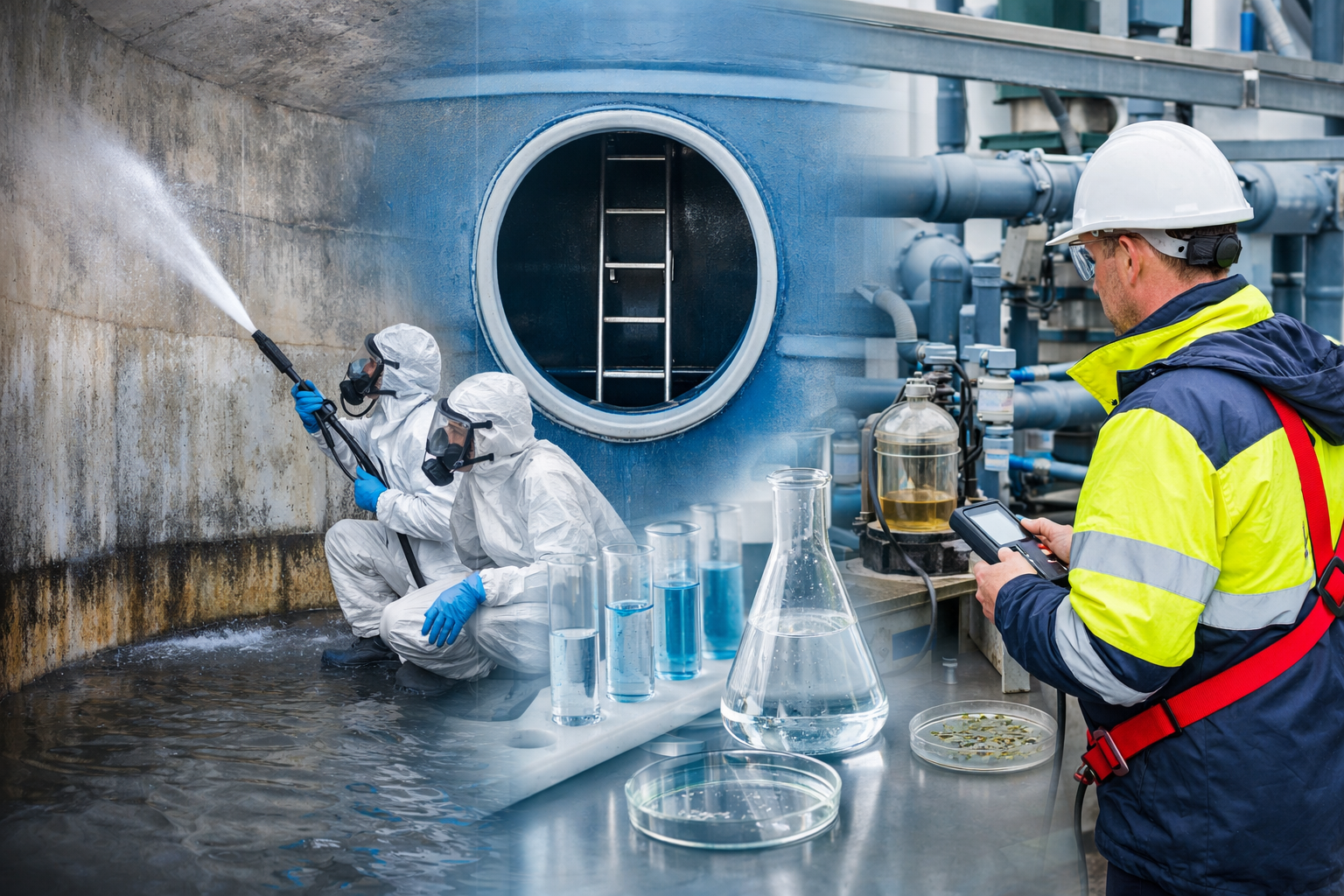
People expect drinking water to be safe. But the storage tank that holds the water can slowly collect dirt and bacteria. Over time, sediment, rust, scale, and debris can build up inside the tank. These materials can become a food source for bacteria and other microorganisms. If this is ignored, contamination can spread through the water system and affect the quality of the drinking supply.
Regular inspection and maintenance help prevent these problems. Clean tanks support good water hygiene and reduce the risk of harmful bacteria developing inside the system.
What Can Build Up Inside a Tank
Water systems naturally collect small particles over time. Even clean mains water can carry tiny materials that settle at the bottom of tanks. These may include
● Sediment and sludge
● Rust and corrosion
● Biofilm on tank walls
● Plant growth or debris
● Dirt and scale
When these deposits stay in the tank, bacteria can multiply. Some bacteria, such as Legionella, grow well in stagnant water systems and can pose a health risk.
Routine inspection helps identify these issues early before they affect the water supply.
The Role of potable water tank cleaning
Professional potable water tank cleaning removes contamination from storage tanks and helps restore safe water conditions. The process usually includes several steps that follow water hygiene standards.
Typical work may involve
● Draining or isolating the tank
● Manual cleaning to remove debris and biofilm
● Disinfection using approved chemicals such as chlorine
● Water sampling and analysis before and after cleaning
● Inspection for defects or structural issues
Testing is important. Water samples help confirm whether bacteria levels have been reduced and whether the cleaning process worked properly.
Regular Inspections Are Important
Cleaning is not the only part of tank care. Annual inspections are also recommended. During an inspection, a qualified assessor checks the inside and outside of the tank to decide whether cleaning or repairs are needed.
This process helps building owners, landlords, and managers maintain safe water systems. It also supports compliance with water safety standards such as the HSE Approved Code of Practice for water hygiene.
Keeping a clear maintenance schedule reduces the chance of contamination and keeps the system working properly.
Conclusion
Clean storage tanks play a quiet but important role in safe drinking water. Dirt, sediment, and bacteria can build up over time if tanks are not maintained. Regular inspections, cleaning, and testing help control these risks and keep water systems in good condition.
Professional support can make this process easier and ensure the work follows proper standards. Services from ARA Environmental help property owners maintain water hygiene, manage risks, and keep their drinking water systems safe for everyday use.
Read our Another Blog Below -
https://logcla.com/blogs/1266245/Water-Hygiene-Services-Protecting-Buildings-from-Health-Risks

 English
 Arabic
 Spanish
 Portuguese
 Deutsch
 Turkish
 Dutch
Dutch
 Italiano
 Russian
 Romaian
 Portuguese (Brazil)
 Greek
Greek