


When people hear the term what was the original use of a chainsaw, most immediately picture heavy-duty tools cutting through timber in forests. However, the origin of this now-common mechanical device is far more unexpected and rooted in medical innovation rather than industrial utility. Understanding this evolution not only highlights technological progress but also sheds light on how tools can dramatically shift purpose over time.
The Medical Origins of the Chainsaw
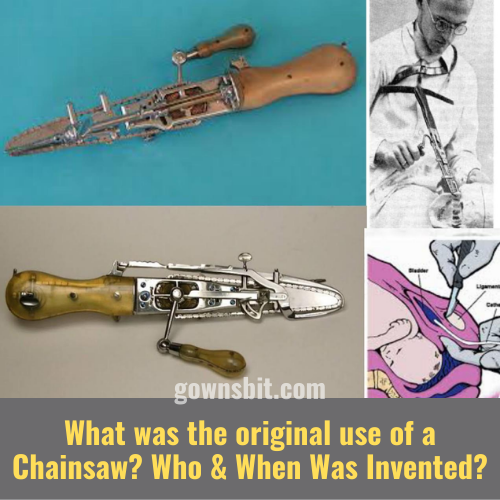
Long before chainsaws became synonymous with logging and construction, their earliest versions were developed in the late 18th century for surgical procedures. Specifically, two Scottish doctors designed a hand-cranked chainsaw-like instrument to assist in childbirth. This tool was used in a procedure known as a symphysiotomy, where cartilage and bone were cut to widen the pelvis during complicated deliveries.
Unlike modern chainsaws, this early device was small, manually operated, and designed for precision rather than power. The chain consisted of small, serrated teeth attached to a rotating mechanism, allowing surgeons to cut through bone more efficiently than with traditional knives or saws. While this application may seem unsettling by today’s standards, it represented a significant advancement in surgical techniques at the time.
Transition from Surgery to Industry
As medical practices evolved and safer alternatives like cesarean sections became more common, the surgical use of chainsaw-like tools declined. However, the fundamental design—rotating chain with cutting teeth—proved highly adaptable.
By the 19th century, inventors began exploring industrial applications of the chainsaw mechanism. Early adaptations were still bulky and manually operated, but they laid the groundwork for mechanized versions. The introduction of steam-powered and later gasoline-powered engines in the late 19th and early 20th centuries revolutionized the tool’s functionality.
These developments marked the chainsaw’s transition from a niche medical instrument to a powerful industrial device capable of cutting large quantities of wood efficiently.
Technological Advancements and Modern Chainsaws
The chainsaw as we know it today began to take shape in the early 20th century. Engineers refined the design by incorporating lightweight materials, improved chain mechanisms, and portable engines. This made chainsaws more accessible and practical for forestry workers and builders.
Modern chainsaws are equipped with advanced safety features such as chain brakes, anti-vibration systems, and ergonomic designs. They are now indispensable in industries like logging, landscaping, and disaster management. Electric and battery-powered variants have also emerged, offering quieter and more environmentally friendly alternatives to traditional gas-powered models.
Why This History Matters
Understanding what was the original use of a chainsaw provides valuable insight into how innovation often stems from unexpected needs. A tool originally created to solve a medical challenge has evolved into an essential component of multiple industries.
This transformation also highlights the importance of adaptability in engineering. The core principle behind the chainsaw—efficient cutting through a continuous motion—remains unchanged, even as its applications have expanded dramatically.
Lessons for Modern Innovation
For brands like Gowns Bit, which focus on delivering high-quality and thoughtfully designed products, this story serves as a reminder that innovation often lies in reimagining existing concepts. The chainsaw’s journey from operating rooms to forests demonstrates how a single idea can be repurposed to meet entirely different demands.
In today’s rapidly evolving technological landscape, the ability to adapt and innovate is more critical than ever. Whether in fashion, technology, or industrial design, the key to long-term success lies in understanding both the origins and potential of the tools and ideas we use.
Conclusion
The next time someone asks, what was the original use of a chainsaw, the answer reveals a fascinating blend of medical history and engineering evolution. From a surgical instrument designed for precision to a powerful industrial tool, the chainsaw’s transformation underscores the unpredictable path of innovation.

 English
 Arabic
 French
 Spanish
 Portuguese
 Deutsch
 Turkish
 Dutch
Dutch
 Italiano
 Russian
 Romaian
 Portuguese (Brazil)