


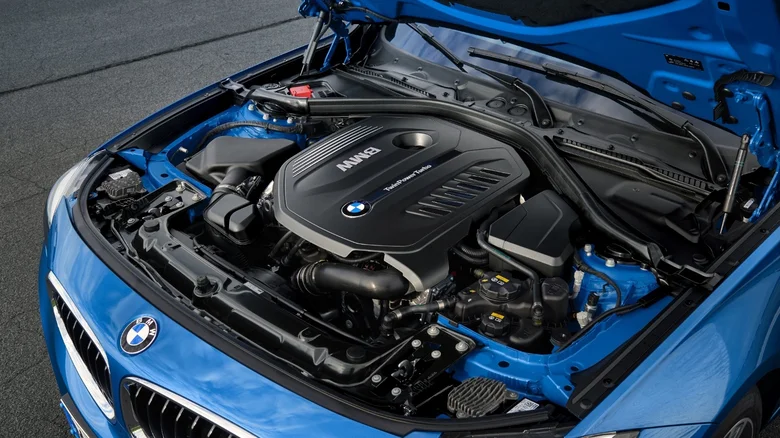
Introduction
BMW, short for Bayerische Motoren Werke AG, is synonymous with performance, precision engineering, and luxury. Central to BMW’s reputation is its engine technology, which combines power, efficiency, and cutting-edge innovation. BMW engines are not just power units; they are the heart of the driving experience, embodying the brand’s commitment to "Sheer Driving Pleasure."
History of BMW Engines
BMW started as an aircraft engine manufacturer in 1917, creating engines for planes during World War I. After the war, the Treaty of Versailles prohibited Germany from producing aircraft engines, so BMW shifted focus to motorcycles and automobiles. The first BMW car, the BMW 3/15, launched in 1929, featured a modest engine, but it set the foundation for BMW’s engineering philosophy.
Over the decades, BMW evolved from producing small, economical engines to designing high-performance engines that rivaled luxury competitors. The company’s history reflects continuous technological advancement, including innovations in turbocharging, valvetronic technology, and hybrid powertrains.
Types of BMW Engines
BMW engines are broadly categorized based on their configuration and fuel type. Understanding these types helps enthusiasts and buyers make informed decisions.
1. Inline Engines (Straight Engines)
BMW is famous for its inline-6 (I6) engines, which are a hallmark of smoothness and balance. An inline engine places all cylinders in a straight line, offering natural engine balance and reduced vibration.
-
Key Features:
-
Smooth operation due to balanced design
-
Linear power delivery
-
Compact design suitable for rear-wheel-drive platforms
-
Examples include the BMW B58, a 3.0-liter turbocharged inline-6 found in models like the BMW 540i and Z4 M40i.
2. V Engines
BMW also produces V6 and V8 engines, which arrange cylinders in a V-shape. V engines are ideal for larger vehicles, offering high torque and compact packaging for bigger displacement engines.
-
V8 engines are prominent in BMW’s M Performance and luxury models like the BMW M5 and BMW X5 M, delivering exhilarating acceleration and sound.
3. Four-Cylinder Engines
For fuel efficiency without sacrificing performance, BMW designs turbocharged four-cylinder engines. These engines power compact models such as the BMW 320i and BMW X1, offering a balance of efficiency and sporty driving.
4. Hybrid and Electric Powertrains
In recent years, BMW has embraced electrification. The BMW i Series (like i4 and iX3) integrates electric motors with traditional engines or uses fully electric systems. Hybrid engines, like the BMW 530e, combine a petrol engine with an electric motor for improved efficiency and lower emissions.
BMW Engine Technologies
BMW engines are renowned for integrating advanced technologies that enhance performance, efficiency, and driving dynamics.
1. TwinPower Turbo Technology
TwinPower Turbo refers to BMW’s use of turbocharging to improve power and efficiency. Unlike traditional turbos, BMW’s system combines high-precision direct fuel injection, variable valve timing, and twin-scroll turbochargers to maximize performance while reducing fuel consumption.
2. Valvetronic and Double VANOS
-
Valvetronic is BMW’s variable valve timing technology, allowing the engine to adjust valve lift continuously. This results in:
-
Improved fuel efficiency
-
Reduced emissions
-
Smoother power delivery
-
-
Double VANOS is another variable valve timing system that adjusts the camshaft timing for optimal torque and power across all RPM ranges.
3. EfficientDynamics
BMW’s EfficientDynamics initiative combines engine design with hybridization, lightweight materials, and regenerative braking to maximize efficiency without sacrificing performance. Modern BMW engines often feature start-stop systems and energy recovery to enhance fuel economy.
4. M Performance Engines
BMW M engines, engineered by the company’s M Division, are high-performance variants designed for speed, track performance, and driver engagement. Examples include:
-
S58 3.0L Twin-Turbo I6 – Used in BMW X3 M and X4 M
-
S63 4.4L Twin-Turbo V8 – Found in BMW M5 and M8
M engines are distinguished by their aggressive power curves, lightweight materials, and superior cooling systems.
Common BMW Engine Series
BMW organizes its engines into series, each with unique characteristics:
1. B Series
-
Modern modular engines
-
Turbocharged inline-3, inline-4, and inline-6 configurations
-
Focus on efficiency and emission compliance
2. N Series
-
Predecessor to the B series
-
Inline-6 engines were particularly praised for smoothness
-
Introduced technologies like Valvetronic and TwinPower Turbo
3. S Series
-
High-performance engines by BMW M
-
Naturally aspirated and turbocharged variants
-
Designed for maximum output and track performance
Maintenance and Longevity of BMW Engines
BMW engines are engineered to last, but proper maintenance is crucial. Regular oil changes, coolant checks, and adherence to service schedules ensure reliability. Turbocharged engines require special attention due to high operating temperatures. Using BMW-certified parts and fluids prolongs engine life.
-
Signs of Engine Trouble:
-
Unusual noises (knocking or ticking)
-
Check engine light activation
-
Loss of power or fuel efficiency
-
Routine maintenance, combined with responsible driving, can make BMW engines last well over 200,000 miles.
Innovations in BMW Engine Development
BMW continues to innovate with a focus on sustainability and performance:
-
Hydrogen Engines: BMW is exploring hydrogen combustion engines as an eco-friendly alternative.
-
High-Performance Hybrid Systems: Combines electric torque with traditional engines for instant acceleration.
-
Lightweight Materials: Aluminum and carbon-fiber components reduce weight, improving efficiency and handling.
Conclusion
BMW engines are a perfect blend of tradition and innovation. From the legendary inline-6 engines to modern electric powertrains, BMW’s engineering philosophy emphasizes performance, precision, and driving pleasure. Whether it’s the smoothness of a B58 inline-6, the raw power of an S63 V8, or the efficiency of a hybrid iSeries engine, BMW continues to set standards in the automotive industry.
Understanding BMW engines allows drivers to appreciate not just the horsepower and torque, but the meticulous engineering that goes into every component. For enthusiasts and everyday drivers alike, BMW engines represent more than machinery—they are the heart of a driving experience that is truly unparalleled.
For more information.

 Arabic
 French
 Spanish
 Portuguese
 Deutsch
 Turkish
 Dutch
Dutch
 Italiano
 Russian
 Romaian
 Portuguese (Brazil)
 Greek
Greek