


A Fudgy Brownie in Minutes, Without Measuring From Scratch
Few desserts have the universal appeal of a well made brownie. Dense, fudgy, slightly crackly on top, and rich in chocolate flavor. But getting that result consistently requires precise ratios of cocoa, fat, sugar, flour, and leavening. Get one element wrong and you end up with something either too cakey, too dry, or too flat.
That is where preblended brownie formulations come in. This blog explains what goes into these mixes, how they work, and why they have become a go to option for anyone who wants reliable brownie output without the complexity of building a recipe from scratch every time.
What Goes Into a Preblended Brownie Mix Formulation
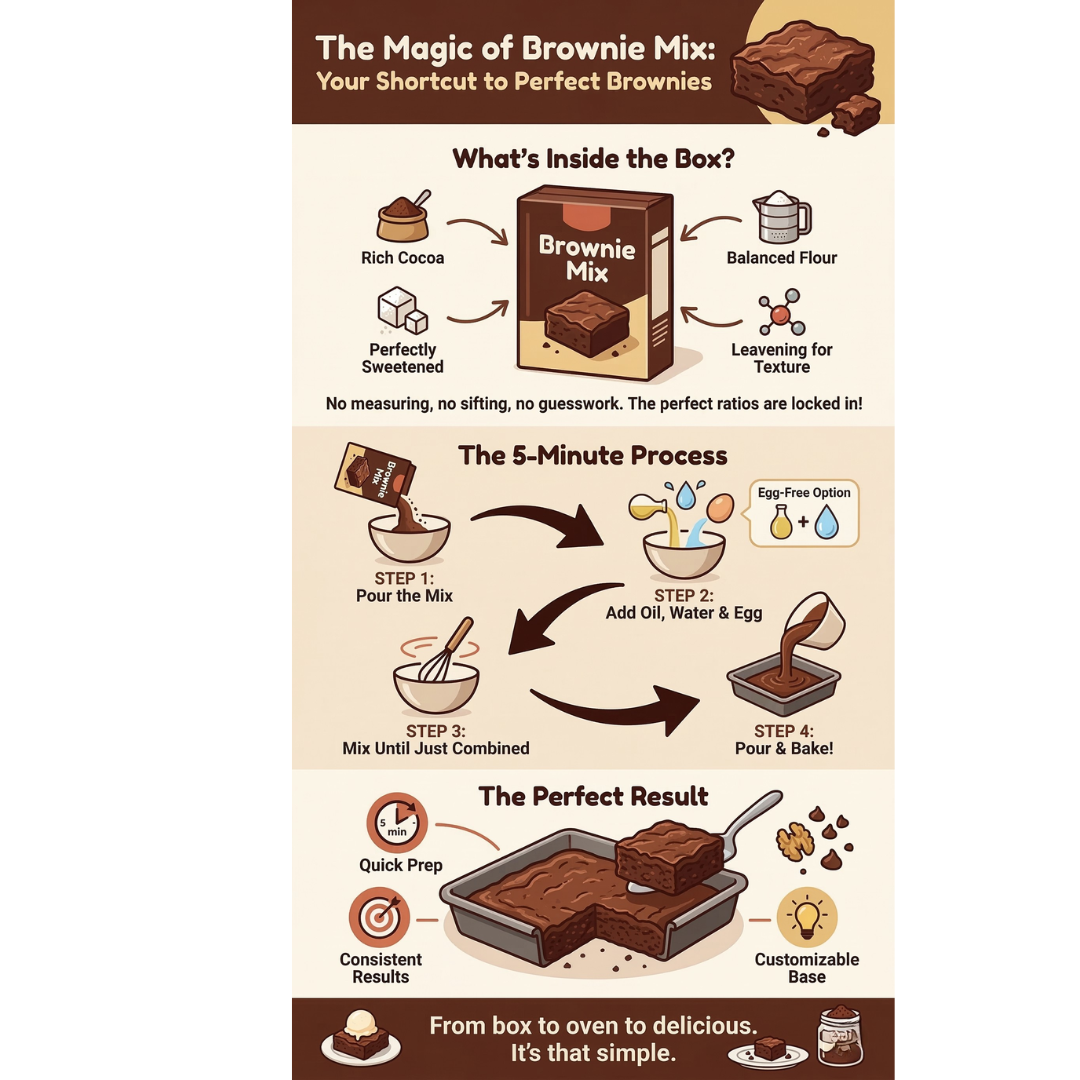
A standard brownie mix is a dry blend of cocoa powder, sugar, flour, leavening agents, and sometimes milk solids or fat in powdered form. Everything is measured and combined at precise ratios during manufacturing, so the end user only needs to add a few wet ingredients like oil, water, or eggs depending on the formulation.
Some variants are designed to be egg free, which is especially useful for vegetarian menus or operations catering to dietary preferences. SwissBake, for example, offers an egg free variant that requires only the addition of water and oil, simplifying the process even further.
The dry blend is where all the critical ratios live. Cocoa percentage determines depth of chocolate flavor. Sugar particle size affects moisture retention and surface texture. Leavening quantity controls whether the result is fudgy or cakey. All of this is locked in before the box is even opened.
How It Actually Works During Preparation
The process is straightforward, and that is the point.
-
Measure the required amount of dry mix
-
Add the specified quantity of wet ingredients, water, oil, and eggs if applicable
-
Mix until just combined, avoiding overmixing which develops too much gluten
-
Pour into a greased or lined baking tray
-
Bake at the recommended temperature for the specified duration
Most brownie mix formulations are designed to be ready for the oven in under five minutes of active preparation. The baking time is usually between 25 to 35 minutes depending on the thickness of the pour and the type of oven being used.
What makes this work so well is the pre calibrated balance of dry ingredients. There is no need to weigh out cocoa, sift flour, or worry about whether the leavening ratio is right. That part is already done.
Why the Results Stay Consistent
The biggest challenge with scratch brownie recipes is variation. A slightly heavier hand with flour or a different cocoa brand can shift the texture noticeably. Multiply that across multiple batches or different people preparing the same recipe, and consistency drops quickly.
With a preblended formulation, the dry side of the equation is fixed. As long as the wet ingredients are measured correctly and the bake time is followed, the result stays the same every time. This is particularly valuable in settings where dessert output needs to be predictable, whether that is a bakery, a café, a catering operation, or a cloud food brand running multiple delivery orders daily.
What Qualities to Look For
Not every preblended option performs the same. Here are a few things worth checking before committing:
-
Cocoa quality: This determines the richness of the final product. Low grade cocoa results in a flat, underwhelming flavor.
-
Texture profile: Some mixes lean fudgy, others lean cakey. Choose based on what your end product should feel like.
-
Egg free or egg based: Egg free versions simplify prep and widen your customer base.
-
Shelf life of the dry mix: A longer shelf life means less waste from expired stock.
-
Versatility: A good brownie mix should also work as a base for variations like walnut brownies, cream cheese swirl brownies, or brownie based dessert jars.
Where It Fits in a Dessert Menu
Brownies are one of the most flexible dessert items. They can be served warm with ice cream, layered into parfaits, cut into bite sized pieces for dessert platters, or used as a base for plated desserts. Having a reliable mix on hand means you can offer brownie based items without dedicating significant prep time to them.
For operations that rotate their dessert menu frequently, it also reduces the number of raw ingredients that need to be stocked separately.
Conclusion
A preblended brownie formulation takes the guesswork out of one of the most popular desserts in any menu. It delivers consistent flavor, texture, and appearance by locking in the critical dry ingredient ratios at the manufacturing stage. Whether you are producing 20 portions or 200, the output stays the same. For anyone looking to serve quality brownies without the overhead of managing a complex scratch recipe, this is a practical and dependable solution.
Frequently Asked Questions
Q.1 What do you need to add to a brownie mix?
Ans: Most formulations require oil and water. Some also need eggs. Egg free variants typically need only oil and water, making preparation faster and simpler.
Q.2 Can you customize brownies made from a brownie mix?
Ans: Yes. You can fold in walnuts, chocolate chips, dried fruits, or swirl in cream cheese or peanut butter before baking. The base mix serves as a reliable foundation for multiple variations.
Q.3 How is a fudgy brownie different from a cakey one?
Ans: Fudgy brownies have a higher fat to flour ratio, resulting in a dense, moist texture. Cakey brownies contain more flour and leavening, giving them a lighter, airier crumb. The mix you choose determines which profile you get.
Q.4 How long do brownies from a mix stay fresh?
Ans: When stored in an airtight container, brownies typically stay fresh for 3 to 4 days at room temperature. Refrigeration can extend this, though texture may firm up slightly.
Q.5 Is an egg free brownie mix lower in quality than a regular one?
Ans: Not necessarily. Well formulated egg free versions deliver comparable moisture, texture, and flavor. The key is the quality of the cocoa, fat system, and overall formulation rather than the presence or absence of eggs.

 Arabic
 French
 Spanish
 Portuguese
 Deutsch
 Turkish
 Dutch
Dutch
 Italiano
 Russian
 Romaian
 Portuguese (Brazil)
 Greek
Greek