


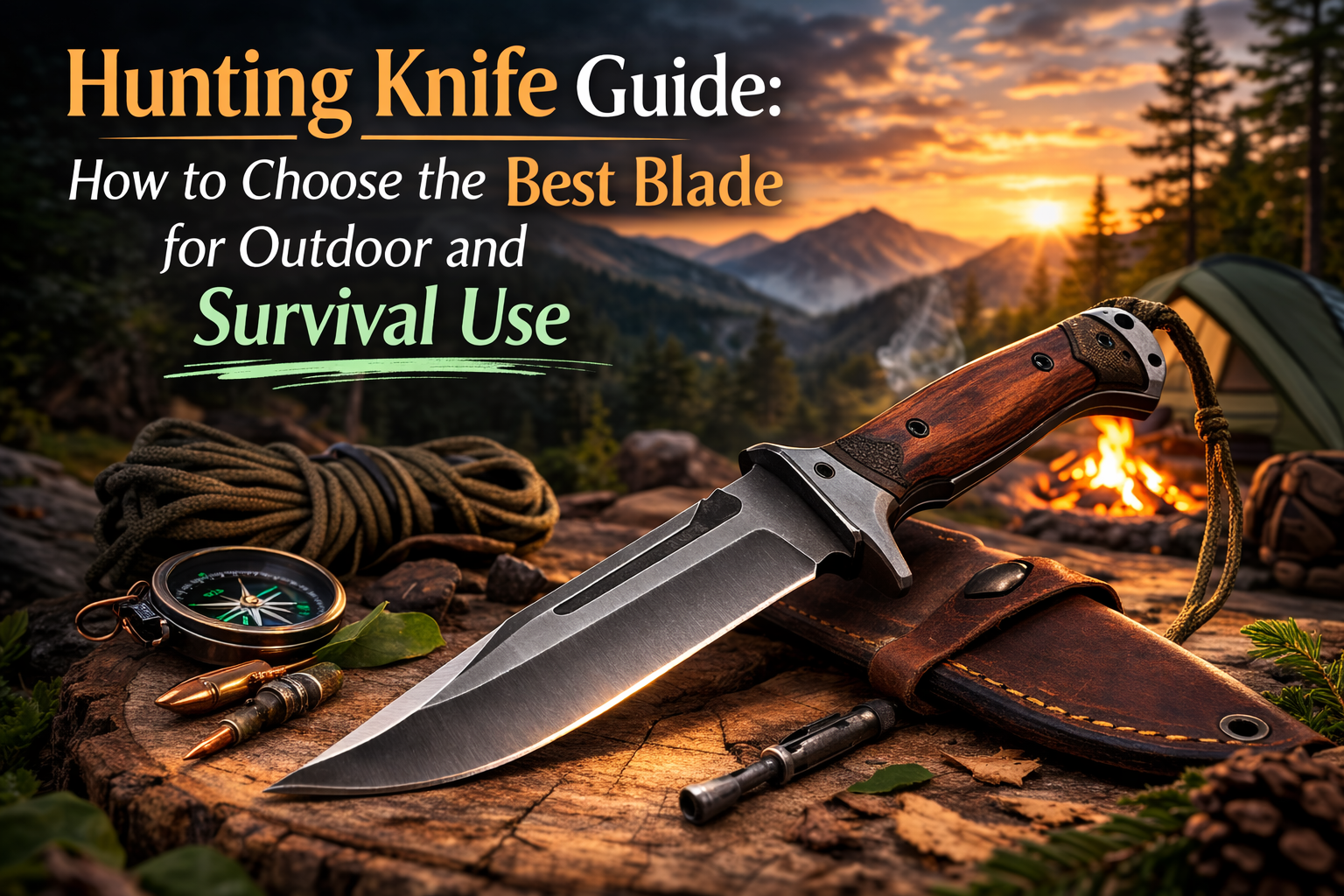
A reliable hunting knife is one of the most essential tools for outdoor enthusiasts, survivalists, campers, and hunters. Whether you are preparing a game, building shelter, cutting rope, or handling emergency survival tasks, the right blade can make a significant difference in both efficiency and safety.With so many designs, materials, and blade styles available, choosing the best hunting knife can feel overwhelming. Understanding the key features and how they affect performance will help you select a knife that fits your outdoor needs.This guide explains everything you need to know about hunting knives, including blade types, materials, handle design, and important factors to consider before making your choice.
What Is a Hunting Knife?
A hunting knife is a fixed or folding blade tool designed specifically for outdoor activities such as hunting, camping, and survival situations. Unlike kitchen knives or utility blades, hunting knives are built for durability, precision, and versatility in rugged environments.
Hunters commonly use these knives for tasks such as.
-
Field dressing and skinning game
-
Cutting rope or cordage
-
Preparing food at campsites
-
Building shelters or crafting tools
-
General outdoor cutting tasks
Because outdoor environments can be unpredictable, a hunting knife must be strong, reliable, and comfortable to use for extended periods.
Why Choosing the Right Hunting Knife Matters
Selecting the right knife is important not only for performance but also for safety. A poorly designed or low-quality blade can break, slip, or become dull quickly, which may lead to accidents during outdoor tasks.
A well-chosen hunting knife offers several advantages.
-
Better control and precision
-
Improved durability in harsh environments
-
Efficient cutting performance
-
Reduced fatigue during use
-
Increased safety during handling
Understanding the key features of hunting knives will help you choose a tool that performs well in both hunting and survival situations.
Types of Hunting Knife Blades
Different blade styles are designed for different purposes. Choosing the right blade shape depends on the type of outdoor activities you plan to perform.
Drop Point Blade
The drop point blade is one of the most popular choices for hunters. It features a curved spine that slopes down toward the tip, creating a strong and controllable point.This blade shape offers excellent control for skinning and field dressing animals while reducing the risk of puncturing internal organs during processing.
Clip Point Blade
Clip point blades have a concave curve near the tip that creates a sharper, more precise point. This design allows for detailed cutting tasks and improved piercing capability.Hunters often choose clip point blades for precision work and versatility in the field.
Skinning Blade
Skinning blades are designed specifically for removing the hide from game animals. They typically feature a wide belly and a rounded tip to prevent accidental punctures.This blade style is ideal for hunters who primarily focus on processing game after a successful hunt.
Tanto Blade
Although less common for traditional hunting, tanto blades feature a strong angular tip that provides excellent durability and penetration strength.These blades are often favored for survival situations where heavy-duty cutting tasks may be required.
Fixed Blade vs Folding Hunting Knives
One of the first decisions when choosing a hunting knife is whether to select a fixed blade or folding blade design.
Fixed Blade Knives
Fixed blade knives have a blade that does not fold into the handle. They are generally stronger and more durable than folding knives because there are no moving parts.
Advantages of fixed blade knives include.
-
Greater strength and reliability
-
Easier cleaning after use
-
Better performance for heavy-duty tasks
-
Faster access in emergency situations
Because of these benefits, many hunters prefer fixed blade knives for field dressing and survival tasks.
Folding Knives
Folding knives have blades that fold into the handle for compact storage and portability.
Their advantages include.
-
Lightweight and easy to carry
-
Convenient pocket storage
-
Safer transport when folded
While folding knives are practical for everyday carry, they may not provide the same strength as fixed blade knives during demanding outdoor activities.
Blade Material and Steel Quality
The steel used in a hunting knife plays a major role in its durability, sharpness, and corrosion resistance.
Stainless Steel
Stainless steel blades are highly resistant to rust and corrosion, making them suitable for wet outdoor environments. They require less maintenance and are easier to clean.However, stainless steel blades may need more frequent sharpening depending on their hardness.
Carbon Steel
Carbon steel blades are known for their excellent sharpness and edge retention. They are often favored by experienced hunters who want precise cutting performance.The downside is that carbon steel requires more maintenance because it can rust if not properly cleaned and dried.
Tool Steel
Some modern hunting knives use advanced tool steels that provide a balance between durability, sharpness, and corrosion resistance.These steels are engineered for demanding outdoor tasks and often offer long-lasting performance.
Blade Length and Thickness
The size of a hunting knife can greatly affect its usability.
Blade Length
For most hunting and outdoor tasks, a blade length between 3 and 5 inches is considered ideal. This size provides good control while still offering enough cutting surface for field dressing and general outdoor work.Larger blades may be useful for survival situations, but they can be less precise for detailed tasks.
Blade Thickness
Thicker blades provide greater strength and durability, which is helpful for heavy-duty tasks like cutting wood or prying.Thinner blades offer better slicing performance and are often preferred for skinning and food preparation.Finding a balance between strength and precision is important when selecting blade thickness.
Handle Design and Comfort
A hunting knife should feel comfortable and secure in your hand, especially during long outdoor trips.
Common Handle Materials
Several materials are commonly used for knife handles.
-
Rubber or synthetic grips for excellent traction
-
Wood handles for traditional aesthetics
-
Micarta or G10 for durability and weather resistance
-
Polymer handles for lightweight strength
The best handle material depends on personal preference and environmental conditions.
Ergonomic Grip
A good hunting knife should feature an ergonomic handle design that reduces hand fatigue and provides a firm grip even when wet.Textured surfaces and finger grooves can also improve control and safety.
Knife Sheath and Carry Options
A quality sheath is just as important as the knife itself. It protects the blade, prevents accidents, and allows for convenient carrying.
Common sheath materials include.
-
Leather for traditional style and durability
-
Nylon for lightweight and weather resistance
-
Kydex for strong, modern blade protection
Many hunters prefer belt-mounted sheaths for quick access while keeping their hands free during outdoor activities.
Maintenance and Sharpening
Keeping a hunting knife sharp and clean is essential for safe and effective use.
Basic knife maintenance includes.
-
Cleaning the blade after each use
-
Drying thoroughly to prevent rust
-
Sharpening regularly with a sharpening stone or tool
-
Applying light oil to carbon steel blades
Proper maintenance ensures your knife remains reliable during outdoor adventures.
Safety Tips When Using a Hunting Knife
Using a hunting knife safely is crucial, especially in remote outdoor environments.
Important safety tips include.
-
Always cut away from your body
-
Keep your knife properly sharpened
-
Store the knife in a sheath when not in use
-
Maintain a firm grip during cutting tasks
-
Keep the blade clean and dry
Practicing safe knife handling reduces the risk of injuries and ensures a better outdoor experience.
Choosing a Trusted Source for Hunting Knives
When purchasing a hunting knife, it is important to select a reputable brand or supplier that prioritizes quality and craftsmanship.A well-made knife should offer durable steel, a comfortable handle, and reliable performance in outdoor conditions. Companies like Blade Vista focus on providing outdoor tools designed for hunters, campers, and survival enthusiasts who require dependable cutting equipment.Investing in a high-quality hunting knife ensures long-term performance and reliability when you need it most.
Final Thoughts
A hunting knife is more than just a cutting tool—it is an essential piece of equipment for outdoor survival and hunting activities. Choosing the right blade involves understanding blade types, steel materials, handle design, and overall durability.By selecting a knife that suits your specific needs and maintaining it properly, you can ensure reliable performance during outdoor adventures.Whether you are an experienced hunter or someone exploring the outdoors for the first time, the right hunting knife will become one of the most valuable tools in your gear collection

 English
 Arabic
 French
 Spanish
 Portuguese
 Deutsch
 Turkish
 Dutch
Dutch
 Russian
 Romaian
 Portuguese (Brazil)
 Greek
Greek