


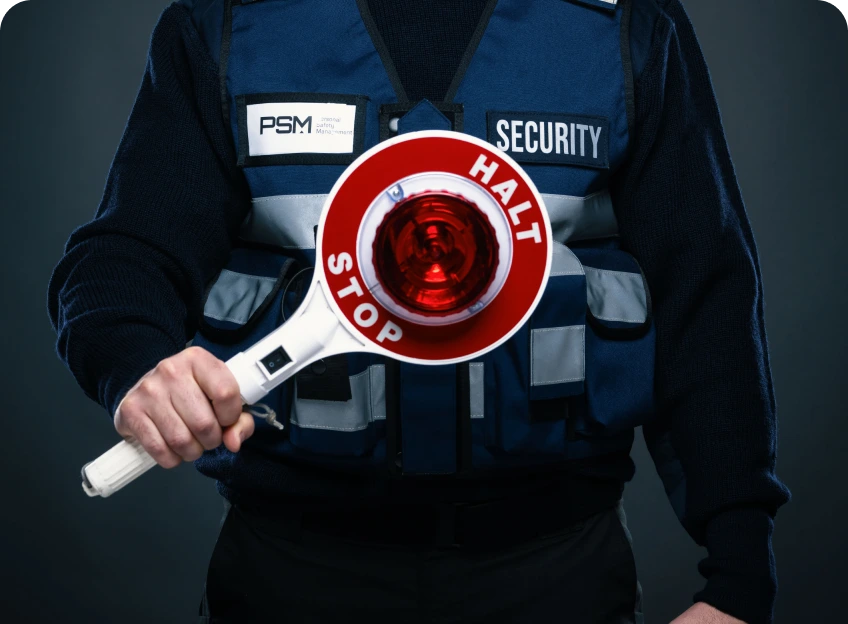
Hiring the wrong security firm can cost you money, sleep, and liability. The right one keeps people safe, reduces incidents, and stands up in court. Here’s a clear, step-by-step way to verify a security company’s license and reputation before you sign anything.
Start With Legal Status: Is the Company Properly Licensed and Registered?
A legitimate security provider holds the correct business registration and the specific licenses for the services they sell. Ask for documents up front. A solid company will share them fast.
- Confirm business registration: Search your state or country’s corporate registry to ensure the company is active and in good standing. Look for the legal name, officers, and any dissolved aliases.
- Verify the security license type: Security work often requires different licenses:
- Security guard agency or private patrol license (company-level)
- Qualifying manager or responsible officer license
- Armed endorsements and firearms permits (for armed guards)
- Alarm contractor/installer and low-voltage license (CCTV, access control)
- Locksmith license (if they handle locks/keys)
- Branch office licenses in each operating location
- Match names and numbers: The legal entity name on the contract should match the license and insurance. DBAs (trade names) should be listed with the regulator.
- Check regulator databases: Use your jurisdiction’s licensing board to confirm license status, expiration, and any disciplinary actions. Examples:
- US states: State licensing boards (e.g., California BSIS, Texas DPS, Florida DACS)
- UK: SIA Approved Contractor Scheme (ACS) for guarding; NSI or SSAIB for systems
- Ireland: PSA register
- Canada: Provincial registries (e.g., Ontario, BC)
- South Africa: PSIRA
- Australia: State police or fair trading registers for security and cabling
- Employee credentials: Randomly sample guard licenses (“guard cards”), training hours, and armed permits. Names should match photo IDs, with current expiration dates.
If a company hesitates to provide license numbers or tries to rush past this step, you’ve likely avoided a bigger problem later.
Insurance, Bonding, and Compliance: Will They Protect You If Something Goes Wrong?
Licensing proves they can operate. Insurance proves they can cover a loss. Ask for a current Certificate of Insurance (COI) and verify with the broker.
- General liability: Typical limits for guarding start at $1M per occurrence/$2M aggregate. Complex sites (hospitals, events) may need higher limits or umbrellas.
- Workers’ compensation: Required where applicable. Confirm the policy covers security operations, not just “consulting.”
- Automobile liability: Needed for patrol vehicles and mobile response.
- Professional liability/errors & omissions: Important for risk assessments, alarm monitoring, and system design.
- Cyber liability: If they manage access control databases, video, or visitor systems.
- Additional insured and waiver of subrogation: Request endorsements by name. Get copies of the forms, not just promises on the COI.
- Policy exclusions: Confirm there are no exclusions that gut coverage (assault and battery, firearms, crowd control, key holding, cash handling).
- Bonding: Fidelity bonds help cover employee theft. Useful for concierge, key control, and cash-related posts.
Call the broker listed on the COI to confirm the policy is active and endorsements are issued. A five‑minute call can save you from uninsured claims.
The leading experts at PSM Dubai ensure your premises are safe around the clock.
Reputation Signals: How to Separate Solid Operators from Smooth Talkers
Look beyond glossy brochures. Use multiple sources and compare stories with evidence.
Independent reviews and complaint history
- Online reviews: Check Google, Trustpilot, and industry directories. Don’t just look at stars—read specifics about response times, no-shows, and supervisor follow‑through.
- Regulatory actions: Search the licensing board for citations, fines, or suspensions.
- Consumer and business bureaus: Look for unresolved complaints and patterns (billing disputes, contract traps, poor training).
- Court and news searches: Look for recent lawsuits, wage claims, or serious incidents tied to the company or owners.
References that actually prove performance
Ask for three client references that match your environment (retail, healthcare, logistics, residential, construction). Then verify details.
- Request the original start date and scope (hours/week, armed/unarmed, duties).
- Ask for measurable outcomes: incident reduction, shrinkage change, response SLAs.
- Probe problems: missed shifts, escalations, weekend coverage, holiday rates.
- Confirm who supervises the site and how often management visits.
- Cross-check: Compare what you heard with sample reports the vendor provides.
If references praise the sales team but can’t name the site supervisor or guards, expect a rocky rollout.
Certifications and audits that matter
- SIA ACS (UK), PSA (IE), PSIRA grading (ZA): Indicates audited management systems for guarding.
- NSI Gold/SSAB/UL/ETL for systems: Useful for alarm/CCTV integrators and monitoring centers (UL 827, Five Diamond).
- ISO 9001/27001: Quality and information security—helpful for multi-site or sensitive operations.
- Safety programs: OSHA logs, safety training records, and incident rates for manned guarding and patrol.
- Professional affiliations: ASIS, BSIA, ESA, CANASA—signals engagement, not a free pass.
Certifications won’t guard your gate by themselves, but they show process maturity and external oversight.
Operational Proof: Test How They’ll Perform on Your Site
A credible company can show how they work, not just tell you. Build a small test or due diligence pack.
- Sample documents: Training matrix, post orders template, incident and daily activity reports, escalation tree, and relief coverage plan.
- Guard tour tech: Ask for a demo of GPS/geofenced patrols, NFC/RFID checkpoints, and audit trails with timestamps and photos.
- Supervisor coverage: “We’ll supervise” is vague. Request the ratio of supervisors to guards and actual visit schedules.
- Response times: For alarms or emergencies, what’s the on‑site target? How do they measure and report misses?
- Subcontracting transparency: If they plan to use partners, verify those firms’ licenses, insurance, and training too.
- Data handling: For video/access systems, ask about encryption, user access controls, and breach notification procedures.
Two short scenarios to test the fit can reveal a lot. Example A: “A delivery driver forces the dock gate at 2 a.m.” Example B: “An employee reports a domestic threat order.” Compare their step‑by‑step actions, not slogans.
Common Mistakes and Red Flags That Cost Buyers Money
Avoid these traps that often lead to weak coverage, higher risk, and surprise invoices.
- Accepting a photocopied license or COI without verification: Documents can be outdated or altered. Always verify with the regulator or broker.
- Focusing on hourly rate only: Low rates often mean poor training, high turnover, and more incidents. Total cost includes shrinkage, downtime, and claims.
- No clear scope of work: Vague “observe and report” language leads to finger‑pointing. Spell out posts, patrol frequencies, access control tasks, and emergency actions.
- Ignoring policy exclusions: Assault-and-battery or firearms exclusions can leave you exposed on the very risks guards face.
- Skipping a pilot or KPI trial: Without a 30–60 day performance check, problems hide until renewal—or after an incident.
- Unvetted subcontractors: You hired one brand but got three vendors with mixed standards. Demand the same checks for all tiers.
- No escalation path: If you can’t reach a duty manager 24/7, response fails exactly when you need it.
One more subtle flag: high-pressure sales with “license pending” or “we’ll add you as insured after signing.” Good firms set coverage before the first shift.
Quick Regional Pointers
Licensing rules vary. Here’s how to aim your search in common markets.
- United States: Check your state’s security licensing board (e.g., BSIS in CA, DPS in TX). Verify guard cards and armed permits. For monitoring centers, look for UL 827 and Five Diamond.
- United Kingdom: Verify SIA ACS status for guarding. For installers/monitoring, look for NSI or SSAIB approvals. Confirm Public and Employers’ Liability insurance.
- Ireland: Check the PSA register for both companies and individuals.
- Canada: Provinces license agencies and guards separately. Confirm both. Ask for COR safety certification where relevant.
- South Africa: Confirm PSIRA registration and grading for both the company and security officers.
- Australia: State-based security and cabling licenses. Verify open/closed cabling registrations for CCTV/access control installers.
If your site is high-risk or regulated (healthcare, critical infrastructure), get legal to confirm any extra licensing or guard training requirements.
Practical Checklist You Can Use Today
Use this short, ordered list as your field checklist before choosing a provider.
- Obtain legal entity name, license numbers, and branch locations. Verify against the regulator’s database.
- Request COI with your company listed as additional insured; confirm with the broker and review exclusions.
- Sample employee credentials: 3–5 guard licenses, training records, and armed permits if applicable.
- Check reviews, complaints, litigation, and any regulatory actions. Ask for three matched references and call them.
- Review sample reports, post orders, guard tour tech, and the escalation tree. Confirm supervisor visit frequency.
- Clarify subcontracting plans and verify partners like you would the prime.
- Set KPIs (coverage rate, response time, incident rates) and a 30–60 day pilot with a walk‑away clause.
Strong providers make this easy. They answer fast, share proof, and welcome a pilot. Do these checks, and you’ll hire a security company that protects your people, your property, and your reputation.

 Arabic
 French
 Spanish
 Portuguese
 Deutsch
 Turkish
 Dutch
Dutch
 Italiano
 Russian
 Romaian
 Portuguese (Brazil)
 Greek
Greek