


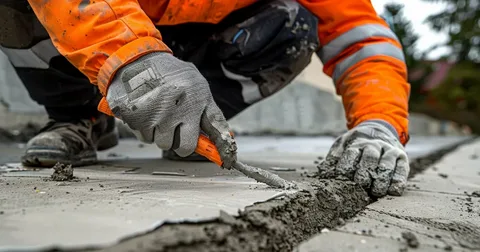
When you notice a fissure snaking across your driveway or a flake of cement peeling off your porch, your first instinct might be to worry about the cost. However, the more important question is whether the issue is purely aesthetic or a sign of deeper instability. For homeowners seeking concrete repair Canonsburg PA, distinguishing between a surface-level blemish and a foundation threat is the first step toward maintaining property value.
Not all cracks are created equal. Some are simply "settling" pains—a natural part of a home’s aging process—while others indicate that the ground beneath your feet is shifting in ways it shouldn't. By understanding the visual cues of concrete failure, you can decide whether you need a quick DIY patch or a professional concrete repair company to intervene before the damage becomes irreversible.
Cosmetic Damage: The "Skin Deep" Issues
Cosmetic damage is primarily an eyesore. It doesn’t compromise the load-bearing capacity of the slab, but if left unaddressed, it can eventually lead to structural problems by allowing water to seep in.
Hairline Cracks
These are thin, shallow cracks (usually less than 1/8 inch wide) that often appear shortly after the concrete is poured. They are typically caused by "plastic shrinkage"—the concrete drying too quickly. While they look unappealing, they rarely signal a structural failure.
Spalling and Scaling
If the surface of your concrete is flaking or peeling off in thin layers, you are looking at spalling. This is common in regions with harsh winters where freeze-thaw cycles and de-icing salts break down the finished surface. While it looks messy, it’s usually a surface-level issue that can be fixed with professional concrete repair services such as resurfacing.
Crazing
Crazing looks like a fine, interconnected map of cracks, similar to a shattered windshield or a spiderweb. This occurs when the top layer of the concrete slab dries much faster than the bottom. It is purely aesthetic and does not affect the structural integrity of the slab.
Structural Damage: Warning Signs of Failure
Structural damage is a much more serious category. This type of damage means the concrete can no longer support the weight it was designed to carry. If you see these signs, it’s time to call in the experts at Peak Precision Contracting.
Wide, Jagged Cracks
Any crack wider than 1/4 inch is a red flag. If you can fit a thumb or even a pencil into the gap, the crack is likely deep and structural. These "active" cracks suggest that the soil underneath has shifted or washed away, leaving the concrete unsupported.
Differential Settlement (Uneven Slabs)
If one side of a crack is higher than the other, you are dealing with "heaving" or "settling." This creates a significant trip hazard and indicates that the sub-base has failed. This cannot be fixed with a simple filler; it requires a professional concrete repair company to perform mudjacking or poly-leveling to stabilize the ground.
Horizontal Cracks in Foundation Walls
While vertical cracks are often just settling, horizontal cracks are a major cause for alarm. They are usually caused by hydrostatic pressure—the weight of water-saturated soil pushing against the walls. This is a severe structural issue that requires immediate attention to prevent a total wall collapse.
Exposed Rebar
If you see rusty metal bars poking through the concrete, the structure is in jeopardy. Once moisture reaches the internal reinforcement, the metal oxidizes and expands, cracking the concrete from the inside out. This is a critical failure point that demands specialized concrete repair services.
Why Timing Matters for Concrete Maintenance
Ignoring "cosmetic" issues is one of the most common mistakes homeowners make. In a climate like Pennsylvania’s, water is the enemy of masonry. A tiny hairline crack can collect rainwater; when that water freezes, it expands, turning a cosmetic blemish into a structural nightmare.
By investing in early concrete repair Canonsburg PA, you avoid the massive price tags associated with total demolition and replacement. A proactive approach includes:
- Sealing: Applying a high-quality sealant every few years to keep moisture out.
- Joint Maintenance: Ensuring expansion joints are clear of debris so the concrete can move naturally.
- Proper Drainage: Making sure gutters and downspouts direct water away from your concrete surfaces.
Choosing the Right Concrete Repair Company
When the damage goes beyond a simple bottle of hardware-store filler, you need a team that understands the local soil conditions and architectural demands of Pennsylvania homes. Choosing Peak Precision Contracting ensures that your repairs aren't just a "band-aid" fix.
Professional concrete repair services involve a thorough diagnostic process. A reputable contractor won't just fill a crack; they will investigate why the crack formed. Whether it’s poor drainage, improper soil compaction, or the natural shifting of the Appalachian landscape, a professional team provides a long-term solution.
What to Look For in a Contractor:
- Experience with Local Climate: Knowledge of how PA winters affect concrete longevity.
- Comprehensive Toolkits: The ability to offer various solutions, from resurfacing and staining to structural reinforcement.
- Transparent Estimates: A clear breakdown of what is cosmetic and what is structural, so you aren't paying for unnecessary work.
Final Thoughts: Protecting Your Investment
Your home’s concrete—from the driveway to the foundation—is the literal groundwork of your investment. While a few small cracks might not seem like a priority, being able to identify the difference between a surface scratch and a structural shift can save you thousands of dollars.
If you are unsure about the health of your slabs, don't wait for the next heavy rain or freeze to find out. Consult with a specialist to ensure your home remains safe, sturdy, and visually appealing for years to come.

 Arabic
 French
 Spanish
 Portuguese
 Deutsch
 Turkish
 Dutch
Dutch
 Italiano
 Russian
 Romaian
 Portuguese (Brazil)
 Greek
Greek