


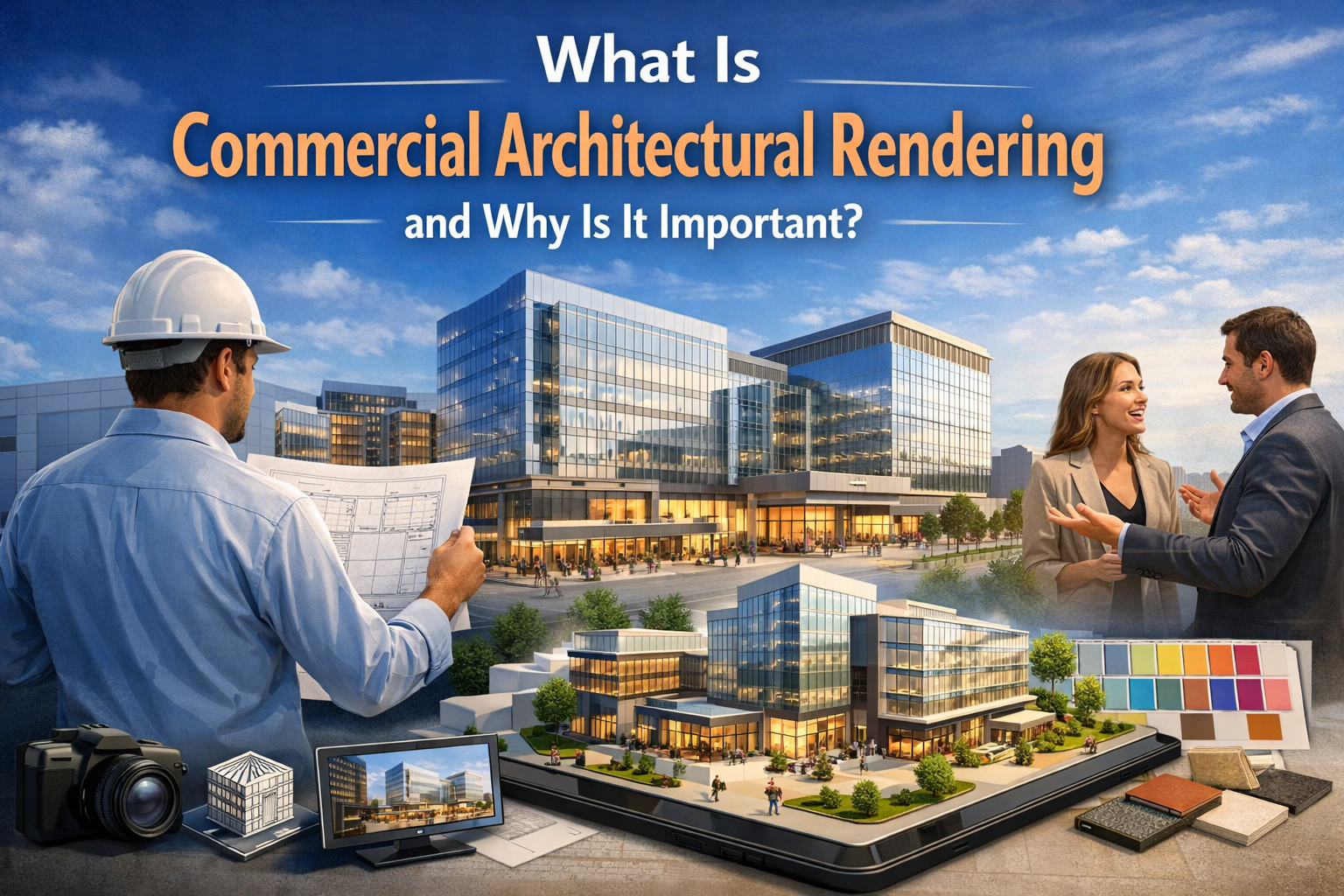
In the modern architecture and real estate industry, visualization has become a crucial part of the design and marketing process. One of the most effective tools in this area is commercial architectural rendering. But what exactly is commercial architectural rendering, and why is it so important for architects, developers, and investors? In this article, we will explore the concept, applications, and benefits of commercial architectural rendering, helping businesses understand why it has become a game-changer in the industry.
Understanding Commercial Architectural Rendering
Commercial architectural rendering is the process of creating highly detailed and realistic visual representations of commercial building projects before they are physically constructed. Unlike traditional architectural blueprints, which primarily serve as technical guides for construction, architectural renderings focus on visualizing the final look and feel of a project. These renderings are produced using advanced 3D modeling software, computer graphics, and sometimes virtual reality (VR) technology to simulate lighting, textures, materials, and spatial relationships.The purpose of these renderings is not just to show how a building will appear but to provide a comprehensive visual experience. From the exterior façade to interior spaces, commercial architectural renderings allow stakeholders to experience a building long before it exists in reality.
Types of Commercial Architectural Rendering
There are several types of commercial architectural renderings, each serving a specific purpose.
-
Exterior Rendering: Focuses on the building’s outer design, including landscaping, lighting, and surroundings. It is particularly useful for urban planning approvals and investor presentations.
-
Interior Rendering: Highlights the interior spaces of a commercial project, including office layouts, retail spaces, lobbies, and amenities. This helps clients visualize the functional and aesthetic aspects of the interior design.
-
3D Walkthroughs and Animations: These interactive renderings allow stakeholders to “walk through” the building virtually. It provides a dynamic perspective that static images cannot achieve.
-
Aerial and Contextual Renderings: Shows the building in its urban or natural context, helping developers understand how it fits into the surrounding environment.
-
Virtual Reality (VR) and Augmented Reality (AR) Renderings: Advanced technologies that immerse users in the building design, allowing real-time interaction with the space.
Importance of Commercial Architectural Rendering
The importance of commercial architectural rendering extends across multiple areas of the construction and real estate sectors. Here are the key reasons why businesses invest in this technology:
Enhanced Communication
Architects, designers, developers, and clients often face communication challenges when discussing complex commercial projects. Technical drawings and blueprints can be difficult to interpret for those without a construction background. Architectural renderings bridge this gap by providing clear, visual representations of the project. Clients can easily understand design intent, material choices, and spatial arrangements, reducing miscommunication and misunderstandings.
Improved Marketing and Sales
For commercial real estate projects, marketing is everything. Investors, tenants, and stakeholders often make decisions based on first impressions. High-quality commercial architectural renderings can serve as powerful marketing tools, showcasing the project in its best light. Renderings can be used on websites, brochures, social media, and presentations, making the property more appealing to potential buyers or tenants.SMA Archviz, for example, specializes in producing realistic renderings that help developers and real estate professionals showcase their projects effectively, increasing engagement and accelerating sales cycles.
Cost and Time Efficiency
Changes in architectural design during construction can be expensive and time-consuming. Commercial architectural renderings allow stakeholders to review and approve designs before construction begins. This proactive approach reduces costly mistakes and revisions, ensuring that the final project aligns with expectations. Additionally, virtual simulations can test lighting, material textures, and spatial layouts, saving time in the decision-making process.
Better Client Engagement
Clients are increasingly seeking interactive experiences during the design process. Renderings allow them to explore different design options, color schemes, furniture arrangements, and materials. This involvement not only boosts client satisfaction but also fosters stronger collaboration between architects and clients, resulting in more tailored and successful projects.
Regulatory Approvals and Stakeholder Buy-In
Commercial projects often require approvals from city planners, zoning boards, and environmental authorities. Architectural renderings provide a clear visual representation of the project, making it easier for authorities to understand and approve the design. Similarly, investors and board members are more likely to support projects they can visualize clearly, reducing hesitation and increasing confidence in the project’s feasibility.
Competitive Advantage
In today’s competitive real estate and architectural market, firms that use architectural rendering technology have an edge over those that rely solely on traditional methods. A visually compelling presentation can differentiate a project from others in the market, attract premium tenants or buyers, and enhance the reputation of the architectural firm.
Applications Across Industries
Commercial architectural rendering is not limited to office buildings or retail complexes. Its applications span various sectors, including.
-
Corporate Offices: Renderings help businesses design functional and aesthetically pleasing workspaces that align with company branding.
-
Retail Spaces: Store layouts, interior finishes, and customer flow can be optimized through detailed renderings.
-
Hospitality and Hotels: Interior and exterior renderings help investors visualize hotels, resorts, and restaurants in a realistic context.
-
Healthcare Facilities: Renderings assist in designing patient-friendly hospitals and clinics that meet regulatory requirements.
-
Mixed-Use Developments: Renderings illustrate how residential, commercial, and leisure spaces interact within a single development.
The Process of Creating Commercial Architectural Renderings
The process typically involves several steps.
-
Concept Development: Architects and designers provide initial sketches, floor plans, and design ideas.
-
3D Modeling: Using software like AutoCAD, 3ds Max, or SketchUp, a 3D model of the project is created.
-
Material and Texture Application: Realistic textures, colors, and materials are applied to surfaces in the 3D model.
-
Lighting and Environmental Simulation: Natural and artificial lighting, shadows, and weather effects are simulated to create a realistic environment.
-
Rendering and Post-Processing: The final rendering is produced, and post-processing tools enhance realism with adjustments in color, contrast, and detail.
-
Client Review and Revisions: The client reviews the rendering, and any necessary changes are incorporated before final approval.
Conclusion
Commercial architectural rendering is more than just a visual tool; it is a critical component of modern architecture, real estate development, and marketing. By providing realistic, detailed, and immersive visualizations, it bridges the gap between concept and reality. It enhances communication, streamlines the design process, improves marketing outcomes, and ensures better client satisfaction.Investing in high-quality commercial architectural renderings can save time, reduce costs, and increase the likelihood of project success. For companies looking to showcase their projects with precision and creativity, partnering with experts like SMA Archviz ensures that designs are not only seen but experienced before construction begins.In a competitive market, the ability to visualize a project in its entirety is no longer optional it is essential. Commercial architectural rendering transforms ideas into compelling visuals that inspire stakeholders, attract investors, and ultimately bring architectural visions to life.

 English
 Arabic
 French
 Spanish
 Portuguese
 Deutsch
 Turkish
 Dutch
Dutch
 Russian
 Romaian
 Portuguese (Brazil)
 Greek
Greek