


Introduction
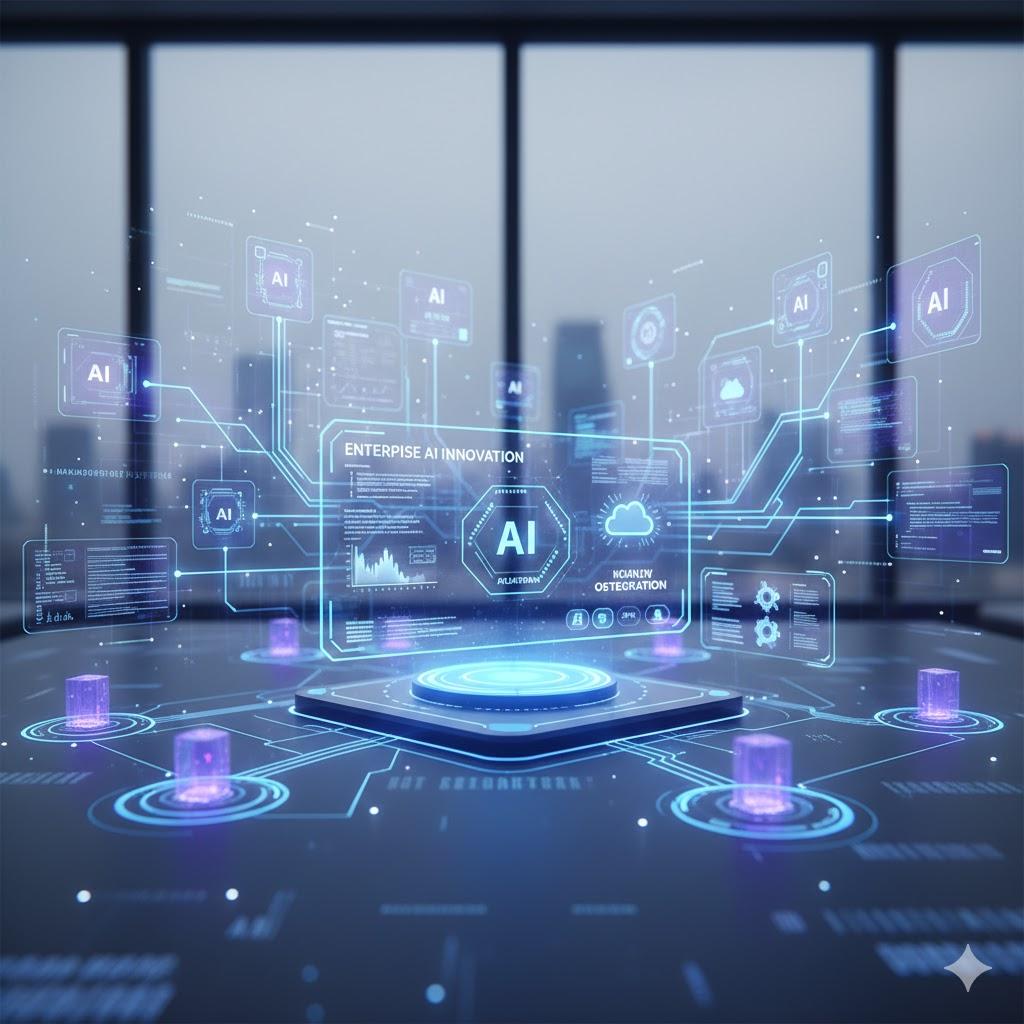
Agentic AI systems—autonomous AI agents capable of independent decision-making—are rapidly transforming businesses and industries. From AI workflow automation to intelligent customer support, agentic AI can observe, plan, and act without constant human input. Yet, many AI agents operate in isolation. Without AI interoperability, these systems cannot communicate or share insights, limiting AI scalability and the full potential of AI ecosystems.
Why interoperability is crucial for scaling agentic AI, and how businesses can leverage multi-agent AI platforms to improve efficiency, drive innovation, and accelerate growth. We also discuss tools and platforms for AI agent development.
What is Agentic AI?
Agentic AI refers to autonomous AI agents that can make decisions, execute tasks, and continuously learn from their environment. Unlike traditional AI systems, which are often single-task oriented, agentic AI can adapt and solve complex problems across multiple domains.
Key features of agentic AI include:
-
Independent decision-making: AI agents analyze data, predict outcomes, and select actions autonomously.
-
AI workflow automation: They handle repetitive or multi-step processes without human intervention.
-
Continuous learning and adaptation: Intelligent agents improve over time by analyzing results and adjusting behavior.
Real-world examples of agentic AI adoption:
-
OpenAI Codex agents automating coding, testing, and deployment.
-
AI agents managing enterprise AI workflows and cross-department communication.
-
Autonomous commerce agents handling transactions and customer interactions in real-time.
Even advanced AI agents cannot reach their full potential if they lack AI interoperability within broader AI ecosystems, or the right AI agent development platforms to build and deploy them effectively.
The Problem with Silos
Many AI agents are deployed in isolated systems, which creates several challenges for enterprise AI adoption:
-
Duplicate tasks: Multiple AI agents may unknowingly perform overlapping work.
-
Inefficient processes: Without coordination, decision-making slows, and productivity drops.
-
Fragmented data and insights: Data collected by one AI agent may not be shared with others, limiting AI-driven business analytics.
Example: A financial company using AI agents for fraud detection may have one AI agent monitoring transactions and another generating reports. Without AI integration and AI interoperability, these AI agents cannot collaborate efficiently, slowing fraud detection and reducing overall effectiveness.
This results in limited AI scalability, delayed ROI, and missed opportunities for multi-agent AI collaboration, even when using a top AI agent builder for deployment.
Why Interoperability Matters
AI interoperability enables agentic AI systems to connect, communicate, and work together, forming a cohesive AI ecosystem.
Key benefits include:
-
Scalability: Interoperable AI agents can expand across departments, platforms, or even different organizations seamlessly.
-
Efficiency: Coordinated AI agents eliminate redundancy and accelerate decision-making across workflows.
-
Innovation: Multi-agent AI collaboration allows complex problem-solving that isolated AI agents cannot achieve.
-
Enhanced data utilization: Shared insights improve predictive analytics, machine learning, and AI-driven business decision-making.
Industry trends:
-
Adoption of multi-agent AI platforms is increasing in enterprises.
-
AI interoperability standards are emerging for secure and seamless AI integration.
-
AI ecosystems, where multiple intelligent agents collaborate, are becoming central to enterprise AI strategy.
How Interoperability Unlocks Scale
Practical AI interoperability relies on APIs, standardized protocols, and cloud-based AI platforms. By allowing AI agents to share data and coordinate tasks, organizations can scale agentic AI quickly and efficiently.
Examples of scalable AI ecosystems:
-
Samsung Galaxy AI ecosystem: AI agents integrate across devices, apps, and third-party AI platforms for seamless user experiences.
-
OpenAI Codex agents: Coordinate software development tasks, from coding to testing and deployment.
-
Enterprise workflow AI: Multi-agent AI collaborates across departments, automating complex processes such as supply chains and customer engagement.
- Impact on businesses: Faster deployment, more automation, and broader adoption of AI systems, leading to measurable gains in AI-driven productivity and efficiency.
Challenges and Considerations
While AI interoperability offers major advantages, it also comes with challenges:
-
Technical complexity: Differences in data formats, system integration issues, and latency can hinder seamless AI collaboration.
-
Security risks: Shared data can create vulnerabilities and compliance concerns.
-
Ethical and governance challenges: Autonomous AI agents making independent decisions require strong oversight and accountability frameworks.
Enterprises are tackling these issues with governance policies, security protocols, and interoperability frameworks, ensuring AI ecosystems remain safe, efficient, and reliable.
Future Outlook
Over the next 3–5 years, we can expect:
-
Widespread adoption of interoperable agentic AI across industries.
-
Multi-agent AI collaboration tackling tasks previously impossible for single AI agents.
-
Clear regulatory frameworks ensuring safe, ethical AI adoption.
Companies embracing AI interoperability today will gain a competitive edge, improving efficiency, innovation, and AI scalability.
Conclusion
AI interoperability is essential for scaling agentic AI. By connecting AI agents and enabling them to collaborate, businesses unlock efficiency, innovation, and growth.
Forward-looking statement:
“Organizations that adopt interoperable AI ecosystems today, and leverage tools like RubikChat for AI agent development, will fully harness the power of agentic AI tomorrow.”

 English
 Arabic
 French
 Spanish
 Deutsch
 Turkish
 Dutch
Dutch
 Italiano
 Russian
 Romaian
 Portuguese (Brazil)
 Greek
Greek