


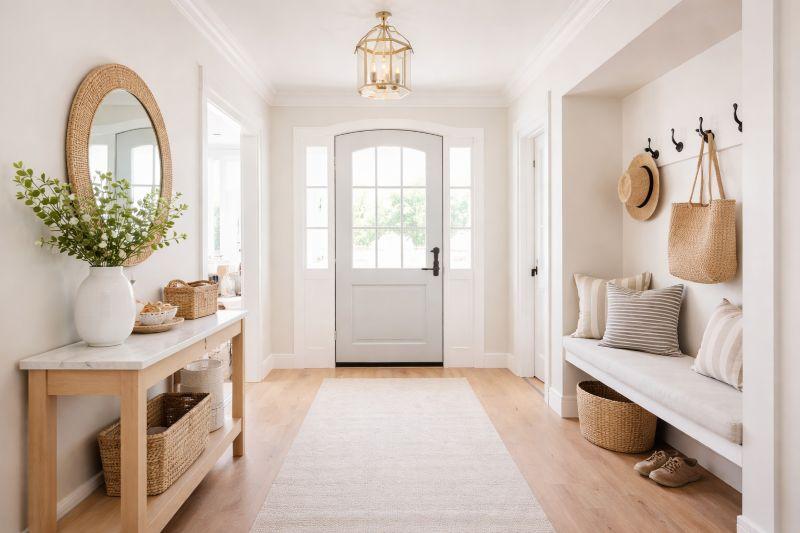
The foyer is the first impression of your home. It’s where guests pause, glance around, and form an opinion before stepping any further inside. But when that space is small, narrow, or poorly lit, it can feel cramped and uninviting.
The good news? Paint can completely transform a tight entryway without knocking down walls. With the right colors, finishes, and techniques, even the smallest foyer can feel open, bright, and welcoming.
At Next Step Painting, a trusted house painter Bellingham homeowners rely on, we’ve seen firsthand how thoughtful paint choices can reshape a space. This guide walks you through proven strategies to make your small foyer feel larger—without sacrificing style.
Why Paint Has Such a Big Impact in a Small Foyer
Unlike furniture or structural changes, paint affects every surface at once. In a compact entryway, walls are close together and often lack natural light. That means color choices either enhance the sense of space or emphasize its limitations.
Paint influences:
-
Light reflection
-
Visual depth
-
Ceiling height perception
-
Flow between rooms
-
Overall mood
Because foyers are transitional spaces, their paint should create openness while connecting seamlessly to adjacent rooms.
Step 1: Choose Light-Reflective Colors
Light colors reflect more natural and artificial light, making walls appear to recede. That visual trick makes the room feel larger.
Best Color Families for Small Foyers
-
Soft whites (warm or cool, depending on flooring)
-
Light greige
-
Pale taupe
-
Creamy neutrals
-
Subtle pastel undertones
Avoid stark, clinical whites unless balanced with warm elements. Instead, choose layered neutrals that feel soft and inviting.
A reliable house painter Bellingham professionals recommend testing paint swatches in different lighting throughout the day. Foyers often lack windows, so artificial lighting plays a significant role in how color appears.
Step 2: Paint the Ceiling Strategically
Ceiling color is often overlooked, but it dramatically influences perceived height.
Option 1: Paint the Ceiling a Lighter Shade
A lighter ceiling creates vertical lift. This works especially well in older homes with lower ceilings.
Option 2: Paint Walls and Ceiling the Same Color
In very small foyers, eliminating contrast between walls and ceiling removes visual boundaries. The eye flows upward without interruption, making the room feel taller and more cohesive.
This technique is often used by industry-leading interior designers in compact spaces because it creates a seamless envelope effect.
Step 3: Use Vertical Color Techniques
Vertical emphasis creates height. If your foyer feels narrow and low, vertical color can correct proportions.
Ideas That Work:
-
Subtle vertical striping in tonal shades
-
Painting the lower half slightly darker and upper half lighter
-
Tall accent paneling in a monochromatic palette
These are not bold stripes—think refined, barely noticeable shifts that elongate the room.
An experienced house painter Bellingham residents trust can execute these techniques with precision so the effect feels sophisticated, not overwhelming.
Step 4: Consider an Accent Wall Carefully
Accent walls can either open up a space or make it feel smaller.
When Accent Walls Work
-
The wall is at the far end of a narrow foyer.
-
The accent color adds depth without being dark and heavy.
-
The adjacent walls remain light.
Soft blue-grays, muted sage, or warm clay tones can add dimension without closing in the room.
When to Avoid Accent Walls
If your foyer is extremely tight with multiple doorways, too much contrast can fragment the space.
A results-driven approach focuses on balance rather than bold contrast.
Step 5: Choose the Right Finish
Paint sheen impacts how light interacts with walls.
Recommended Finishes for Small Foyers:
-
Satin: Slightly reflective, durable, easy to clean.
-
Eggshell: Soft glow, forgiving on imperfections.
-
Semi-gloss for trim: Enhances light and creates crisp lines.
Avoid flat paint in tight, dim entryways. It absorbs light and can make the space feel dull.
Professional painters understand how high-performance finishes can enhance brightness without creating glare.
Step 6: Coordinate Trim and Doors
Contrast between trim and wall color shapes the room visually.
Two Effective Approaches:
-
Match trim to wall color for a seamless look.
-
Use slightly brighter white trim to frame the space cleanly.
Painting the front door interior a complementary color can also draw attention away from tight walls and toward a focal point.
Next Step Painting has helped many homeowners use innovative color strategies to elevate their entryways without expensive renovations.
Real-World Example: A Bellingham Home Transformation
A homeowner in Bellingham contacted Next Step Painting with a common concern: their narrow, dimly lit foyer felt like a hallway rather than an inviting entrance.
The walls were painted a dark beige, and the ceiling was standard white. The lack of contrast and limited lighting made the space feel boxed in.
The Solution:
-
Repainted walls in a warm light greige.
-
Matched ceiling color to walls for visual continuity.
-
Updated trim with a crisp, slightly brighter white.
-
Switched to satin finish for improved light reflection.
The Result:
The foyer immediately felt taller and more open. Even without changing lighting fixtures or flooring, the space gained noticeable brightness and flow.
This affordable upgrade dramatically improved the home’s first impression.
That’s the power of strategic paint selection guided by a well-experienced house painter Bellingham homeowners can depend on.
Step 7: Use Color to Create Flow Into Adjacent Rooms
Small foyers often open directly into living rooms or hallways. Abrupt color changes can make the entry feel boxed in.
To create spaciousness:
-
Choose a foyer color that transitions naturally into surrounding areas.
-
Use varying shades of the same color family.
-
Avoid sharp contrasts at door frames.
Scalable design principles focus on continuity. The smoother the transition, the larger the space feels.
Step 8: Brighten With Strategic Contrast
While light colors are essential, too much uniform brightness can feel flat.
To add dimension:
-
Paint the inside of a coat closet a soft contrasting color.
-
Use slightly darker flooring tones to anchor the space.
-
Add subtle wall texture in the same color family.
This approach creates depth without shrinking the room.
Step 9: Don’t Forget Lighting and Paint Together
Paint alone can transform a foyer, but pairing it with improved lighting maximizes results.
Cool white bulbs can enhance crisp whites and grays.
Warm bulbs complement cream and beige tones.
A reliable painting contractor will consider lighting conditions before recommending final colors.
Why Hiring a Professional Matters
Painting a small foyer may seem simple, but the space’s tight dimensions make flaws more noticeable.
Professional painters ensure:
-
Clean lines at trim and ceiling
-
Even color application
-
Proper surface preparation
-
High-performance durability
Next Step Painting is known for its proven process, attention to detail, and top-rated service in Bellingham. Their team understands how to tailor color solutions for each home’s architecture and lighting.
Choosing an affordable yet trusted house painter Bellingham homeowners recommend ensures your entryway upgrade delivers long-lasting impact.
Common Mistakes to Avoid
Even the best intentions can backfire without careful planning.
Avoid:
-
Going too dark in a windowless foyer
-
Using flat paint in high-traffic areas
-
Ignoring ceiling color
-
Choosing trendy shades that clash with adjacent rooms
-
Skipping primer when covering darker colors
A well-planned paint strategy prevents costly corrections later.
Frequently Asked Questions
What is the best paint color for a small, dark foyer?
Light greige, soft white, or pale taupe typically work best. These shades reflect light and create openness without feeling cold.
Should I paint my foyer the same color as my hallway?
If the foyer is small, using the same or a closely related color improves visual flow and makes the area feel larger.
Is it worth hiring a professional for a small space?
Yes. Small spaces highlight imperfections. Professional application ensures smooth finishes and crisp lines.
Can darker colors ever work in a small foyer?
Yes, but only strategically. A soft, muted darker accent can add depth if balanced with lighter surrounding walls.
Final Thoughts
A small foyer doesn’t have to feel tight or overlooked. With thoughtful color selection, the right finish, and seamless coordination with surrounding rooms, paint can completely reshape how the space feels.
Whether your entryway lacks light, height, or warmth, a carefully executed paint plan delivers measurable transformation.
Next Step Painting brings innovative techniques, reliable craftsmanship, and a results-driven approach to every project. If you’re ready to enhance your home’s first impression, partnering with an experienced house painter Bellingham homeowners trust is the smartest next step.

 Arabic
 French
 Spanish
 Portuguese
 Deutsch
 Turkish
 Dutch
Dutch
 Italiano
 Russian
 Romaian
 Portuguese (Brazil)
 Greek
Greek