


The global solar updraft tower market was valued at US$ 223.6 Mn in 2024 and is projected to grow at a robust CAGR of 16.6% from 2025 to 2035, reaching approximately US$ 1,211.0 Mn by the end of 2035.
Solar updraft towers (SUTs) represent an innovative renewable energy technology that converts solar-heated air and natural convection into electricity. While still in its early commercialization phase compared to solar PV and concentrated solar power (CSP), the technology is gaining renewed attention due to its potential for stable, utility-scale clean power generation in high-irradiance regions.
Market Overview
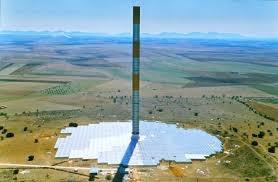
A solar updraft tower consists of three primary components:
- Solar air collector – A vast, ground-level transparent structure that traps solar radiation and heats the air underneath.
- Chimney/Tower – A tall vertical structure through which heated air rises.
- Turbine and generator system – Converts the airflow into electricity.
As warm air rises naturally through the chimney, turbines rotate to generate power. The system offers relatively low maintenance requirements and long operational lifespans, making it attractive for large-scale renewable projects, especially in arid and desert regions.
Key Market Drivers
Rising Global Push for Renewable Energy Diversification
As countries pursue decarbonization and net-zero commitments, policymakers are increasingly exploring renewable technologies beyond traditional solar PV and wind. Variability in wind and PV output has created grid stability concerns, especially in regions with limited energy storage or weak transmission infrastructure.
Solar updraft towers provide quasi-continuous power generation due to ground heat retention, allowing electricity production even after sunset. This characteristic enhances grid reliability and complements intermittent renewable sources.
Regions such as Asia Pacific, the Middle East, North Africa, Australia, and Latin America are actively evaluating SUT technology as part of diversified renewable energy portfolios.
Get Sample PDF Copy Now: https://www.transparencymarketresearch.com/sample/sample.php?flag=S&rep_id=85458
Strategic Investments and Technological Advancements
The commercialization pathway of solar updraft towers is being strengthened through pilot demonstrations, research collaborations, and engineering advancements.
A notable early prototype was developed in Manzanares, Spain in the 1980s, demonstrating the technical feasibility of the concept. Today, companies such as EnviroMission Limited are advancing large-scale SUT projects and securing funding partnerships to move projects toward development stages.
Technological improvements in:
- Lightweight construction materials
- Advanced heat-absorbing collector surfaces
- Optimized turbine design
- Improved thermal-flow modeling
are helping reduce structural costs and performance risks, thereby improving investor confidence.
Government-backed R&D grants, green bonds, climate funds, and renewable portfolio incentives are further supporting commercialization.
Solar Air Collector: Dominant Component Segment
The solar air collector represents the largest investment portion of a solar updraft tower project, often accounting for more than half of total capital expenditure.
Large-scale collectors require durable, lightweight, and cost-effective materials to withstand desert climates while maintaining high thermal efficiency. Innovations in transparent membranes and heat-retaining polymers are improving collector performance and reducing maintenance requirements.
As project scale increases in arid regions, demand for high-performance collector systems is expected to drive segment growth significantly through 2035.
Regional Insights
Asia Pacific – Leading Region (42.3% Market Share)
Asia Pacific leads the global market, accounting for an estimated 42.3% share. Countries such as Australia, India, and western China offer abundant high-irradiance land and rising electricity demand, supported by renewable diversification policies.
The region is actively pursuing R&D initiatives, pilot programs, and alternative financing mechanisms to accelerate SUT adoption.
Middle East & Africa – Strong Emerging Market
The Middle East and North Africa (MENA) region benefits from vast desert landscapes and high solar irradiance. Countries such as Saudi Arabia and the UAE are integrating renewable diversification into long-term energy transition plans. However, prioritization of PV and CSP technologies has moderated the pace of SUT deployment.
Competitive Landscape
The solar updraft tower market remains highly specialized, with limited but focused participants advancing commercialization. Key companies include:
- EnviroMission Limited
- sbp
- Ferrovial
- Cape Horn Engineering
Collaboration with EPC contractors, utilities, research institutions, and investors is critical to advancing prototype validation, securing financing, and scaling commercial projects.
Recent updates from EnviroMission highlight technical modeling advancements and funding progress aimed at reducing project risk and accelerating commercialization timelines.
Future Outlook
The solar updraft tower market is positioned as a long-term strategic renewable energy solution, particularly for sun-rich, land-abundant regions. Although still in its early commercialization stage, rising climate commitments, grid stability concerns, and diversification strategies are expected to accelerate adoption over the coming decade.
As financing models mature and large-scale pilot projects demonstrate technical viability, solar updraft towers could become a niche yet impactful contributor to the global clean energy transition by 2035.

 Arabic
 French
 Spanish
 Portuguese
 Deutsch
 Turkish
 Dutch
Dutch
 Italiano
 Russian
 Romaian
 Portuguese (Brazil)
 Greek
Greek