


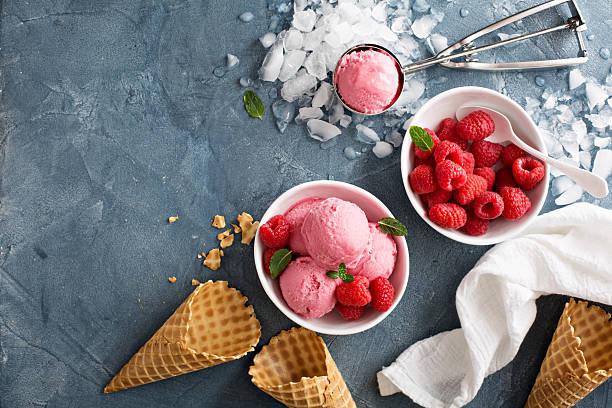
Manufacturing excellence in frozen desserts hinges on achieving perfect texture consistency that consumers expect with every scoop. Stabilizers play an indispensable role in this quality equation, preventing undesirable ice crystal growth and maintaining smooth creaminess throughout product shelf life. The industry has witnessed a decisive shift toward naturally derived stabilizing agents as manufacturers respond to consumer clean label preferences.
Guar gum, carrageenan, and locust bean gum have emerged as preferred natural stabilizers, each offering distinct functional benefits. These hydrocolloids work synergistically to control water migration, prevent wheying-off, and ensure optimal melt-down characteristics. Formulators carefully balance these components to achieve desired texture profiles while minimizing ingredient declaration complexity. Regional preferences influence specific stabilizer selections based on availability and traditional usage patterns.
The effectiveness of natural stabilizers depends heavily on proper hydration, dispersion techniques, and processing parameters. Modern manufacturing facilities employ sophisticated mixing systems that ensure uniform distribution without creating undesirable clumping. Temperature control during aging phases allows stabilizer networks to develop fully, maximizing their functional performance in finished products.
Pectin has gained prominence as a multifunctional ingredient offering both stabilization and potential health benefits. Its ability to form gels at specific pH levels makes it particularly valuable in fruit-based varieties and low-fat formulations. Additionally, pectin's prebiotic properties align perfectly with growing consumer interest in functional foods that support digestive wellness.
Artificial intelligence revolutionizes stabilizer selection and dosage optimization through advanced modeling capabilities. Machine learning algorithms predict texture outcomes based on ingredient interactions, processing conditions, and storage scenarios. This technology reduces trial-and-error experimentation and accelerates new product launches considerably.
Tapioca starch represents an increasingly popular stabilizer alternative, particularly in organic and allergen-free formulations. Its clean taste, clear labeling advantages, and excellent freeze-thaw stability make it attractive across diverse product categories. Modified versions offer enhanced performance characteristics while maintaining natural ingredient status under regulatory frameworks.
FAQ 1: Why are natural stabilizers preferred over synthetic options? Consumers increasingly demand recognizable ingredients on product labels, and natural stabilizers align with clean label trends while delivering necessary functional properties.
FAQ 2: Can stabilizers improve nutritional profiles? Certain stabilizers like pectin and inulin offer prebiotic benefits, enhancing nutritional value beyond their primary textural functions.

 Arabic
 French
 Spanish
 Portuguese
 Deutsch
 Turkish
 Dutch
Dutch
 Italiano
 Russian
 Romaian
 Portuguese (Brazil)
 Greek
Greek