


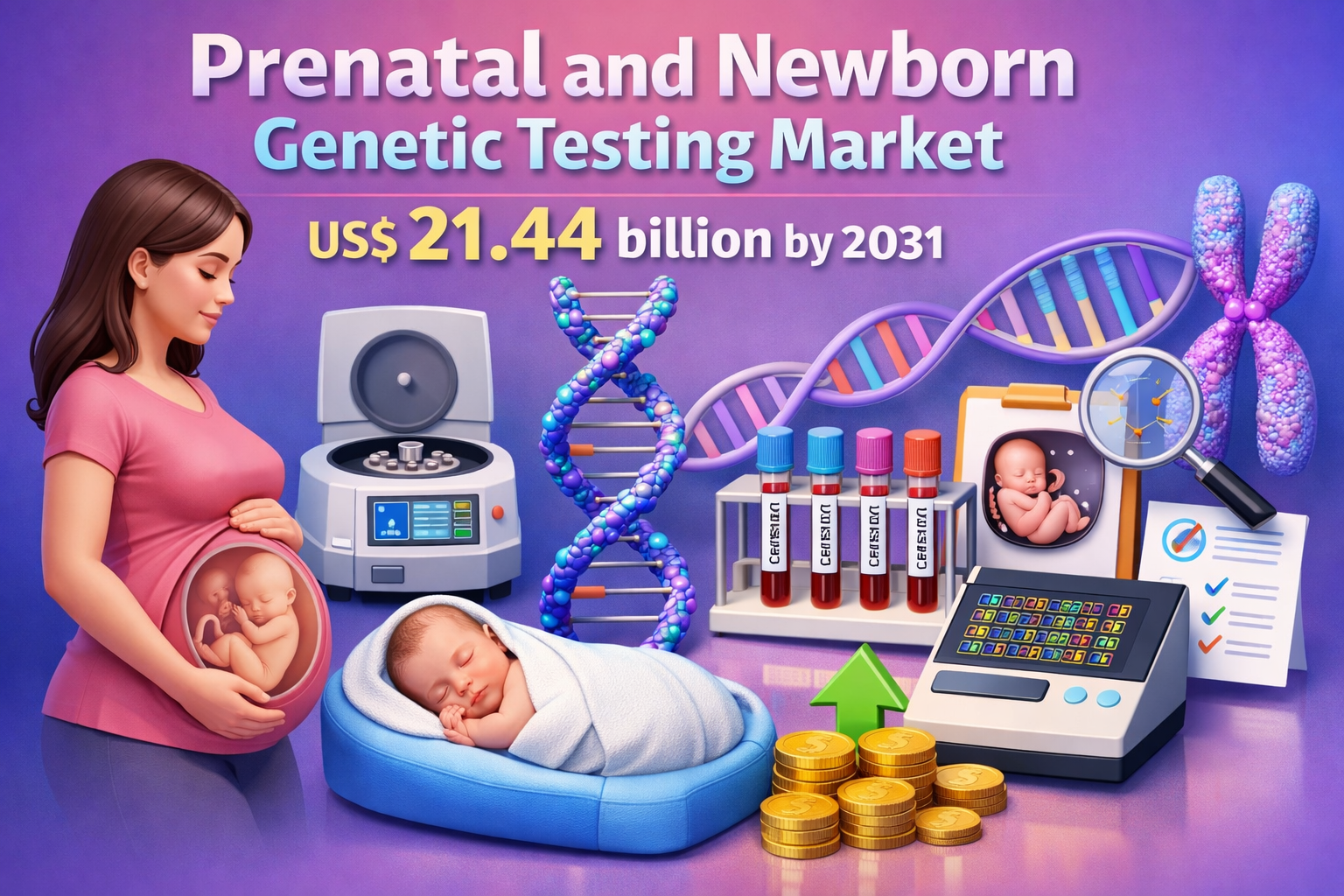
Prenatal and newborn genetic testing involves screening and diagnostic procedures conducted during pregnancy or shortly after birth to detect inherited disorders and chromosomal abnormalities. These tests enable early medical intervention, informed parental decision making, and improved long term health outcomes. As healthcare systems shift toward preventive and personalized care, genetic testing is becoming an integral part of maternal and neonatal health programs.
Market Overview
The prenatal and newborn genetic testing market was valued at US$ 5.72 billion in 2021 and is projected to reach US$ 21.44 billion by 2031, registering a CAGR of 14.5% during 2023 to 2031. Rising awareness, technological innovation, and increasing emphasis on early disease detection are driving substantial market expansion worldwide.
The increasing burden of genetic diseases among infants is a major factor influencing demand. Down syndrome remains one of the most common chromosomal disorders, affecting approximately one in every 700 babies in the United States, with nearly 6,000 cases reported annually according to the Centers for Disease Control and Prevention. The World Health Organization estimates that around 240,000 newborns die globally each year within 28 days of birth due to congenital disorders, with an additional 170,000 deaths occurring between one month and five years of age. These statistics highlight the urgent need for early detection and intervention.
Driving Factors
- Rising prevalence of genetic and congenital disorders in infants
- Increasing maternal age leading to higher pregnancy risks
- Growing awareness regarding early disease detection
- Expanding public and private investments in genomic research
- Supportive government mandates for newborn screening
Governments across the globe are recognizing the importance of genetic testing in reducing infant mortality and long-term disability. Programs such as the California Newborn Screening Program ensure universal screening for serious but treatable disorders. In India, the UMMID initiative launched by the Department of Biotechnology promotes screening and management of inherited disorders. Such initiatives are strengthening testing infrastructure and encouraging wider adoption.
Prenatal and Newborn Genetic Testing Market Trends
- Integration of digital microfluidics in newborn screening
- Adoption of non invasive prenatal testing technologies
- Expansion of genomic sequencing and molecular diagnostics
- Growing collaboration between research institutes and diagnostic companies
- Increased focus on personalized and precision medicine
Download Sample PDF: https://www.theinsightpartners.com/sample/TIPBT00002550
Digital microfluidics is emerging as a transformative trend, enabling automated and high throughput newborn screening with improved efficiency. Additionally, advances in genomic sequencing are enhancing the detection of rare genetic variants and supporting tailored treatment strategies.
Prenatal and Newborn Genetic Testing Market Growth Opportunities
North America currently leads the market due to high awareness, strong regulatory mandates, and advanced healthcare systems. Birth defects affect one in every 33 babies born annually in the United States, reinforcing the importance of screening programs. Continuous launch of innovative non-invasive tests and integration of advanced diagnostic technologies are further boosting regional demand.
Asia Pacific is expected to register the highest growth rate over the forecast period. Increasing healthcare expenditure, rising birth rates in certain countries, and expanding access to diagnostic services are contributing to rapid adoption. Public health campaigns promoting early screening and partnerships between global diagnostic firms and local providers are also creating favorable growth conditions.
Emerging economies present untapped potential as healthcare infrastructure improves and awareness regarding genetic disorders rises. Expanding laboratory networks and digital health platforms are making genetic testing more accessible and affordable.
Key Players
- Abbott
- Quest Diagnostics Inc.
- Bio-Rad Laboratories, Inc.
- Illumina, Inc.
- F. Hoffmann La-Roche Ltd.
- Qiagen
- PerkinElmer, Inc.
- Ravgen
- Natera, Inc.
- Laboratory Corporation of America Holdings
These companies focus on expanding product portfolios, enhancing genomic capabilities, forming strategic alliances, and investing in research to strengthen their competitive positions.
Future Outlook
The prenatal and newborn genetic testing market is poised for robust expansion through 2031, driven by technological innovation, rising disease awareness, and supportive regulatory frameworks. Advances in genomic sequencing, digital screening platforms, and personalized medicine will continue to reshape testing paradigms. As governments intensify efforts to reduce infant mortality and improve maternal health, widespread integration of genetic testing into routine healthcare is expected. Growing demand in emerging markets and continuous research investments will further accelerate long term market growth.
FAQs
1. What is driving growth in the prenatal and newborn genetic testing market?
Growth is driven by rising genetic disease prevalence, increasing maternal age, government screening mandates, and technological advancements in genomic diagnostics.
2. Why is newborn screening important?
Newborn screening enables early detection of treatable genetic disorders, reducing infant mortality and preventing long term complications.
3. Which region is expected to grow fastest?
Asia Pacific is expected to witness the highest growth rate due to expanding healthcare infrastructure, rising awareness, and increasing investments in genetic testing programs.
Related Report
Virus-Like Particles Market Size, Trends & Growth by 2034

 Arabic
 French
 Spanish
 Portuguese
 Deutsch
 Turkish
 Dutch
Dutch
 Italiano
 Russian
 Romaian
 Portuguese (Brazil)
 Greek
Greek