


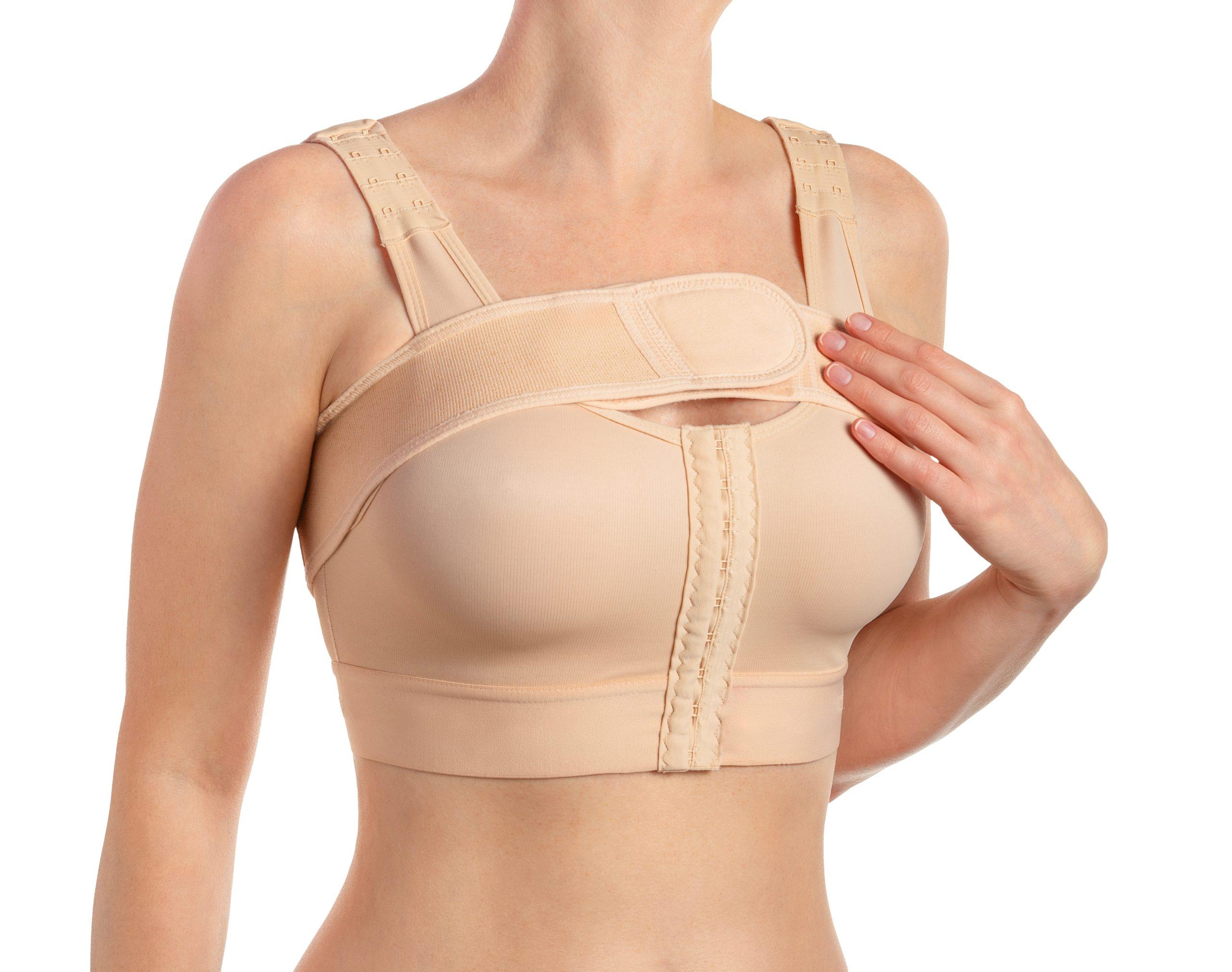
Breast lift surgery and breast augmentation are two distinct procedures designed to enhance the appearance of the breasts, but they address different concerns and achieve different outcomes. Understanding the differences between these procedures is essential for individuals considering breast enhancement, as choosing the right surgery depends on one’s anatomy, aesthetic goals, and expectations. Breast lift surgery in Riyadh is a popular option for women looking to restore firmness and achieve a more youthful breast contour.
Breast lift surgery, medically known as mastopexy, is primarily aimed at correcting sagging or drooping breasts, a condition called ptosis. Over time, factors such as aging, gravity, pregnancy, breastfeeding, weight fluctuations, and genetics can cause the breast tissue to lose elasticity, resulting in a downward shift of the breast mound and nipples. A breast lift repositions the breast tissue and nipple to a higher, more youthful position, reshapes the breast, and often tightens the surrounding skin to restore firmness. Importantly, a breast lift focuses on shape and position rather than volume. While it can sometimes involve minor volume adjustments by removing or reshaping tissue, it does not significantly increase breast size. Breast lift techniques vary depending on the degree of sagging, including the crescent lift for minimal sagging, the peri-areolar or “donut” lift for mild drooping, the vertical or “lollipop” lift for moderate sagging, and the inverted-T or “anchor” lift for severe ptosis. The choice of technique is determined by factors such as nipple position, breast tissue quality, and the extent of sagging.
On the other hand, breast augmentation is a procedure that primarily increases breast volume and enhances overall size. It is often sought by women who feel their breasts are naturally small, have lost volume after pregnancy or weight loss, or desire improved symmetry. Breast augmentation typically involves inserting implants made of silicone or saline behind the breast tissue or chest muscles. Unlike a breast lift, augmentation does not correct sagging. In some cases, increasing the volume with implants can slightly lift the breasts due to the added fullness, but if significant drooping exists, the results may be unsatisfactory without a lift. Therefore, breast augmentation is ideal for individuals who are happy with the position and shape of their breasts but want more size or projection.
Many patients find that combining a breast lift with augmentation provides the most comprehensive results, particularly for women who experience both sagging and loss of volume. This combined procedure allows for lifting the breast to a youthful position while simultaneously restoring or enhancing fullness. It can improve cleavage, breast contour, and overall symmetry, offering a more complete aesthetic transformation. The decision to combine procedures depends on individual anatomy, the degree of ptosis, desired breast size, and surgeon recommendations. In some cases, performing the lift first followed by augmentation or vice versa may be necessary for optimal results.
The surgical approach, recovery, and scarring differ between the two procedures. A breast lift requires removing excess skin, repositioning tissue, and sometimes resizing the areola, resulting in incisions that vary in shape depending on the lift technique. Common patterns include circular, vertical, or anchor-shaped incisions. Scarring from a breast lift is generally more extensive than augmentation but tends to fade over time with proper care. Recovery may involve swelling, bruising, and temporary discomfort for several weeks, with most patients returning to normal activities within two to three weeks. Breast augmentation typically involves incisions under the breast fold, around the areola, or in the armpit. Scarring is usually minimal and strategically placed, and recovery involves similar swelling and discomfort. The presence of implants may require additional monitoring in the long term.
Choosing between a breast lift and augmentation depends on the patient’s goals. Women who are primarily concerned with sagging, drooping nipples, or loss of firmness may benefit most from a lift. Women seeking to increase volume without significant sagging are better suited for augmentation. In cases where both concerns are present, a combined approach can provide the most natural and aesthetically pleasing results. A thorough consultation with a board-certified plastic surgeon is crucial to evaluate breast anatomy, discuss expectations, and develop a personalized surgical plan. Surgeons often assess factors such as skin elasticity, breast tissue density, nipple position, chest wall shape, and overall body proportions to recommend the most suitable procedure.

 English
 Arabic
 French
 Spanish
 Portuguese
 Deutsch
 Turkish
 Italiano
 Russian
 Romaian
 Portuguese (Brazil)
 Greek
Greek