


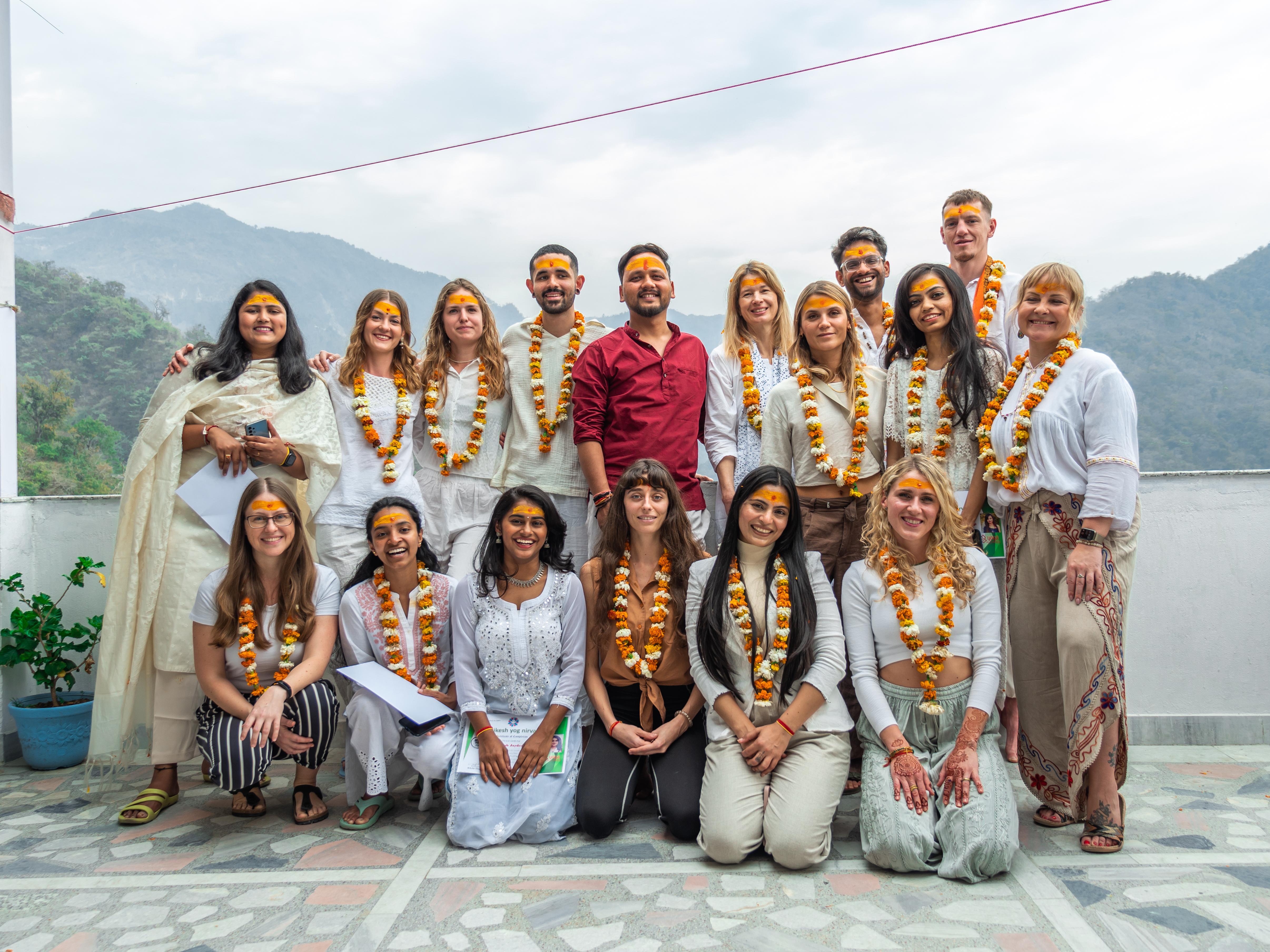
The world of yoga education is changing—and changing fast. What once required months of international travel and full-time immersion has now evolved into a flexible, globally accessible experience. At the heart of this shift is the growing popularity of the 300 Hour Yoga Teacher Training in Rishikesh, especially in its hybrid format. As a yoga retreat and training centre rooted in the spiritual soil of Rishikesh, India, we’ve witnessed this transformation from the front row.
Hybrid yoga teacher training programs are no longer a temporary solution; they are becoming the preferred pathway for serious practitioners who want depth, authenticity, and adaptability all at once.
Why the 300 Hour Yoga Teacher Training Matters More Than Ever
For yoga teachers who have already completed their foundational 200-hour certification, the 300 Hour Yoga Teacher Training is a powerful next step. This level of training goes far beyond postures. It dives deep into advanced asana alignment, yogic philosophy, pranayama, meditation, anatomy, teaching methodology, and personal sadhana.
What we see globally is a new generation of teachers who are not just interested in “teaching yoga,” but in living it. They want confidence, clarity, and credibility. They want to understand why a practice works, not just how to cue it. And they want this knowledge to fit into real life—which is where hybrid learning steps in.
What Exactly Is a Hybrid Yoga Teacher Training Program?
A hybrid 300 Hour Yoga Teacher Training blends the best of two worlds:
-
Online learning modules for theory, philosophy, anatomy, and self-practice
-
In-person immersion for hands-on adjustments, teaching practice, rituals, and community connection
Instead of leaving your job, family, or responsibilities for months, you can now study in phases. Many students complete the theoretical portion online from their home country and then travel to India—often to Rishikesh—for an intensive residential module.
This structure allows learning to unfold gradually, with time for reflection, integration, and personal growth.
Why Hybrid Yoga Teacher Training Is Rising Worldwide
1. Flexibility Without Compromising Depth
One of the biggest gaps we noticed in traditional programs was burnout. Students were absorbing massive amounts of information in a short time. Hybrid programs solve this by pacing the learning journey. You study, practice, revisit, and embody the teachings before moving forward.
2. Global Accessibility
Not everyone can travel to India for 8–12 continuous weeks. Hybrid 300 Hour Yoga Teacher Training programs open doors for practitioners from Europe, North America, Australia, and beyond—without diluting the authenticity of traditional yoga education.
3. Deeper Integration of Learning
When students learn philosophy or anatomy online and then experience it physically during in-person training, the knowledge sticks. We’ve seen stronger teaching confidence and more grounded instructors emerge from hybrid formats.
4. Authentic Roots Still Matter
Despite the online component, students still crave real connection—to teachers, to lineage, and to sacred spaces. That’s why Rishikesh remains a global magnet for yoga education.
If you’re exploring a program rooted in tradition while offering modern flexibility, our 300 Hour Yoga Teacher Training in Rishikesh is designed with this balance in mind.
Rishikesh: The Spiritual Anchor of Hybrid Training
There’s a reason Rishikesh is called the Yoga Capital of the World. Practicing on the banks of the Ganges, chanting ancient mantras at sunrise, and learning from teachers who live yogic philosophy daily—these are experiences no screen can replace.
In a hybrid 300 Hour Yoga Teacher Training, the in-person module in Rishikesh becomes the heart of the journey. Students often describe it as a turning point—not just in their teaching, but in their lives.
At Rishikesh Yog Nirvana, we welcome students who arrive with months of preparation and curiosity. They come ready to refine their skills, ask deeper questions, and step into their role as advanced yoga teachers.
How Hybrid Programs Improve on Traditional Training Models
Through years of feedback and observation, we identified areas where traditional programs struggled—and hybrid models now excel:
-
More personalized learning pace
-
Better retention of complex subjects like anatomy and philosophy
-
Reduced physical and mental overwhelm
-
Greater confidence in teaching real classes
-
Stronger long-term connection with mentors
Instead of rushing transformation, hybrid training allows it to unfold naturally.
Who Should Choose a Hybrid 300 Hour Yoga Teacher Training?
This format is ideal if you:
-
Are already a certified 200-hour yoga teacher
-
Want advanced training without leaving your life behind
-
Value both traditional wisdom and modern learning tools
-
Plan to teach internationally or online
-
Seek long-term mentorship, not just a certificate
Hybrid programs are not “easier.” They are smarter. They require discipline, self-practice, and commitment—but reward you with lasting mastery.
The Future of Yoga Education Is Hybrid
Yoga has always evolved while staying rooted in timeless principles. The rise of hybrid 300 Hour Yoga Teacher Training programs is simply the next chapter in that evolution.
As teachers, we believe education should meet students where they are—geographically, emotionally, and spiritually—without losing its soul. Hybrid training does exactly that.
Rishikesh Yog Nirvana — where the journey of the 300 Hour Yoga Teacher Training becomes a living experience, not just a qualification.
Frequently Asked Questions About 300 Hour Yoga Teacher Training
1. Is a hybrid 300 Hour Yoga Teacher Training internationally recognized?
Yes, as long as the school is Yoga Alliance registered and follows proper curriculum standards, hybrid certifications are globally accepted.
2. How long does a hybrid 300 Hour Yoga Teacher Training take to complete?
Most programs range from 6 to 12 months, depending on how the online and in-person modules are structured.
3. Do I need to be an experienced teacher before joining?
You should have completed a 200-hour yoga teacher training. Teaching experience is helpful but not mandatory.
4. Is the in-person module in Rishikesh compulsory?
In authentic hybrid programs, yes. The in-person immersion ensures proper adjustments, teaching practice, and lineage-based learning.
5. Can I teach yoga professionally after completing the 300 hour training?
Absolutely. This training enhances your credibility, depth of knowledge, and teaching confidence.
6. What makes Rishikesh an ideal place for advanced yoga training?
Its spiritual environment, traditional teachers, sacred geography, and long-standing yogic lineage make Rishikesh unmatched.

 English
 Arabic
 French
 Spanish
 Portuguese
 Turkish
 Dutch
Dutch
 Italiano
 Russian
 Romaian
 Portuguese (Brazil)
 Greek
Greek