


Fallout 76 stands apart in the Fallout series by focusing on a world that is not only ruined, but actively changing through player involvement. Set in post-nuclear Appalachia, the game places players in a landscape filled with danger, mystery, and opportunity. Rather than presenting a fixed story of collapse, Fallout 76 explores what happens when survivors attempt to rebuild in the aftermath of catastrophe.
From the moment players leave Vault 76, the world feels quiet but uneasy. Nature has begun to reclaim the land, covering broken highways and abandoned towns with forests and wildlife. This contrast between beauty and destruction defines the atmosphere of the game. Every location carries traces of the past, told through scattered notes, recordings, and environmental details. Instead of forcing narrative exposition, the game allows players to discover these stories organically, making exploration feel purposeful and immersive.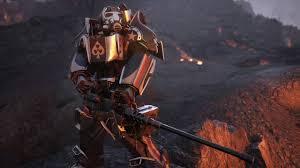
Survival mechanics play a key role in shaping how players interact with the world. Resources such as food, water, and crafting materials must be managed carefully, especially during the early stages. Combat encounters can be unforgiving, encouraging preparation and strategic thinking. This sense of vulnerability reinforces the idea that the wasteland is not simply a playground, but a place that demands respect and adaptation.
A defining feature of Fallout 76 is its shared-world design. Other players inhabit the same environment, creating a sense of scale and unpredictability. Encounters with fellow survivors can lead to cooperation during events, casual trade interactions, or silent moments of coexistence. These interactions feel natural rather than intrusive, preserving the lonely tone of the wasteland while adding subtle signs of life. The presence of others reminds players that survival is often easier when people work together.
Base building through the CAMP system adds depth to this experience. Players can construct personalized settlements that function as homes, workshops, or social hubs. These camps become reflections of individual playstyles, ranging from simple survival shelters to elaborate creative builds. Seeing player-made camps scattered across the map reinforces the idea that Appalachia is slowly being reshaped, one small effort at a time.
Progression in Fallout 76 emphasizes flexibility and long-term commitment. The perk card system allows players to adjust their abilities as challenges evolve, encouraging experimentation rather than rigid specialization. Weapons, armor, and crafting systems support a wide range of playstyles, allowing players to grow in ways that feel personal and earned. Advancement is gradual, making each improvement feel meaningful rather than automatic.
Ultimately, Fallout 76 is about more than surviving a nuclear wasteland. It is about persistence, cooperation, and the slow process of rebuilding. By blending exploration, survival, and player-driven change, Fallout 76 Items creates a living world where every action contributes to a shared story of recovery.

 Arabic
 French
 Spanish
 Portuguese
 Deutsch
 Turkish
 Dutch
Dutch
 Italiano
 Russian
 Romaian
 Portuguese (Brazil)
 Greek
Greek