


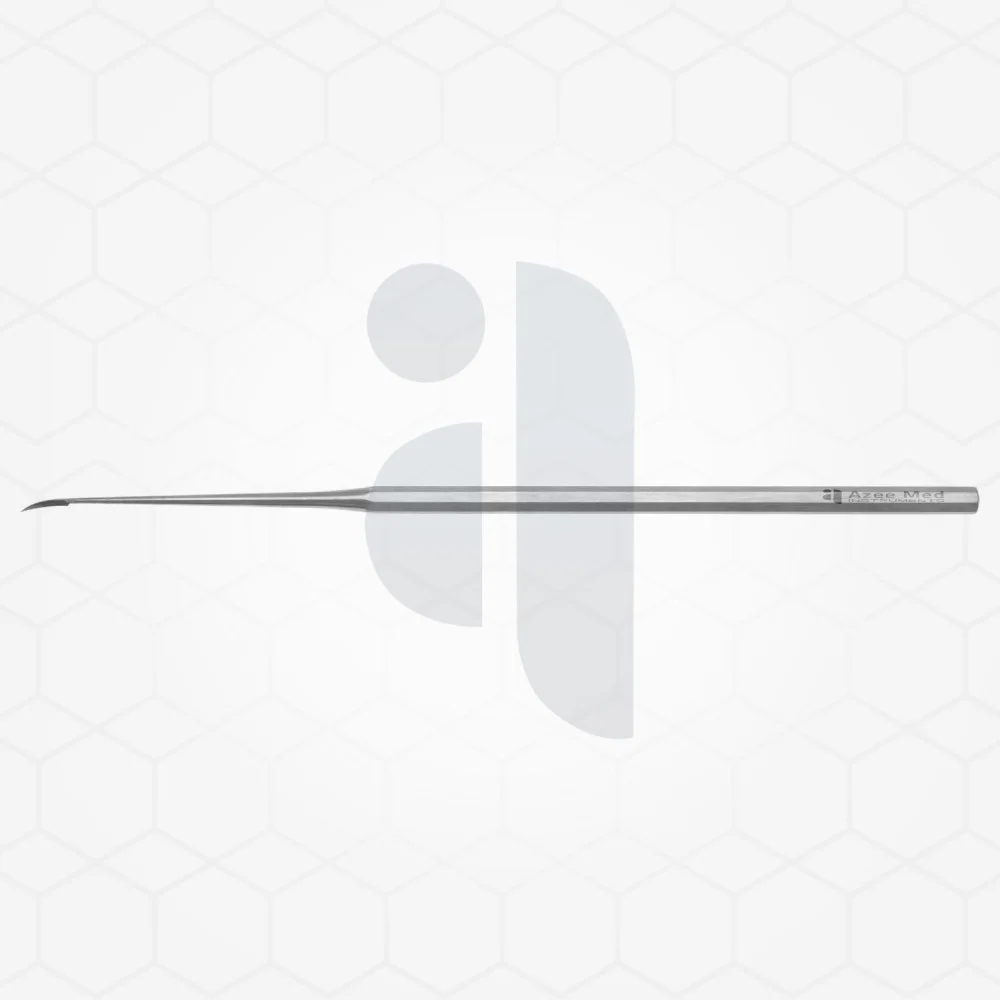
The world of surgical instruments is vast and intricate, with each tool designed for a specific and critical function. Among these essential devices is the sickle knife, a specialized instrument valued for its unique shape and cutting precision. Its curved, sickle-like blade allows surgeons to make controlled incisions in tight or delicate areas that would be difficult to access with a standard scalpel. Understanding the design and application of this tool reveals the incredible level of detail required in surgical procedures.
Azeemed Instruments is dedicated to this world of precision, providing high-quality surgical tools that meet and exceed the needs of medical professionals. Every instrument, from the most common forceps to a highly specialized sickle knife, is crafted with meticulous attention to detail. This commitment ensures that surgeons have reliable, effective tools in their hands, allowing them to perform procedures with confidence and achieve the best possible outcomes for their patients. The quality of a surgical instrument directly impacts the success of an operation, making superior craftsmanship non-negotiable.

The Role of the Sickle Knife in Ophthalmic Procedures
In ophthalmology, precision is paramount. The delicate structures of the eye demand instruments that offer unparalleled control and accuracy. The sickle knife is frequently used in various eye surgeries, including cataract removal and corneal procedures. Its sharp, curved tip is ideal for creating precise corneal incisions or dissecting ocular tissues with minimal trauma. The specific design enables surgeons to navigate the eye's curved surfaces effectively. Alongside other specialized tools like colibri forceps, which are used for grasping delicate tissues, the sickle knife forms a crucial part of the ophthalmic surgeon's toolkit, ensuring clean cuts and facilitating complex maneuvers within a very small space.
Beyond Ophthalmology: Other Surgical Applications
While its role in eye surgery is prominent, the utility of the sickle knife extends to other medical fields as well. In otolaryngology (ENT), it can be used for delicate procedures within the ear or nasal passages. Plastic and reconstructive surgeons may also employ it for fine dissection work where precision and minimal scarring are essential. The instrument’s design allows for versatility, making it a valuable asset in any procedure requiring careful and accurate tissue incision. The consistent performance of a well-made surgical knife is a testament to the advanced engineering and material science behind modern medical instruments.

 English
 Arabic
 French
 Portuguese
 Deutsch
 Turkish
 Dutch
Dutch
 Italiano
 Russian
 Romaian
 Portuguese (Brazil)
 Greek
Greek