


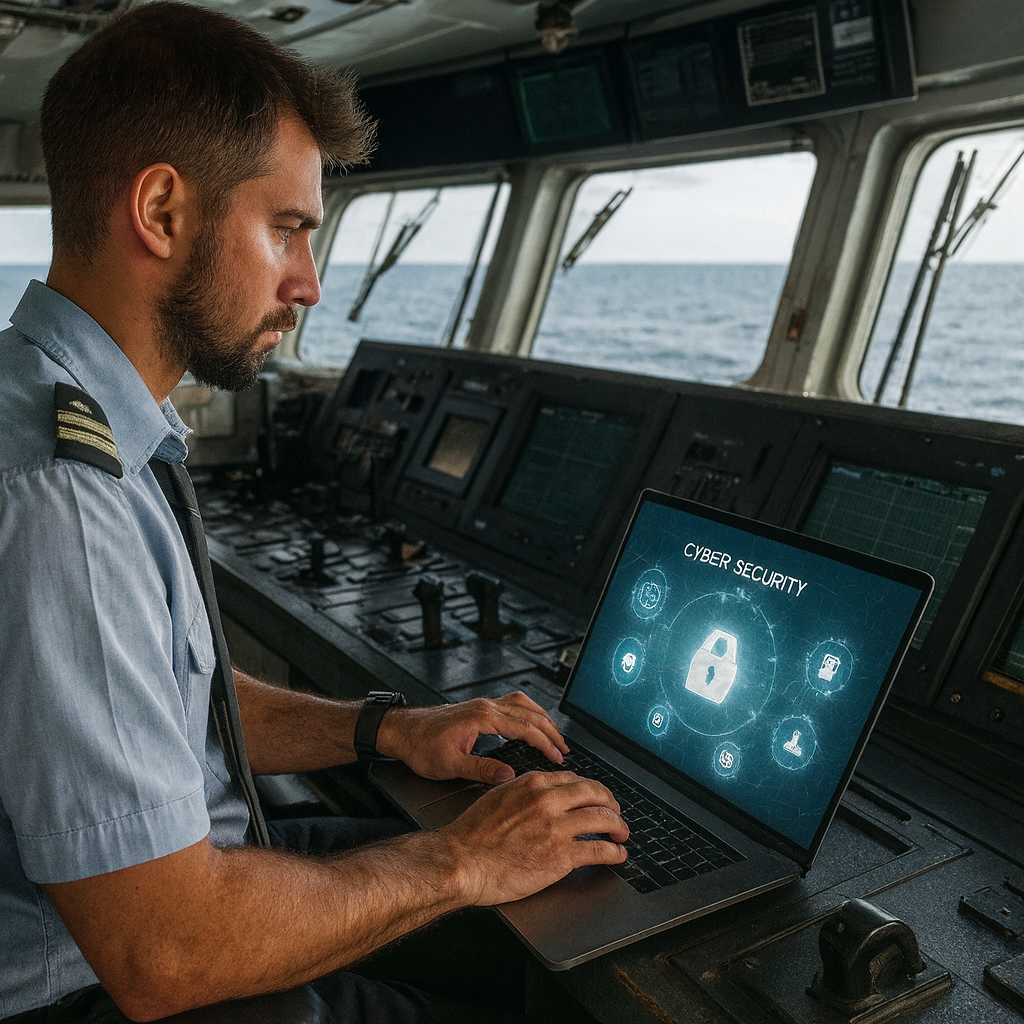
As the maritime industry becomes increasingly digital, cyber security has emerged as a critical concern for ships and seafarers worldwide. Modern vessels rely heavily on interconnected systems for navigation, communication, cargo management, and engine control. While these technologies improve efficiency and safety, they also introduce new risks. Cyber security training at sea is no longer optional. Every seafarer must understand the basics of cyber threats and how to respond to them effectively.
Why Cyber Security Matters at Sea?
Ships today operate as floating networks. Systems such as ECDIS, GPS, AIS, cargo management software, and satellite communications are all connected. A cyber attack on any one of these systems can disrupt operations, compromise safety, and cause serious financial and environmental damage.
Unlike shore based organisations, ships operate in isolated environments where technical support may not be immediately available. This makes prevention and crew awareness essential. Cyber security training ensures that seafarers understand their role in protecting onboard systems and data.
Common Cyber Threats Faced by Ships
Seafarers may not always realise how cyber attacks occur. Many incidents begin with simple actions such as opening a malicious email or using an infected USB device. Common cyber threats at sea include phishing emails, malware infections, ransomware, unauthorised access to ship systems, and GPS spoofing.
Phishing attacks often target crew members by pretending to be official messages from shipping companies or port authorities. Malware can spread through personal devices connected to ship networks. Without proper training, these threats can go unnoticed until serious damage has occurred.
The Role of the Crew in Cyber Security
Cyber security is not just the responsibility of the company or IT department. Every seafarer plays a part. Human error remains one of the leading causes of cyber incidents in the maritime sector. This is why cyber security training at sea focuses heavily on awareness and behaviour.
Crew members must understand safe digital practices, such as creating strong passwords, recognising suspicious emails, and following company cyber policies. Training helps seafarers understand how small actions can either protect or expose critical ship systems.
Key Topics Covered in Cyber Security Training
Effective cyber security training for seafarers covers several essential areas. These include understanding cyber risks, recognising common attack methods, and knowing how to respond to incidents. Training also explains the importance of software updates, access controls, and secure communication practices.
Another key area is the safe use of personal devices on board. Many ships allow crew members to use smartphones, laptops, and USB drives. Training teaches how these devices can introduce risks and how to use them safely without compromising ship systems.
Regulations and Industry Expectations
Cyber security is now recognised at an international level. The International Maritime Organization has included cyber risk management within the Safety Management System requirements. Shipping companies are expected to assess cyber risks and ensure crew members receive appropriate training.
For seafarers, this means cyber security awareness is becoming a standard professional requirement. Completing cyber security training can improve employability and demonstrate compliance with company and regulatory expectations.
Responding to a Cyber Incident at Sea
Knowing how to respond to a cyber incident is just as important as prevention. Cyber security training teaches seafarers what to do if they suspect a breach. This may include isolating affected systems, reporting the issue to the master or company, and avoiding further interaction with compromised equipment.
Quick and calm action can prevent a minor issue from becoming a major incident. Training ensures that crew members do not panic or take actions that could worsen the situation.
Benefits of Online Cyber Security Training for Seafarers
Online training has become a popular option for maritime cyber security education. It allows seafarers to complete courses at their own pace, regardless of location. Online programmes are especially useful for crew members with limited shore time or rotating schedules.
High quality online training provides practical examples, real world scenarios, and clear guidance tailored to shipboard environments. This makes the learning relevant and easy to apply during daily operations at sea.
Building a Cyber Aware Maritime Culture
Cyber security training is most effective when it is part of a wider safety culture. When seafarers understand that cyber risks can affect navigation, safety, and even lives, they are more likely to take training seriously. Regular refresher courses and onboard discussions help reinforce good habits.
A cyber aware crew is a strong line of defence against digital threats. Awareness, vigilance, and training work together to reduce risk.
Conclusion
Cyber security training at sea is essential in today’s digital maritime environment. From recognising phishing attempts to protecting critical ship systems, every seafarer must understand their role in cyber risk management. With increasing regulatory focus and real world cyber incidents affecting ships globally, training is no longer a luxury but a necessity.
Platforms such as Seafarer.online provide accessible and practical maritime training solutions, helping seafarers build essential cyber security knowledge and stay compliant with modern industry standards. Investing in cyber security training is an investment in safety, professionalism, and the future of maritime operations.

 English
 Arabic
 French
 Spanish
 Portuguese
 Deutsch
 Turkish
 Dutch
Dutch
 Russian
 Romaian
 Portuguese (Brazil)
 Greek
Greek