


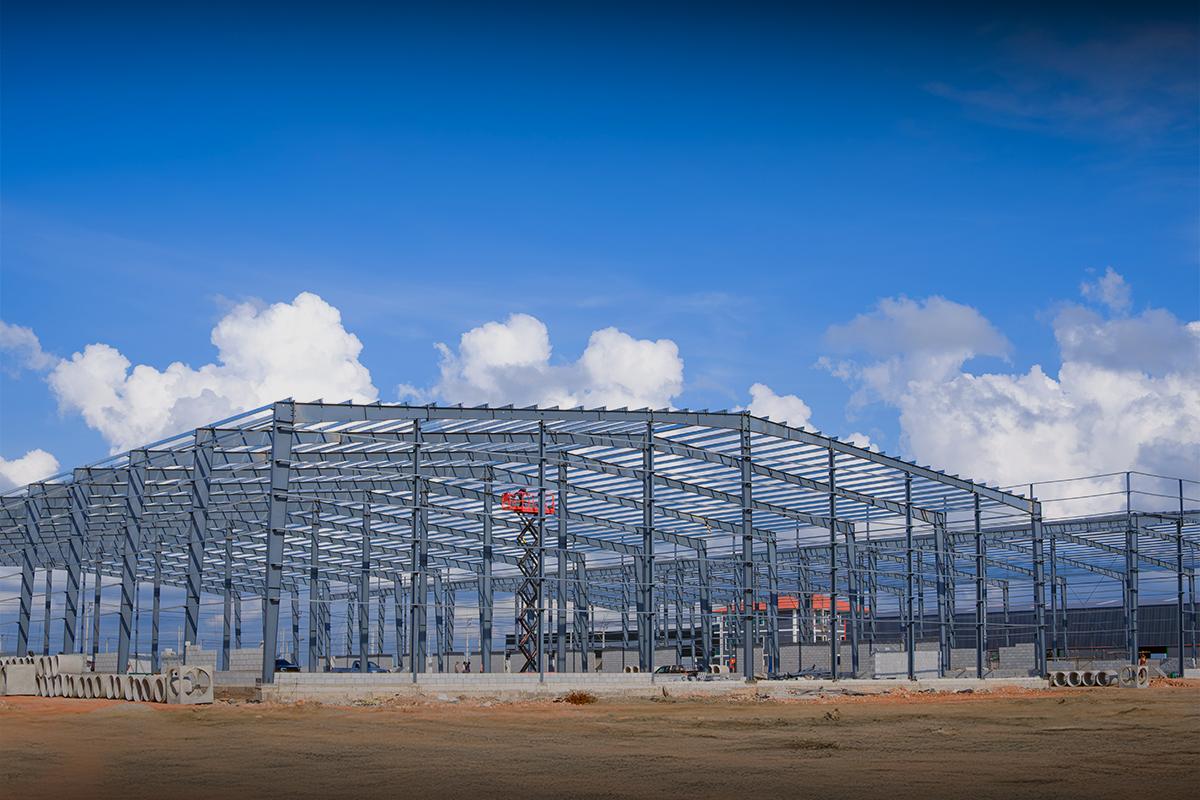
Picture this: you’ve finalized land, approvals are in motion, and your business needs usable space, fast. A warehouse for a 3PL operator. A fabrication unit. A cold storage shed. A factory expansion that can’t wait for a long RCC timeline. This is where pre engineered building manufacturers become more than a vendor category; they become your project’s critical path.
Pre-engineered buildings (PEBs) have moved from “alternative construction” to a mainstream choice for industrial and logistics infrastructure, largely because they compress timelines, reduce on-site uncertainty, and scale cleanly when you need future expansion. Industry trackers also point to steady growth in India’s broader prefabricated building ecosystem, reflecting rising adoption across industrial and commercial segments.
This guide is designed for commercial-intent buyers, owners, procurement teams, EPCs, and consultants who want to evaluate PEB building manufacturers with a practical lens.
Why PEB Works So Well for Industrial Projects
A well-executed PEB project can be a “design-manufacture-erect” pipeline rather than a long, sequential site build. The biggest commercial advantages usually show up in:
-
Speed to occupancy: parallel engineering and fabrication help you start site work and structure production together.
-
Predictable cost control: fewer wet trades, tighter quantities, and fewer surprises (when design is frozen early).
-
Expandability: bays and spans can be planned so future extensions don’t require rework.
-
Uniform quality: factory-controlled fabrication is typically more consistent than fully site-built steel.
That said, the outcome depends heavily on the manufacturer’s engineering discipline, detailing quality, material traceability, and erection capability.
The Non-Negotiables: Codes, Loads, and Steel Grades
Even if you’re not doing the structural design yourself, you should know what “good” looks like, because you’ll be signing off on drawings, specs, and change orders.
Most Indian PEB projects reference core structural and loading standards such as:
-
IS 800 for general steel construction design principles
-
IS 875 (Part 3) for wind loads (critical for large-span sheds and coastal/high wind zones)
-
IS 2062 for structural steel material specification is commonly used in built-up members and structural components
Buyer takeaway: Ask your shortlisted steel building manufacturers what design codes they follow, how they compute wind loads, and whether their documentation is audit-ready (drawings, calculations, MTCs, inspection reports).
A Quick Fitment Test: What Type of PEB Do You Actually Need?
Before you compare suppliers, clarify your building “type,” because manufacturers optimize differently.
Most common commercial use cases
-
Warehouses & logistics hubs (high clear height, wide spans, dock canopies)
-
Factories & assembly units (crane beams, mezzanines, service openings)
-
Workshops & fabrication sheds (heavy live loads, equipment anchoring)
-
Cold storage (envelope performance, vapor barriers, insulated panels)
-
Industrial PEB sheds for expansion/overflow capacity (fast add-on structures)
If your requirement includes overhead cranes, heavy mezzanine loads, or large service penetrations, treat it as an engineering-heavy project, not a commodity shed.
Vendor Shortlisting: What to Ask Pre Engineered Building Manufacturers
Use these questions to screen pre engineered building manufacturers quickly:
1) Engineering depth
-
Do they provide in-house design, detailing, and connection engineering?
-
Can they share sample GA drawings and typical details (base plates, bracings, gutter/eave details)?
2) Material & traceability
-
Do they supply Mill Test Certificates (MTCs) for primary steel and structural members?
-
How do they manage coating thickness, paint systems, and corrosion protection?
3) Manufacturing capacity & QA
-
What are their fabrication facilities and QA checkpoints?
-
Do they have documented weld procedures and inspection protocols?
4) Erection capability
-
Is the erection in-house or outsourced?
-
How do they manage safety, timeline, and site coordination?
5) After-sales & warranty clarity
-
What is warranted: structural performance, coating, roof sheeting, fasteners, leakage?
-
How are rectifications handled and within what SLA?
Commercial Comparison Table: A Simple Scorecard You Can Actually Use
| Evaluation Area | What “Good” Looks Like | Red Flags |
| Engineering & detailing | Clear drawings, stable design assumptions, minimal RFIs | Frequent revisions, vague load assumptions |
| Supply commitment | Transparent lead times, documented BOM | “We’ll manage” without a schedule baseline |
| Coating & corrosion plan | Suitable paint system for your environment | No clarity on DFT or exposure conditions |
| Erection plan | Method statement + manpower plan + safety approach | “Erection included” but no details |
| Cost transparency | Separate line items (steel, sheeting, accessories, erection) | One lump sum with no scope boundaries |
Steel Companies List: Notable PEB Building Manufacturers in India
Below is a practical steel companies list of players commonly considered in the Indian PEB ecosystem (not a ranking). It includes companies active in pre-engineered buildings, industrial steel structures, and prefabricated building solutions:
| Company / Brand | Why buyers consider them (high-level) |
| Kirby Building Systems | Dedicated pre-engineered steel building systems and solutions |
| Interarch Building Products | Established PEB player offering end-to-end engineered steel building solutions |
| Tata BlueScope Steel (Building Solutions) | PEB solutions backed by a large steel brand and building solutions arm |
| EPACK Prefab | Prefab and PEB solutions with pan-India execution focus |
| Pennar Industries (PEB/PEBS) | Pre-engineered buildings and engineered steel solutions across applications |
| Zamil Steel (India) | Pre-engineered steel buildings with manufacturing network and project delivery |
| Kamdhenu (PEB solutions) | Offers pre-engineered building solutions for diverse construction needs |
RFQ Checklist: What to Put in Your Enquiry (So Quotes Are Comparable)
If you want apples-to-apples pricing from pre engineered building manufacturers, your RFQ should specify:
-
Location (wind zone, terrain category if known, soil SBC)
-
Building dimensions: length × width, clear height, bay spacing
-
Roof slope, ridge/eave details, gutters/downpipes
-
Crane requirements (if any): capacity, duty class, runway beams
-
Cladding: roof/wall sheet type, insulation needs, skylights/ventilators
-
Doors & openings: rolling shutters, dock levelers, louvers, ridge monitors
-
Foundation scope split: what you will do vs what the vendor includes
-
Preferred design codes and deliverables (drawings + calculations package)

 Arabic
 French
 Spanish
 Portuguese
 Deutsch
 Turkish
 Dutch
Dutch
 Italiano
 Russian
 Romaian
 Portuguese (Brazil)
 Greek
Greek