


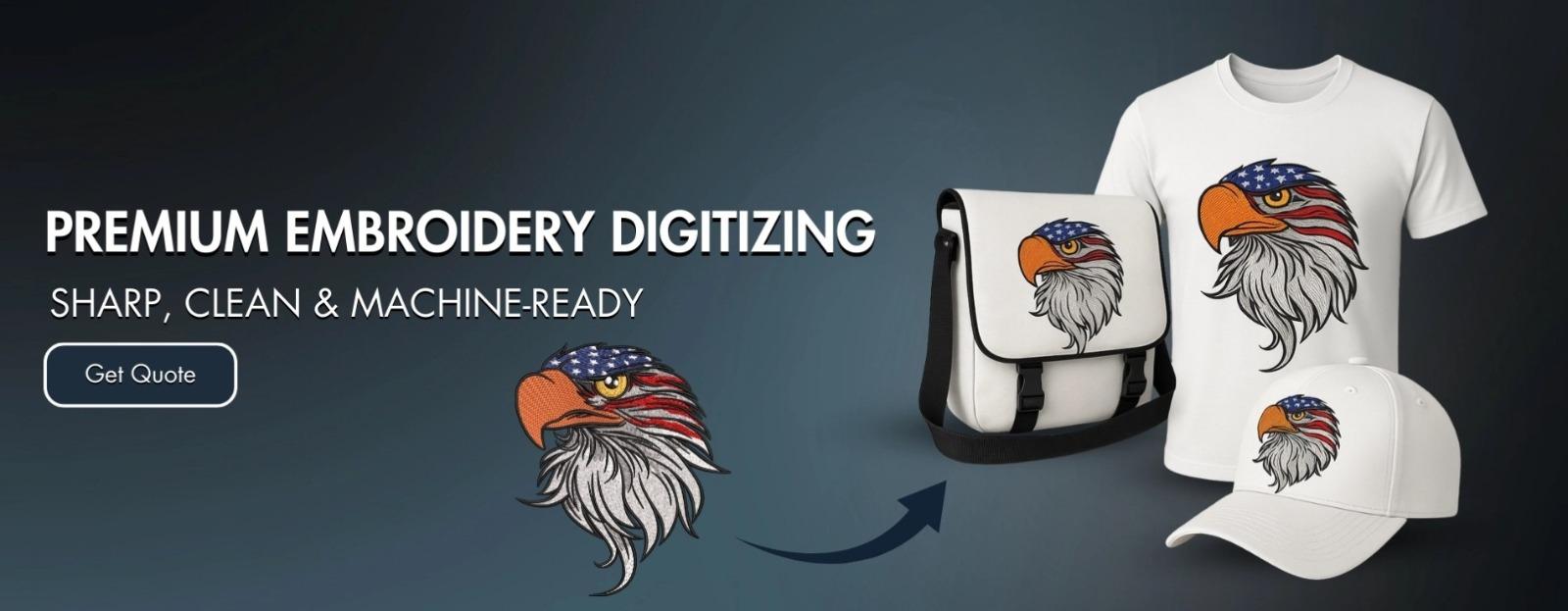
In today's fast-paced, digital-first world, the idea of being able to instantly digitize logo online is incredibly appealing. For a small business owner, a startup, or a craft enthusiast, the promise of uploading a logo and receiving ready-to-stitch digitizing files for embroidery with the click of a button sounds like the perfect solution. While the online landscape offers various services to digitize logo online, understanding the critical distinction between automated convenience and professional quality is the key to ensuring your embroidered logo looks as professional as your brand deserves. The digitizing files for embroidery you receive are the digital DNA of your stitched design; their quality dictates everything from thread integrity to fabric durability. This comprehensive guide will navigate the world of online digitizing, explain the essential nature of embroidery files, and provide a roadmap for making informed decisions that protect your brand and project.
The Online Digitizing Landscape: Convenience vs. Craft
The ability to digitize logo online exists on a broad spectrum, from fully automated software platforms to professional services with online portals. Understanding this spectrum is crucial.
1. Fully Automated "Instant" Online Converters:
These are websites or apps where you upload a JPG or PNG, select a few basic settings, and receive a file in minutes for a very low fee (often $5-$15). The process is entirely software-driven.
-
The Appeal: Extreme speed and low cost.
-
The Reality: The software applies generic, one-size-fits-all stitch settings. It cannot interpret context—it doesn't know if your logo is for a cap or a towel. It often fails with small text, complex details, and creates inefficient stitch paths with excessive trims and jumps. The resulting digitizing files for embroidery are frequently unreliable, leading to puckering, thread breaks, and unprofessional results. This is a high-risk option for any serious project.
2. Online Portals for Professional Digitizing Services:
This is the recommended path for quality results. Reputable custom embroidery digitizing services operate user-friendly websites where you can upload artwork, specify project details, and order professional digitizing.
-
The Process: You submit your vector file (AI, EPS, PDF preferred), fill out a form specifying garment, fabric, and size, and a human digitizer manually creates your file. Turnaround is typically 24-48 hours.
-
The Outcome: You receive a proof for approval and then professional-grade digitizing files for embroidery. The digitize logo online action here is simply the convenient submission method; the actual work is done by an expert.
The Non-Negotiables: Understanding Digitizing Files for Embroidery
Regardless of how you get your file, understanding what you're receiving is essential. The digitizing files for embroidery are specialized data sets that command the machine. Here’s what you need to know:
Core Machine File Formats:
These are the final, machine-specific files you load onto your embroidery machine or USB stick. They contain the stitch data and commands. The most common formats include:
-
.DST: The universal industry standard, originally for Tajima machines but readable by almost all commercial and many home machines.
-
.PES: The primary format for Brother and Babylock embroidery machines.
-
.EXP: Used by Melco, Bernina, and some other brands.
-
.JEF: The native format for Janome machines.
-
.VP3: For Husqvarna Viking and Pfaff machines.
-
.XXX: For Singer embroidery machines.
The Critical "Source" or "Editable" File:
When you use a professional online service, you can often request the source file (e.g., .EMB for Wilcom software). This is the working project file that allows for future edits (color changes, resizing). If you plan to own your design long-term, securing this file is a wise investment that an instant converter will never provide.
The Visual Proof:
A hallmark of a professional service accessed online is the provision of a visual proof. This is a simulated image of the sewn design, showing stitch types, density, and color blocks. It is your chance to approve the digitizing before the file is finalized—a step that separates professional services from automated black boxes.
How to Successfully Digitize Logo Online: A Step-by-Step Guide
To leverage the convenience of online submission while guaranteeing quality, follow this process:
-
Prepare Your Artwork: This is the most important step. If you have a vector file (.AI, .EPS, .PDF), use it. This ensures clean, scalable paths. If you only have a raster image (JPG, PNG), ensure it is very high-resolution (300 DPI) and clean-edged.
-
Choose a Reputable Online Service: Research providers. Look for services that:
-
Explicitly mention "manual digitizing" or "custom digitizing."
-
Have portfolios and customer reviews.
-
Offer a proofing and revision process.
-
Ask for project details (garment, fabric, size) during quoting.
-
-
Provide Complete Project Specifications: When submitting your order online, be thorough. Specify:
-
Garment Type: Is this for a left chest polo, a structured cap, a jacket?
-
Fabric: Cotton, fleece, stretchy performance material, towel?
-
Finished Size: Dimensions in inches or centimeters.
-
Your Machine Brand: This ensures you get the correct file format.
-
-
Review the Proof Meticulously: When you receive the proof, examine it closely. Check for clarity of detail, appropriate density, and overall accuracy. Don't hesitate to request revisions.
-
Conduct a Test Sew: Before running your final production, always stitch the file out on a scrap of your actual garment fabric. This is the ultimate quality check for thread tension, puckering, and overall appearance.
The Risks of the "Instant Online" Route and the Value of Professional Files
Opting for the cheapest, fastest online converter carries significant hidden costs:
-
Material Waste: A bad file can ruin expensive garments, costing far more than you saved on digitizing.
-
Production Inefficiency: Poorly sequenced files with excessive trims and jumps slow down your machine, reducing output.
-
Brand Damage: A puckered, broken, or blurry logo reflects poorly on your business.
-
No Support or Recourse: With an automated service, there is no one to consult when the file fails.
Investing a modest amount more ($25-$60) with a professional online service for your digitizing files for embroidery provides immense value:
-
Guaranteed Sewability: The file is engineered to run smoothly on your machine.
-
Fabric-Specific Optimization: It will account for stretch, loft, or stiffness.
-
Design Integrity: Fine details and text are preserved.
-
Efficient Production: Clean stitch paths mean faster runtimes.
When is an Online Professional Service the Right Choice?
Using a reputable website to digitize logo online is ideal for:
-
Businesses and Brands: Needing consistent, high-quality logos for uniforms and merchandise.
-
Embroidery Shops: Outsourcing complex designs to focus on production.
-
Event Organizers: Creating one-off designs for team apparel or commemorative items.
-
Anyone with a Complex Design or Challenging Garment: Where automated software is guaranteed to fail.
The "instant" automated route might only be acceptable for:
-
Extremely simple, single-color shapes on stable fabric for a personal, non-critical project.
-
Creating a quick test file when you are fully prepared for it to fail and require rework.
Conclusion: Embracing Convenience Without Compromising Quality
The ability to digitize logo online is a powerful tool in the modern creator's arsenal. However, it is vital to remember that you are not just ordering a file—you are commissioning the digital blueprint for a physical product. The quality of the digitizing files for embroidery you receive will be permanently stitched into your hats, shirts, and bags.
By choosing to use an online portal as a convenient gateway to a professional digitizing service, rather than an instant automated converter, you make a smart investment. You marry the efficiency of digital submission with the irreplaceable expertise of a human craftsperson. This approach ensures that when you click "upload" to digitize logo online, you are ultimately downloading confidence—confidence that your logo will be stitched with the precision, durability, and professionalism that your brand or project deserves. In embroidery, the file is the foundation. Build yours on expertise, not just algorithms.

 English
 Arabic
 French
 Spanish
 Portuguese
 Deutsch
 Dutch
Dutch
 Italiano
 Russian
 Romaian
 Portuguese (Brazil)
 Greek
Greek