


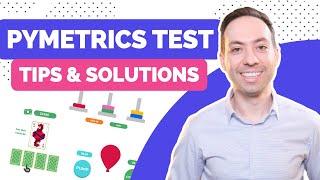
Recruitment has undergone a major transformation over the last decade. Traditional hiring methods such as resumes, cover letters, and unstructured interviews are increasingly seen as inefficient, biased, and poor predictors of real job performance. As companies compete for top talent in a fast-moving, digital-first world, they are turning to more innovative ways to assess candidates fairly and accurately.
One of the most impactful changes is the rise of game-based hiring tests. Tools like the pymetrics assessment reflect a growing shift toward skills-focused and behavior-driven recruitment. Instead of relying solely on a candidate’s background or credentials, employers now evaluate how individuals think, adapt, and make decisions in real time, creating a more data-driven and engaging hiring experience.
What Are Game-Based Hiring Tests?
Game-based hiring tests are interactive digital assessments designed to measure cognitive abilities, behavioral traits, and emotional intelligence through short, science-backed games. These are not traditional “games” meant for entertainment; rather, they simulate real-world decision-making scenarios and track how candidates respond under different conditions.
Unlike conventional aptitude tests, these tools focus on how a candidate approaches problems rather than whether they get a single correct answer. The goal is to capture natural behaviors such as attention span, memory, risk tolerance, adaptability, and learning speed.
These assessments are typically short, mobile-friendly, and accessible, making them easy for candidates to complete from anywhere while still generating valuable insights for employers.
Why Companies Are Moving Away from Traditional Hiring Methods
Resumes and interviews have long been the backbone of recruitment, but they come with significant limitations. Resumes often favor candidates with privileged backgrounds, strong writing skills, or recognizable employers factors that don’t always correlate with job success.
Interviews, while useful, are prone to unconscious bias. Hiring managers may unintentionally favor candidates who look, speak, or think like them. This can limit diversity and result in missed talent opportunities.
Game-based hiring tests help address these issues by standardizing evaluation. Every candidate is assessed using the same criteria, reducing bias and focusing on measurable skills and behaviors rather than subjective impressions.
How Game-Based Assessments Evaluate Candidates
Game-based assessments work by collecting thousands of data points as candidates interact with the games. These data points are then analyzed to identify patterns in thinking and behavior.
Key areas evaluated include problem-solving ability, logical reasoning, memory, attention to detail, emotional regulation, and decision-making under pressure. For example, some games assess how candidates respond to uncertainty, while others examine how they balance speed versus accuracy.
Artificial intelligence and machine learning models compare these patterns against benchmarks created from high-performing employees, helping employers predict which candidates are most likely to succeed in specific roles.
Benefits for Employers
One of the biggest advantages of game-based hiring tests is improved hiring accuracy. Employers gain deeper insights into candidate potential rather than relying on surface-level qualifications.
These tools also help reduce unconscious bias by removing identifying information such as name, gender, age, or educational background from early hiring decisions. This leads to more diverse and inclusive talent pipelines.
Additionally, game-based assessments significantly speed up the recruitment process. Employers can screen large volumes of applicants quickly while maintaining consistent evaluation standards, making them ideal for high-volume or graduate hiring.
Benefits for Job Seekers
From a candidate’s perspective, game-based hiring tests offer a more engaging and less intimidating alternative to traditional exams. Instead of answering long, abstract questions, candidates interact with short, intuitive challenges.
These assessments provide a fairer opportunity for individuals who may not excel in interviews but perform well in real-world problem-solving situations. Candidates are evaluated based on their natural abilities rather than their resume formatting or interview confidence.
Another key benefit is accessibility. Most game-based tests can be completed on a smartphone or laptop, reducing barriers related to location, time, or resources.
Role of Data and Analytics in Modern Recruitment
Data is at the heart of game-based recruitment. Every click, pause, and decision contributes to a behavioral profile that helps employers make evidence-based hiring decisions.
In the middle of the recruitment funnel, platforms using approaches similar to the pymetrics assessment analyze behavioral data to match candidates with roles where they are most likely to thrive. This not only benefits employers but also improves job satisfaction and retention for employees.
Ethical data use is critical. Leading hiring platforms emphasize transparency, data privacy, and responsible AI practices to ensure candidates are evaluated fairly and securely.
Industries Adopting Game-Based Hiring Tests
Game-based hiring tests are being adopted across a wide range of industries. Consulting and finance firms use them to evaluate analytical thinking and decision-making skills under pressure.
Technology companies rely on these tools to identify candidates with strong problem-solving abilities and learning agility, especially for roles that evolve rapidly.
Healthcare, retail, and large enterprises also use game-based assessments for volume hiring, leadership identification, and early-career recruitment programs, where traditional screening methods fall short.
Challenges and Limitations
Despite their benefits, game-based hiring tests are not without challenges. Some candidates may feel unfamiliar or skeptical about being evaluated through games, especially if instructions are unclear.
Accessibility concerns must also be addressed. Employers need to ensure that assessments are inclusive for individuals with disabilities and do not disadvantage those with limited access to technology.
Finally, while automation is powerful, it should not completely replace human judgment. The most effective hiring strategies combine data-driven assessments with structured interviews and human insight.
Future of Recruitment and Hiring Technology
The future of recruitment is increasingly personalized and predictive. As AI technology evolves, game-based hiring tests will become even more accurate in matching candidates to roles based on long-term success potential.
We can expect deeper integration between hiring platforms, applicant tracking systems, and employee performance data. This will allow organizations to continuously refine their hiring models and improve workforce outcomes.
Rather than replacing traditional hiring methods entirely, game-based assessments will complement them, creating a more balanced, fair, and effective recruitment process.
Conclusion
Game-based hiring tests are redefining how organizations identify and evaluate talent. By shifting the focus from resumes to real abilities, these tools help employers hire smarter while giving candidates a more engaging and equitable experience.
As recruitment continues to evolve, companies that embrace data-driven, skill-focused hiring methods will be better positioned to attract diverse talent, reduce bias, and build high-performing teams for the future.

 English
 Arabic
 French
 Spanish
 Portuguese
 Deutsch
 Turkish
 Dutch
Dutch
 Italiano
 Russian
 Portuguese (Brazil)
 Greek
Greek