


Surgical procedures rely on a vast array of specialized instruments, each designed for a specific function to ensure patient safety and procedural success. Two of the most commonly confused tools are the needle holder and the hemostat. While they may look similar at a glance, understanding the distinct roles of a needle holder vs hemostat is crucial for medical students, surgical technicians, and healthcare professionals. Both instruments feature ring handles and a ratchet mechanism, but their jaws and intended uses set them apart completely.
The Anatomy of a Needle Holder
A needle holder is built for one primary purpose: suturing. Surgeons use this instrument to grasp and manipulate a curved needle while stitching wounds. The jaws of a needle holder are typically shorter and sturdier than those of a hemostat. This design provides maximum grip strength at the tip, preventing the needle from slipping or rotating during the delicate suturing process.
The inner surface of the jaws often features a textured pattern or a tungsten carbide insert to enhance grip. Some designs even include a small groove to accommodate the curve of the needle. When you examine a needle holder vs hemostat, the needle holder’s jaws are often blunt and shorter relative to the shank, offering superior leverage for driving needles through tissue.
The Role of a Hemostat
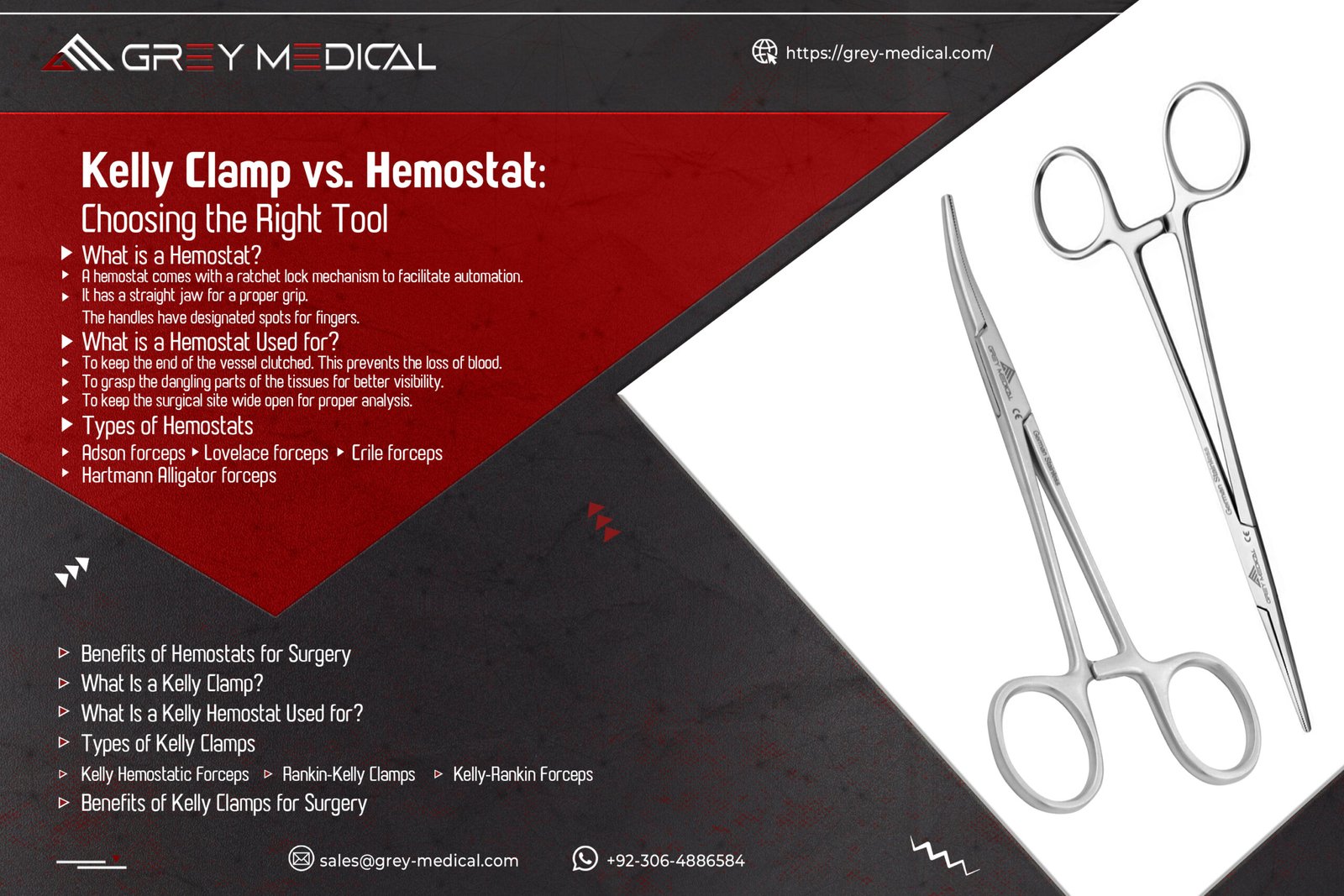
In contrast, a hemostat (or hemostatic forcep) is designed to control bleeding. Its primary function is to clamp blood vessels or tag tissues during surgery. The jaws of a hemostat are generally longer and thinner compared to a needle holder. They feature serrations that run either transversely or longitudinally along the jaws. These serrations are designed to occlude a vessel gently but firmly without causing excessive trauma to the delicate vascular tissue.
While a hemostat can technically grasp objects, using it to hold a suture needle is improper technique. The hard steel of the needle can damage the serrations of the hemostat, rendering it ineffective for stopping bleeding later. This misuse highlights why distinguishing between a needle holder vs hemostat is not just academic but vital for instrument longevity.
Key Differences in Design and Function
The ratchet mechanism on both surgery instruments allows them to lock in a closed position, but the tactile feedback differs. A needle holder must lock securely to hold a needle under the pressure of piercing skin, while a hemostat locks to maintain constant pressure on a vessel.
Another visual cue when comparing a needle holder vs hemostat is the shape of the jaws. Hemostats often have tapered, finer tips to reach into small cavities to clamp vessels. Needle holders maintain a broader width at the tip to ensure a stable platform for the needle. Mixing these tools up can lead to surgical complications, such as a needle slipping at a critical moment or a vessel not being adequately clamped.
Conclusion
Mastering the identification of surgical instruments is the first step toward excellence in the operating room. Whether you are prepping a sterile tray or assisting in a complex procedure, knowing the difference between a needle holder vs hemostat ensures efficiency and safety. At GreyMedical®, we understand these nuances deeply. As a privately owned medical technology company dedicated to innovation and excellence in the craft of surgical instruments, we provide tools that professionals trust to perform their best work. Recognizing the unique value of each instrument respects the craft of surgery itself.

 Arabic
 French
 Spanish
 Portuguese
 Deutsch
 Turkish
 Dutch
Dutch
 Italiano
 Russian
 Romaian
 Portuguese (Brazil)
 Greek
Greek