


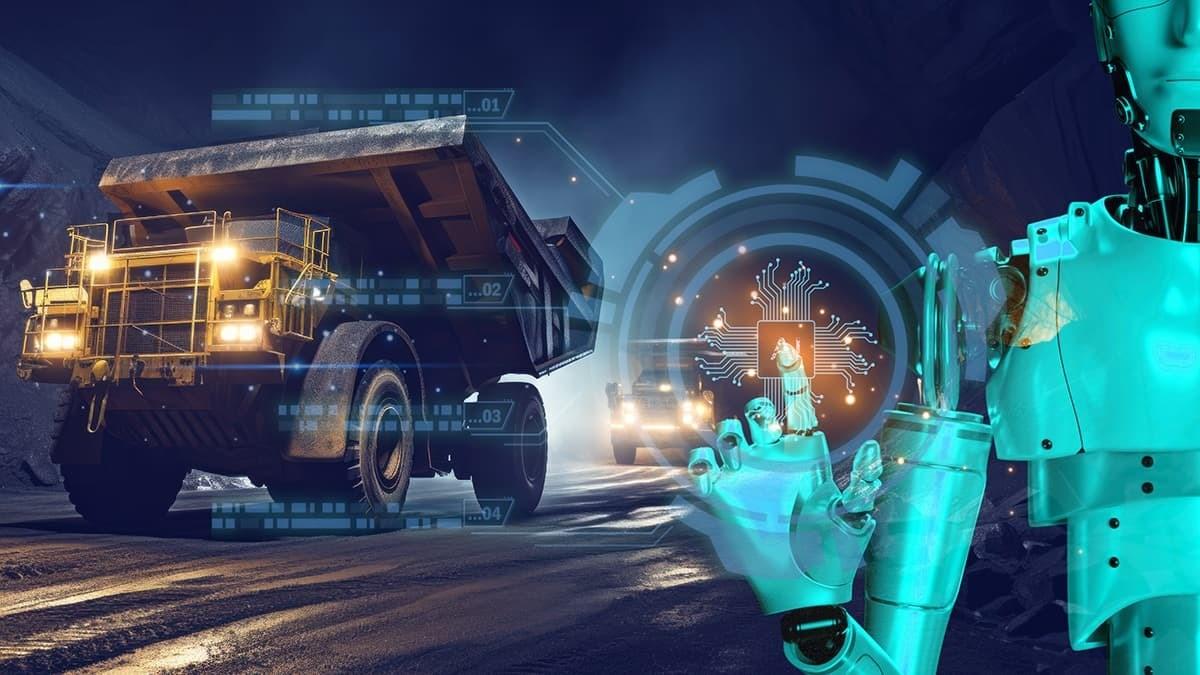
The mining industry is undergoing a strategic reset. What was once driven by fragmented systems, manual reporting, and reactive decision-making is now moving toward integrated, data-led operations. As global competition intensifies and operational margins tighten, mining leaders are recognizing a hard truth: disconnected processes are no longer sustainable.
Operational silos—isolated departments, standalone tools, and inconsistent data flows—have historically slowed productivity, increased risk, and limited visibility across the mining value chain. Today, technology is dismantling those silos and replacing them with connected, intelligent ecosystems that enable real-time insights, predictive control, and enterprise-wide optimization.
This shift is not just about digital adoption. It’s about redefining how mines operate, collaborate, and scale in a future where efficiency, safety, and agility determine long-term success.
The Cost of Operating in Silos
For decades, mining operations evolved in functional pockets. Exploration teams worked independently from operations. Maintenance relied on manual logs. Supply chain decisions were made with delayed or incomplete data. While this structure once worked, it now introduces systemic inefficiencies.
Common challenges caused by siloed operations include:
-
Limited visibility across sites and departments
-
Delayed decision-making due to manual data consolidation
-
Higher downtime caused by reactive maintenance
-
Inconsistent reporting and compliance risks
-
Poor coordination between planning, production, and logistics
When each function operates in isolation, leadership lacks a single source of truth. Decisions become assumption-driven rather than insight-led, leading to cost overruns, missed production targets, and increased safety exposure.
The Rise of Connected Mining Ecosystems
Connected mines are built on integrated digital foundations that unify data, workflows, and people across the entire operation. Instead of disconnected tools, mining enterprises are adopting centralized platforms that synchronize information from pit to port.
At the core of this transformation is seamless connectivity between:
-
Field equipment and control centers
-
Operational data and enterprise systems
-
On-site teams and remote stakeholders
-
Planning, execution, and performance analysis
By breaking down barriers between systems and departments, mining organizations gain real-time operational awareness and the ability to respond proactively rather than reactively.
Real-Time Data as a Strategic Asset
In connected mining environments, data is no longer static or retrospective. It becomes a live operational asset.
Sensors, machine telemetry, and operational systems continuously stream data into centralized platforms. This allows leadership teams to monitor production rates, equipment health, energy consumption, and safety metrics as they happen.
The strategic impact includes:
-
Faster response to operational anomalies
-
Improved production forecasting
-
Reduced unplanned downtime
-
Greater accountability across teams
More importantly, real-time data enables decision-makers to shift from gut-based judgment to evidence-based strategy.
Predictive Intelligence Replacing Reactive Operations
One of the most significant outcomes of connected mines is the transition from reactive problem-solving to predictive intelligence.
Advanced analytics and machine learning models analyze historical and live data to identify patterns that humans often miss. These insights enable mining companies to anticipate issues before they escalate.
Examples include:
-
Predicting equipment failure before breakdowns occur
-
Identifying production bottlenecks in advance
-
Forecasting maintenance needs based on actual usage
-
Anticipating supply chain disruptions
This predictive approach reduces operational risk, extends asset life, and stabilizes production outcomes across sites.
Workflow Automation Across the Mining Value Chain
Automation plays a critical role in eliminating inefficiencies caused by manual processes. In connected mines, workflows are digitally orchestrated across departments, ensuring consistency and speed.
Key areas benefiting from automation include:
-
Maintenance scheduling and work order management
-
Inventory tracking and procurement approvals
-
Production reporting and performance dashboards
-
Safety incident logging and compliance documentation
Automated workflows reduce human error, improve turnaround times, and free skilled professionals to focus on higher-value strategic work rather than administrative tasks.
Enhancing Safety Through Connected Systems
Safety remains one of the most important priorities in mining. Connected technology significantly enhances safety outcomes by providing greater visibility and control.
Wearable devices, equipment sensors, and monitoring systems can detect unsafe conditions in real time. Alerts are automatically triggered when thresholds are exceeded, allowing immediate intervention.
Connected safety systems help with:
-
Monitoring worker fatigue and location
-
Detecting hazardous environmental conditions
-
Tracking equipment behavior in high-risk zones
-
Ensuring compliance with safety protocols
By embedding safety into digital workflows, mining organizations move from reactive incident management to proactive risk prevention.
Centralized Visibility for Executive Decision-Making
For mining executives, connected operations provide something that was previously elusive: a unified operational view.
Instead of relying on delayed reports from multiple sites, leadership teams access centralized dashboards that consolidate performance data across operations. This enables faster strategic decisions, clearer accountability, and stronger governance.
Executive-level benefits include:
-
Enterprise-wide performance benchmarking
-
Transparent KPI tracking
-
Improved capital allocation decisions
-
Better alignment between operational and business objectives
This level of visibility empowers leadership to steer the organization with confidence and precision.
Scalability Across Global Mining Operations
As mining enterprises expand geographically, scalability becomes critical. Disconnected systems often fail when replicated across multiple sites, leading to inconsistency and operational drift.
Connected digital platforms, by contrast, are designed for scale. They allow standardized processes, data models, and governance frameworks to be deployed across regions while still accommodating local operational nuances.
This enables:
-
Faster onboarding of new sites
-
Consistent operational standards
-
Centralized governance with local flexibility
-
Lower long-term IT and operational costs
Scalability ensures that growth does not come at the expense of control or efficiency.
Overcoming Change Management Barriers
While the benefits of connected mines are clear, transformation is not without challenges. Resistance to change, legacy infrastructure, and skill gaps often slow adoption.
Successful mining organizations address these challenges by:
-
Aligning technology initiatives with business outcomes
-
Engaging operational teams early in the process
-
Investing in training and digital literacy
-
Phasing implementation to minimize disruption
Technology alone does not drive transformation. People, processes, and leadership commitment are equally critical.
The Strategic Imperative for Mining Leaders
The shift from operational silos to connected mines is no longer optional. It is a strategic imperative driven by market pressure, regulatory expectations, and the need for sustainable profitability.
Mining leaders who embrace connected ecosystems position their organizations to:
-
Operate more efficiently and safely
-
Respond faster to market volatility
-
Improve asset utilization and ROI
-
Build resilient, future-ready operations
Those who delay risk falling behind competitors who are already leveraging data and connectivity as competitive advantages.
Conclusion: Connecting Technology to Mining Excellence
Mining excellence today is defined by connectivity, intelligence, and agility. Breaking down operational silos enables organizations to unlock real-time insights, predictive capabilities, and enterprise-wide optimization that were previously unattainable.
By embracing integrated digital ecosystems, mining enterprises transform complexity into clarity and data into decisive action. This evolution is the foundation upon which modern, resilient, and scalable operations are built—making mining industry software solutions a critical enabler of long-term success.
FAQs
1. What does a connected mine mean in practical terms?
A connected mine integrates operational systems, equipment data, and workflows into a unified digital environment, enabling real-time visibility and coordinated decision-making across the organization.
2. How do connected systems improve operational efficiency?
They eliminate manual processes, reduce downtime through predictive insights, and ensure data flows seamlessly between departments, leading to faster and more informed decisions.
3. Can connected mining technologies be scaled across multiple sites?
Yes. Modern platforms are designed to support multi-site operations with centralized governance while allowing flexibility for site-specific requirements.
4. Is digital transformation suitable for mid-sized mining companies?
Absolutely. Scalable and modular digital frameworks allow mid-sized operators to adopt technology incrementally while still achieving measurable operational gains.
5. How long does it take to see ROI from connected mining initiatives?
Many organizations begin seeing efficiency, safety, and cost improvements within months, especially when automation and real-time monitoring are implemented strategically.

 English
 Arabic
 French
 Spanish
 Portuguese
 Deutsch
 Turkish
 Dutch
Dutch
 Russian
 Romaian
 Portuguese (Brazil)
 Greek
Greek