


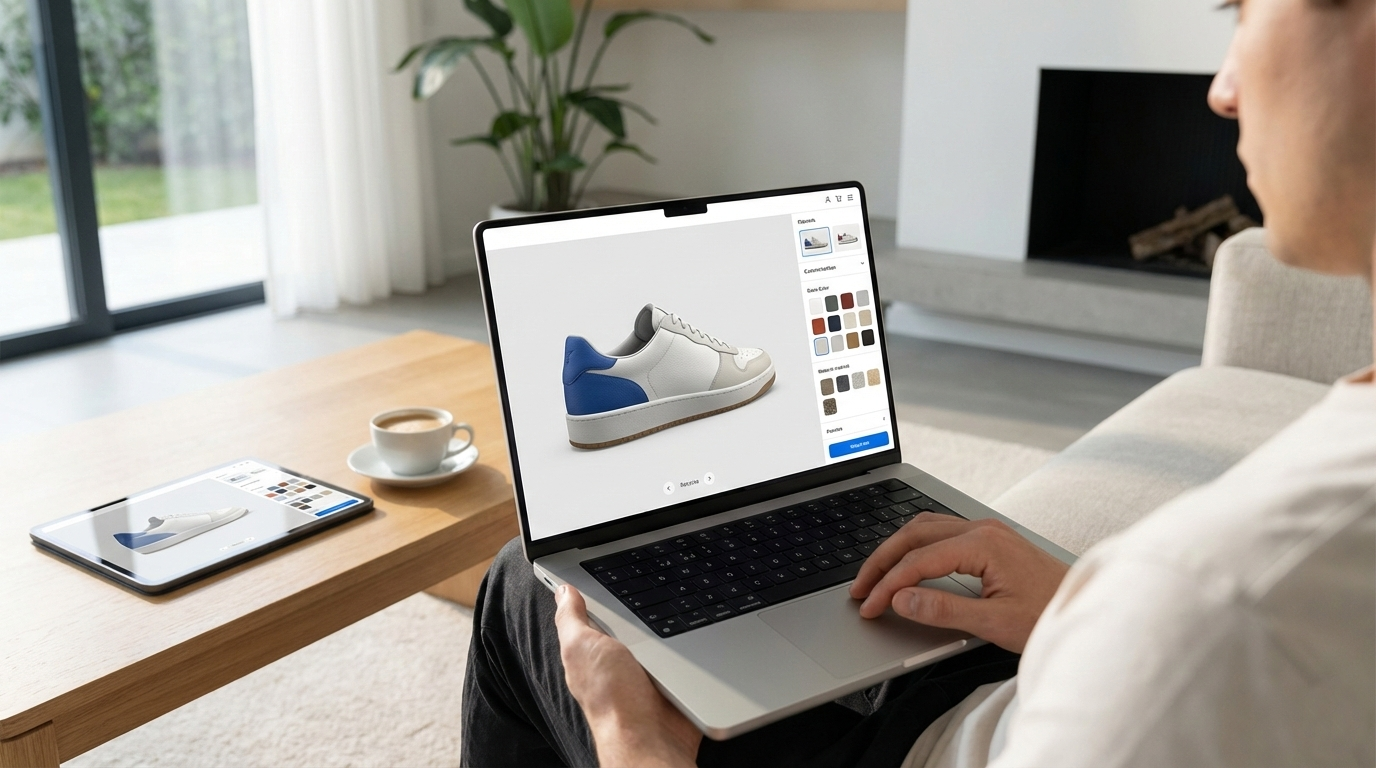
Shopping behavior has undergone a radical transformation over the past decade, driven largely by technological innovations that fundamentally alter how consumers discover, evaluate, and purchase products. Among these innovations, 3D product visualization stands out as a particularly transformative force reshaping the entire shopping journey. This technology enables customers to examine products from every angle, customize features in real-time, and visualize purchases in their actual environments before committing to transactions. The impact of 3D product visualization extends far beyond simple convenience. It addresses fundamental limitations of traditional online shopping while creating entirely new consumer expectations and behaviors. Understanding how 3D visualization is changing shopping reveals not just technological progress but a comprehensive reimagining of consumer-brand relationships in digital commerce.
From Imagination to Visual Certainty
Traditional online shopping required customers to imagine how products would look based on limited photographs and written descriptions. This imagination requirement introduced substantial uncertainty that deterred purchases and generated disappointment when delivered products didn't match mental images. 3D product visualization eliminates this guesswork by providing comprehensive visual access to products from unlimited perspectives. Customers rotate items freely, zoom into details, and examine products thoroughly through 3D visualization interfaces without relying on imagination.
The confidence generated through 3D product visualization translates directly into changed shopping behavior. Conversion rates increase dramatically, typicallyby twenty to forty percent, when customers interact with 3D visualization compared to static images. The certainty provided by comprehensive 3D product visualization removes the primary barrier preventing online purchase completion: uncertainty about what's actually being purchased. Customers who thoroughly examine products through 3D visualization proceed to checkout decisively rather than abandoning carts due to lingering doubts.
The reduced return rates following 3D product visualization adoption, often decliningby thirty to fifty percent, demonstrate how visual certainty changes post-purchase behavior as well. When customers examine products comprehensively through 3D visualization before buying, delivered items match expectations because those expectations were formed accurately. This alignment between visualization and reality fundamentally changes the risk profile of online shopping froman uncertain gamble to a confident selection.
Customization as Standard Expectation
Perhaps the most significant behavioral change driven by 3D product visualization is the shift from accepting standard products to expecting customization. Traditional shopping presented limited options constrained by physical inventory; customers selected from available variations rather than specifying ideal configurations. 3D product visualization enables mass customization where each customer designs products matching exact preferences through interactive 3D visualization interfaces.
This customization capability through 3D product visualization has created new consumer expectations that transcend specific industries. Customers who've configured vehicles through automotive 3D visualization expect similar customization when purchasing furniture, electronics, or apparel. The ability to personalize products through 3D product visualization becomes expected rather than exceptional, fundamentally changing what customers demand from shopping experiences.
The emotional investment generated through customization via 3D product visualization also changes purchase psychology. Customers who design products themselves through 3D visualization develop ownership feelings before buying. The configured product becomes "theirs" psychologically through the 3D product visualization creation process, generating stronger purchase motivation than passive selection from standard inventory. This emotional engagement through 3D visualization transforms shopping from a transactional necessity to a creative expression.
Extended Research and Consideration
Shopping behavior timelines have expanded as 3D product visualization enables more thorough research without physical store visits. Customers spend substantially more time, often triple or quadruple traditional duration,s exploring products through 3D visualization platforms. This extended engagement reflects genuine interest rather than confusion because 3D product visualization makes exploration enjoyable and productive.
The ability to save configurations created through 3D product visualization and return later changes decision-making patterns. Rather than making rushed choices during single shopping sessions, customers using 3D visualization create multiple options, reflect over days, and make deliberate decisions after thorough consideration. This temporal distribution of decision-making through 3D product visualization improves choice quality while changing the pace of shopping from immediate to considered.
Social research behaviors also emerge from 3D product visualization capabilities. Customers share configurations created through 3D visualization with friends and family via social media or direct links, soliciting opinions before purchase. This social validation through 3D product visualization sharing transforms shopping from an individual activity to a collaborative process, fundamentally changing how purchase decisions are made.
Reduced Physical Store Dependency
The comprehensive product understanding enabled by 3D product visualization has reduced dependence on physical store visits for many product categories. Customers previously requiring in-person examination can now evaluate products thoroughly through 3D visualization from home. This behavioral shift accelerated dramatically during pandemic years but persists as customers recognize the efficiency and convenience of 3D product visualization research.
The showrooming and webrooming phenomena, researching online before buying in-store or vice versa, have evolved through 3D product visualization. Customers using advanced 3D visualization for research often complete purchases online without store visits because the visual information satisfies examination needs. Conversely, when customers do visit stores after 3D visualization research, they arrive informed and decisive, changing in-store interactions from exploratory to confirmatory.
Dealership and showroom models are adapting to this behavioral change driven by 3D product visualization. Rather than maintaining extensive physical inventory for customer examination, retailers offer demonstration models while directing customization to 3D visualization platforms. This hybrid model acknowledges that 3D product visualization handles configuration and appearance evaluation more effectively than physical inventory constraints allow.
Mobile Shopping Integration
The optimization of 3D product visualization for smartphones has fundamentally changed where and when shopping occurs. Customers access sophisticated 3D visualization through phones during commutes, lunch breaks, or leisure moments, integrating shopping into daily routines seamlessly. This constant accessibility through mobile 3D product visualization has made shopping more frequent but less concentrated, with multiple short sessions replacing fewer extended ones.
Touch-based interaction with 3D product visualization on mobile devices creates more intuitive engagement than mouse-based desktop browsing. Pinch-to-zoom and swipe-to-rotate gestures for manipulating 3D visualization feel natural, encouraging exploration. The tactile nature of mobile 3D product visualization interaction increases engagement, particularly among younger, mobile-native consumers who prefer smartphone shopping.
Augmented reality features integrated with mobile 3D product visualization enable entirely new shopping behaviors. Customers visualize configured products in actual environments through smartphone camera,s furniture in living rooms, vehicles in driveways, and appliances in kitchens. This contextual visualization through AR-enhanced 3D product visualization addresses the final barrier traditional online shopping faced: understanding how products fit actual spaces.
Data-Informed Shopping Decisions
Customers interacting with 3D product visualization generate behavioral data that increasingly informs their shopping through personalized recommendations. Machine learning algorithms analyze 3D visualization interaction patterns, which options customers explore, how long they examine features, what combinations they create to suggest relevant products and configurations. This intelligence transforms 3D product visualization froma passive tool to an active shopping assistant.
The comparison capabilities within 3D product visualization platforms change how customers evaluate options. Rather than mentally comparing products viewed separately, customers place configured items side-by-side within 3D visualization interfaces for direct comparison. This systematic evaluation through 3D product visualization improves decision quality while changing comparison behavior from memory-dependent to visually-explicit.
Price transparency during 3D product visualization interaction also changes shopping behavior. Real-time pricing updates as customers add features through 3D visualization enable immediate value assessment. This transparency through 3D product visualization reduces the negotiation and haggling that characterized traditional shopping, particularly in automotive and furniture sectors, where pricing historically lacked clarity.
Brand Relationship Evolution
The experiences created through 3D product visualization change how customers relate to brands beyond transactional interactions. Companies offering sophisticated 3D visualization are perceived as innovative, customer-focused, and premium regardless of actual product positioning. This halo effect from advanced 3D product visualization enhances brand equity while differentiating from competitors still using static imagery.
Customer loyalty increases following positive 3D product visualization experiences. Shoppers who enjoyed configuring through quality 3D visualization return preferentially when future needs arise, creating behavioral lock-in through experiential superiority. The convenience and enjoyment of familiar 3D product visualization platformscreates switching costs that protect businesses from competitive threats.
The shareability of configurations created through 3D product visualization transforms customers into brand advocates. Enthusiastic sharing of unique designs via social media provides organic marketing as recipients discover brands through authentic peer recommendations rather than advertising. This word-of-mouth amplification through 3D visualization sharing changes customer acquisition dynamics fundamentally.
Immediate Gratification Through Virtual Ownership
3D product visualization creates psychological ownership before physical possession, changing the waiting period between purchase and delivery. Customers who've thoroughly visualized and configured products through 3D visualization maintain clear mental images during shipping. They imagine using products, showing them to friends, and enjoying specific features, anticipatory thinking that generates pleasure during waiting periods through 3D product visualization memories.
The ability to revisit saved configurations through 3D product visualization during waiting periods maintains engagement and excitement. Rather than post-purchase doubt, customers reviewing their 3D visualization configurations experience confirmation and renewed enthusiasm. This sustained positive emotion through 3D product visualization extends satisfaction beyond transaction moments.
Cross-Category Expectations Transfer
Perhaps most significantly, 3D product visualization in one product category creates expectations that transfer to others. Customers configuring vehicles through automotive 3D visualization expect similar capabilities when shopping for furniture, electronics, or home improvement products. This expectation transfer drives 3D product visualization adoption across industries as businesses recognize that customer demands reflect experiences elsewhere rather than category-specific traditions.
The competitive pressure created by 3D product visualization adoption becomes self-reinforcing. As leading brands implement advanced 3D visualization, customers viewing competitors' static imagery perceive inferiority regardless of actual product quality. This experiential comparison through 3D product visualization forces industry-wide adoption to maintain competitive parity.
Conclusion
3D product visualization is fundamentally changing shopping behavior across dimensions,s including confidence and conversion, customization expectations, research depth, physical store dependence, mobile integration, decision-making patterns, brand relationships, and cross-category expectations. These behavioral changes reflect not merely technological novelty but genuine value creation through reduced uncertainty, enhanced personalization, improved decision quality, and experiential satisfaction. As 3D product visualization technology continues advancing with augmented reality, artificial intelligence, and photorealistic rendering improvements, shopping behavior will evolve further toward interactive, personalized, and experientially-rich paradigms. The transformation is irreversible. Customers who've experienced comprehensive 3D product visualization will not return contentedly to static imagery and imagination-dependent shopping. Businesses recognizing this behavioral shift and implementing sophisticated 3D visualization position themselves to serve emerging consumer expectations,ons while those clinging to traditional presentation methods face progressive obsolescence in markets where 3D product visualization defines competitive standards and customer satisfaction.

 English
 Arabic
 French
 Spanish
 Portuguese
 Deutsch
 Turkish
 Dutch
Dutch
 Italiano
 Romaian
 Portuguese (Brazil)
 Greek
Greek