


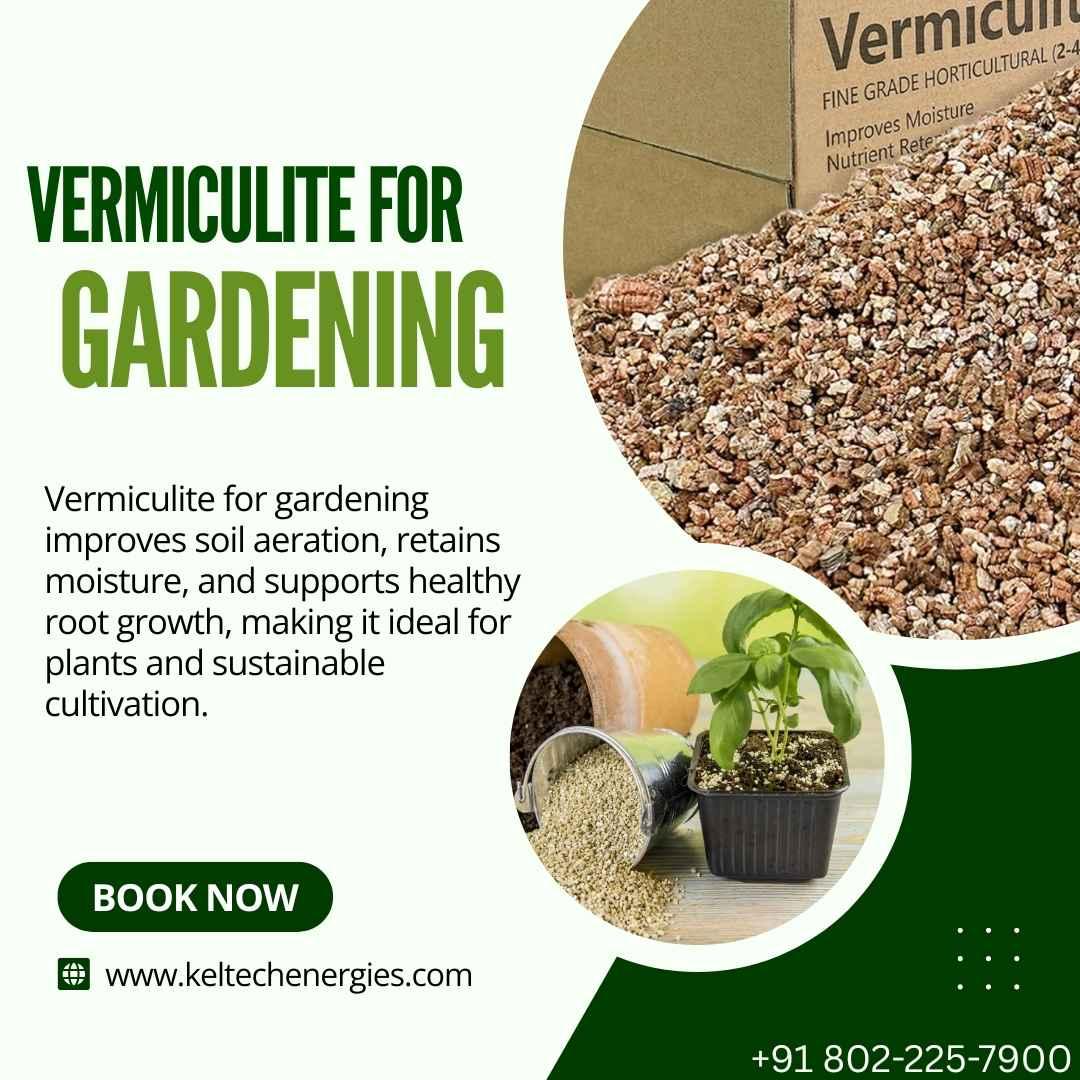
Vermiculite is a natural mineral that expands when heated, forming lightweight, porous flakes. These flakes hold water, nutrients, and air at the same time. For gardeners, this balance is critical. Healthy plants need oxygen at the roots, steady moisture, and access to nutrients without waterlogging. Vermiculite delivers all three in a clean and stable form, making it a reliable growing medium for both beginners and professionals.
How does vermiculite improve plant growth?
Plant growth depends on what happens below the soil surface. Vermiculite works directly in the root zone to create ideal conditions for development.
Key growth advantages include
• Improved root aeration for stronger root systems
• Higher water holding capacity without compaction
• Better nutrient availability through cation exchange
• Reduced stress during temperature fluctuations
These qualities help plants grow faster, greener, and more evenly across growth stages.
Why is vermiculite excellent for moisture control?
Overwatering and underwatering are common gardening problems. Vermiculite absorbs water like a sponge and releases it slowly as roots need it. This controlled moisture release keeps soil evenly damp rather than wet.
Seedlings and young plants benefit the most because their roots are delicate and easily damaged by dry or soggy soil. With vermiculite in the mix, moisture remains consistent, which directly supports early plant survival and vigor.
Can vermiculite help with nutrient retention?
Yes. Vermiculite has a natural ability to hold essential nutrients such as potassium, magnesium, and calcium. Instead of nutrients washing away during watering, they stay available in the root zone.
This feature reduces fertilizer loss and improves nutrient efficiency. Plants fed in vermiculite enriched media often show better leaf color, stronger stems, and more uniform growth.
Is vermiculite safe and suitable for all plants?
Vermiculite is sterile, non toxic, and odor free. It does not decompose or attract pests. These properties make it suitable for indoor plants, vegetables, herbs, flowers, and even hydroponic systems.
It is especially useful for
• Houseplants sensitive to overwatering
• Seed starting trays and propagation beds
• Root crops that need loose growing media
• Plants grown in containers or pots
Because it is neutral in pH, it does not interfere with soil chemistry.
How is vermiculite used in potting mixes?
Most gardeners do not use vermiculite alone. It works best when blended with soil or organic components.
Common mixing ratios
-
For seed starting use equal parts vermiculite and cocopeat
-
For indoor plants mix one part vermiculite with two parts potting soil
-
For vegetables add vermiculite at ten to twenty percent of total mix
These ratios improve texture, drainage, and water retention without making the soil heavy.
What role does vermiculite play in seed germination?
Seed germination requires warmth, moisture, and air. Vermiculite excels at maintaining all three conditions. Seeds placed in vermiculite stay evenly moist and protected from surface drying.
Another benefit is visibility. Light colored vermiculite makes it easier to monitor seed placement and early sprouting. This is one reason commercial nurseries often rely on it for propagation work.
Is vermiculite useful for indoor and container gardening?
Indoor plants grow in limited space where soil conditions must be precise. Vermiculite prevents compaction in pots and allows roots to breathe. This is especially valuable for plants kept in low light or air conditioned environments.
When used correctly, Vermiculite for Plants supports healthier foliage, fewer root problems, and longer intervals between watering. For urban gardeners, this translates into lower maintenance and better plant appearance.
How does vermiculite compare to perlite?
Both vermiculite and perlite improve soil structure, but they serve different purposes. Perlite focuses on drainage and aeration. Vermiculite focuses on moisture and nutrient retention.
In dry climates or indoor settings, vermiculite often performs better. In very wet conditions, a combination of both can balance drainage and water holding capacity. Many professional growers blend the two to create optimized growing media.
Can vermiculite be used for organic gardening?
Vermiculite itself is a natural mineral and contains no synthetic additives. While it does not provide organic nutrients, it supports organic gardening by improving soil efficiency and reducing fertilizer runoff.
When paired with compost or organic fertilizers, it enhances nutrient uptake and soil stability over time. This makes it compatible with sustainable and eco conscious gardening practices.
What are the best practices for using vermiculite?
Using vermiculite correctly ensures maximum benefit.
Practical tips
• Do not over mix to avoid excessive softness
• Moisten vermiculite slightly before blending to reduce dust
• Store in a dry place to maintain quality
• Use fresh material for seed starting and propagation
Following these steps helps maintain consistency and performance in every growing cycle.
Why do professional growers rely on quality suppliers?
Consistency matters in horticulture. Uniform particle size and clean processing directly affect results. Trusted manufacturers ensure vermiculite is expanded properly and free from contaminants.
Industry leaders like Keltech Energies focus on quality control and application specific grades, which helps gardeners achieve predictable growth outcomes across seasons.
How does vermiculite support sustainable plant care?
By holding water and nutrients efficiently, vermiculite reduces waste. Less frequent watering and lower fertilizer loss mean reduced environmental impact. Plants grow healthier with fewer inputs, aligning with modern sustainable gardening goals.
For growers seeking long term soil improvement without chemical dependency, Vermiculite for Gardening plays a practical and responsible role.
Is vermiculite right for your garden?
If your plants struggle with moisture stress, compacted soil, or uneven growth, vermiculite is worth considering. Its versatility across indoor, outdoor, and commercial applications makes it one of the most dependable soil amendments available today.
With proper use and quality sourcing, vermiculite becomes more than an additive. It becomes a foundation for healthier plants, stronger roots, and consistent growth results.

 Arabic
 French
 Spanish
 Portuguese
 Deutsch
 Turkish
 Dutch
Dutch
 Italiano
 Russian
 Romaian
 Portuguese (Brazil)
 Greek
Greek