


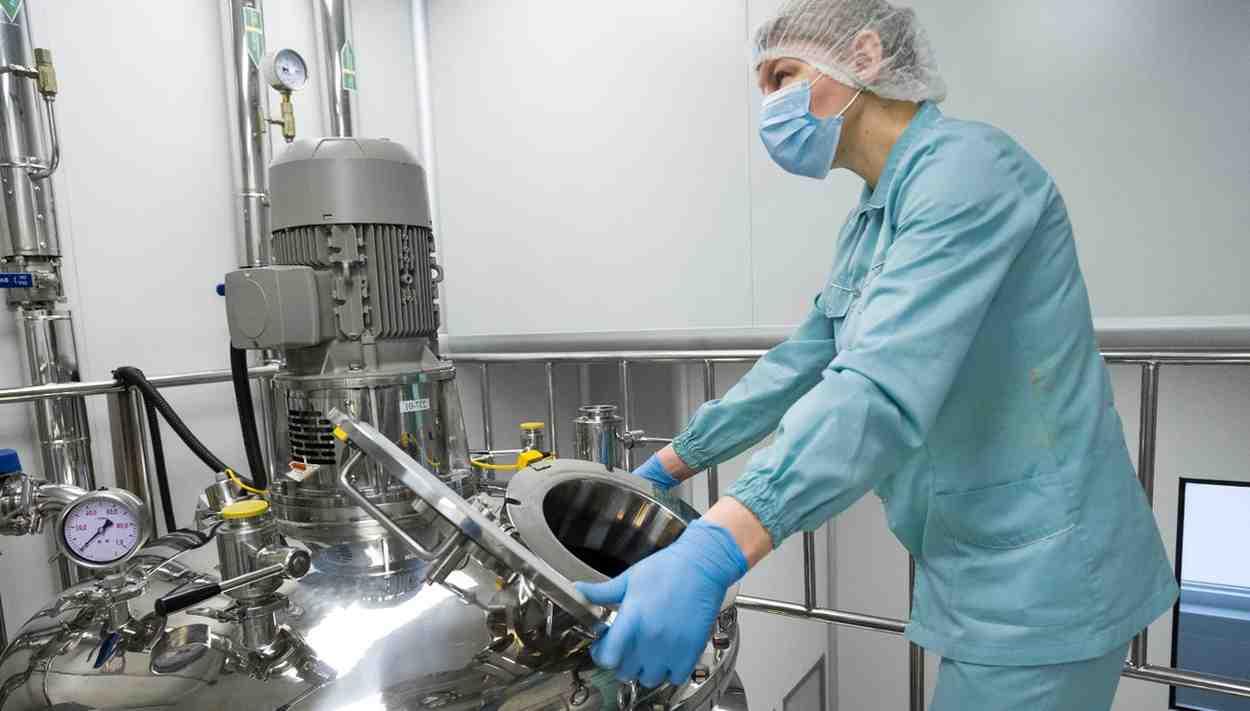
The importance of achieving the proper material texture, consistency and quality has increased dramatically due to the speed at which our industry develops products and performs research. Regardless of whether you are an independent lab operator, manager of a manufacturing facility or engineer working with a large corporation; your equipment selection affects how you get product results. Laboratory Bead Mills and High Speed Agitator Dispersers, for example, are types of equipment that help manufacturers and processors produce high-quality product faster and better, while decreasing costs associated with production. These types of laboratory equipment provide both prototype testing and complete production capabilities.
What Are Laboratory Bead Mills and Why Are They Important?
Laboratory Bead Mill machines are tiny, yet robust, used primarily by Research and Development laboratories to grind solid material into a very fine particle size as well as create a uniform mixture with a liquid. Laboratory Bead Milling utilizes tiny spherical or bead-like objects that travel at very high velocities inside a container or chamber filled with liquid. As solid material flows through the Bead Mill, it's ground into smaller pieces and smoothed out by contact with the Bead surface.
Laboratory Bead Mills are extremely valuable tools in several markets where the way products feel, look and perform depends on the size and density of the particles used in the formulation. As a result, researchers utilize Laboratory Bead Milling to assess the test their new formulations to ensure that the same results will be obtained each time a researcher creates and tests the formulation.
Laboratory Bead Mills provide an additional advantage of control. Research scientists are able to modify the bead size, rotary speed and duration of time in which the bead is in contact with the solid material to create a product depending upon the nature of the solid material being ground into small particles. By using such precise parameters for the Laboratory Bead Milling process, researchers are able to replicate their findings on a much larger scale when moving their product from the laboratory to large-scale production.
The Everyday Value of a High Speed Agitator Disperser
A High Speed Agitator Disperser provides the fastest and most consistent mix of materials. Many operators use this type of mixer when mixing thick liquids, powders and semi-solid materials, where extremely high shear is required to create a homogeneous blend. The high speed mixer generates an intense flow of liquid through the mixing vessel, drawing from the upper surface of the material, causing the material to be pulled downward and creating excellent mixing.
High Speed Agitator Dispersers are widely used by manufacturers of paints, chemicals, foods, cosmetics and adhesives. An example of how this equipment is used is during the manufacturing process for paints, where pigment distribution must be uniform to avoid creating a banded effect or spotty appearance. The high-speed agitator helps to minimize pigment clumping by breaking large lumps into smaller pieces and evenly distributing those particles within the liquid.
The primary benefit of this equipment is that it saves you time. Rather than having to spend hours manually mixing the material or utilizing typical response-speed mixers to accomplish your task, you can quickly complete your mixing with a high-speed disperser, thus providing your company with a more efficient work flow that allows you and your employees to spend time on other higher priority tasks.
Choosing the Right Industrial Agitator Tank Manufacturer
Production methods go from laboratory to factory when large-scale manufacturing occurs with the assistance of an Industrial Agitator Tank Manufacturer. The Industrial Agitator Tank Manufacturer designs and builds Industrial Agitator Tanks, which are large containers used to create a mixture of different raw materials and may even be capable of heating and cooling these same raw materials.
Many different industries utilize Industrial Agitator Tanks to produce their products. Some examples include Chemical, Food & Beverage, Pharmaceutical, Water Treatment and many others. Each of these industries has their own unique requirements related to Industrial Agitator Tanks regarding how they mix their ingredients and what types of ingredients they use to produce the product. For example, Chemical Industry would require thicker, heavier ingredients than the Food Industry, which uses water-based or light-weight ingredients and has different requirements regarding how accurately they control temperatures during production and how intensively they mix their ingredients.
An excellent Industrial Agitator Tank Manufacturer will understand the unique requirements of each industry, and therefore offer a variety of options that allow manufacturers to choose the best possible tank configuration based on their individual product needs. To determine the best Industrial Agitator Tank configuration, the manufacturer allows the customer to select their preferred tank material, choose an appropriate size for their specific production volume, and design an optimal agitator blade to facilitate effective mixing of their ingredients. Implementing the appropriate sized, designed and configured Industrial Agitator Tank can result in an increase in product quality, reduced energy usage, and increased efficiency of the overall production process.
How a Laboratory Wet Grinding System Makes a Difference
The Wet Grinding Laboratory is a type of laboratory/analyzing system that allows for the preparation of a wet, even finely ground mixture of materials with a liquid. Wet grinding of materials with a liquid can be very beneficial for companies that manufacture products using materials that can be affected by dust or extreme temperature. When wet grinding occurs, the risk of overheating of the mixture is minimized, and the amount of dust that may come from the project is reduced in the work area.
There are several industries in which the wet grinding process is utilized, including ceramics, chemicals, pharmaceuticals, and others. One example of a product that requires wet ground materials to create the proper consistency for making the final product is Medicine production, Many times, particle size must be very small and a uniform distribution of these small size particles in the formulation is required, and wet grinding systems produce this – and reduce the chance of damage to the final product during wet grinding.
Another benefit of using a wet grinding system is the ability for operators to have a greater level of control over the final product, because they can modify the ratio of liquid to materials and the length of time the product is in the grinder to create the desired final texture, and this allows for improved consistency in all batches of the product that are produced.
Connecting the Lab to the Factory Floor
Moving from the testing phase to the full-scale production phase of a product is one of the biggest obstacles many businesses face. The equipment and processes that work well in a laboratory environment may not perform the same way when scaled up to manufacturing in an industrial setting. Therefore, using equipment that allows for easy scaling of processes is critical for success.
Bead Mills and Laboratory Wet Grinding System provide businesses with the opportunity to test and refine their processes in a controlled environment before scaling up to a larger-sized facility or production facility. Once the most effective process has been determined, businesses can implement similar methodologies on larger pieces of equipment such as Large Agitator Tanks and High-Speed Dispersers. By several connections between test environments and full-scale production environments, companies can ensure that there is continuity of processes, thereby minimizing risk of failure during mass production.
Through the consistency of processes throughout the entire lifecycle of goods produced by the company, businesses will experience significant savings in both the cost of production and the costs associated with waste and having to replace inferior products.
Supporting Different Industries
Many different industries make use of mixers and mills. In the paint and coatings business, mixers and mills create smooth and durable colors. In food processing, mixers and mills ensure that all ingredients are mixed properly and safely. In the pharmaceutical industry, mixers and mills help to maintain the high-level of quality required for medications.
Mixers and mills also find important applications in research laboratories and universities, where they aid in the development of new substances and the experimentation with new concepts. The versatility of mixers and mills is an asset for both very large-scale facilities and smaller-scale facilities (Laboratory-type).
Simple Benefits That Matter Every Day
The benefits of having the right equipment are clear to anyone who works in manufacturing; better quality products, lower cost of manufacturing due to decreased production time, and a healthier work place are just a few of the advantages. Using the right equipment for repetitive tasks allows manufacturing teams to achieve the same outcomes with confidence, knowing that they can achieve results consistently every time.
When equipment is user-friendly and requires little maintenance, it allows the employees time to put their energy into creative thinking and troubleshooting; this allows a more collaborative and creative work environment, resulting in stronger productivity and profitability for the employer in the long term.
Final Thoughts
When you think about how fast and how well your products are manufactured, it is important to have the best equipment available to produce the highest quality products possible. Using Laboratory Bead Mill High Speed Agitator Dispersers, with Industrial Agitator Tank Manufacturers you trust, and wet grinding systems, you will be able to advance from concept to finished product in the fastest and most efficient way possible.
Once you know which of these systems are a part of your day-to-day operations, you will start making better decisions, streamline your processes, and create a platform to support your future business growth. The mixers and grinders that you will use are not just machines, they will be friends and co-workers that help you develop new and better products for the planet.

 Arabic
 French
 Spanish
 Portuguese
 Deutsch
 Turkish
 Dutch
Dutch
 Italiano
 Russian
 Romaian
 Portuguese (Brazil)
 Greek
Greek