


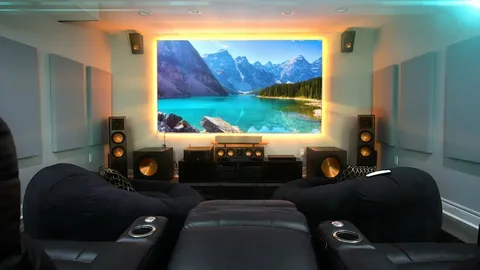
If you’re dreaming of a dedicated room that delivers cinema-like immersion and musical fidelity, a thoughtfully engineered Home Theater System is more than buying the fanciest TV and biggest speakers. Great systems combine room design, acoustics, precise speaker placement, correct amplification, optimized source playback and careful calibration to produce natural sound and convincing on-screen presence. This long-form guide walks you through planning, equipment choices, acoustic strategies, wiring and installation trade-offs, calibration techniques and how to integrate the theater into your wider home automation environment.
Define Your Goals And Use Cases First
The first step in any successful home theater system is to describe exactly what you want. Are you primarily watching movies with cinematic dynamic range? Do you want a hybrid space for movies and gaming, or a dedicated high-fidelity music room? Is your theater a casual family room with occasional movie nights or a serious screening room for critical listening and home cinema presentation? Clarifying goals affects nearly every design decision: room dimensions, speaker type, amplifier power, seating rows and even wiring pathways. Start with how the room will be used most often and let that guide the technical choices.
Room Selection And Layout Considerations
A physical room with good proportions simplifies the acoustic problem. Avoid perfectly square rooms where standing waves reinforce certain bass frequencies; instead choose rooms with length at least 1.4 times the width where possible. High ceilings can work beautifully for large-screen projection but require more acoustic treatment and careful speaker placement to preserve vertical coherence. Position seating so the primary listening seat is not at the room’s center where bass nulls often occur. Account for sightlines, screen size and throw distance when selecting a display or projector. The room’s layout will dictate speaker placement and the number of acoustic panels needed.
Plan The Visual System: Screen, Projector Or Flat Panel
Large-screen projection offers a true cinema experience when ambient light is controlled; modern projectors with HDR and high lumen ratings are compelling for dedicated rooms. For brighter family rooms, an OLED or high-quality LED flat panel may be the better choice with superior contrast in mixed-light environments. Screen gain, aspect ratio, and viewing distance must be tuned to your chosen format. For projection consider seating distance relative to the throw ratio and budget for motorized blackout shades and controlled lighting to preserve contrast. Your visual approach should complement the audio plan rather than compete with it.
Speaker System Topologies And Channel Configurations
Home theater systems typically range from simple 2.0 stereo to expansive immersive formats like Dolby Atmos with overhead channels. For cinematic immersion a starting point is the 5.1 system—left, center, right, two surrounds and a single subwoofer. Upgrading to 7.1 or adding height channels for Atmos produces greater envelopment but adds complexity and cost. Choose loudspeakers that match the room size: small sealed bookshelf speakers are often overwhelmed in larger rooms while substantial floorstander towers provide greater dynamic range. Center channel quality is crucial for dialog intelligibility; prioritize a high-performance center that timbre-matches the main L/R speakers. Subwoofers require careful placement and calibration to blend with the main speakers without overwhelming the room.
Amplification, Receivers And Processing Choices
An A/V receiver remains the easy all-in-one solution for many home theater systems, offering decoding, amplification, and convenient switching. For higher-end systems consider separating processing and amplification: a dedicated preamp/processor feeding discrete monoblock or multi-channel amplifiers reduces distortion and improves headroom. Verify receiver or processor support for the immersive audio formats you want—Dolby Atmos, DTS:X—and ensure the device has robust room correction capabilities. Be realistic about amplifier power: more power delivers cleaner dynamics and lower distortion at realistic listening levels; undersized amps will clip and can damage speakers during demanding passages.
Room Acoustics And Treatment Strategies
Acoustics transform a good speaker into a great theater. Treat first reflections with absorption at sidewalls and ceiling to preserve direct sound clarity. Implement bass trapping in corners and along wall-ceiling junctions to control low-frequency buildup. Use diffusion on rear walls for larger rooms to preserve a sense of space without deadening the room. Acoustic treatments don’t need to be visually ugly: fabric-wrapped panels, decorative diffusors, and integrated bass-trap furniture preserve aesthetics. Measure reverberation time and tune treatments to achieve a balanced, controlled room—adequate clarity for dialogue without a brittle dry sound is the goal.
Speaker Placement And Time Alignment
Precise speaker placement creates a coherent soundstage. Position left and right speakers at symmetrical angles flanking the screen, and align the center channel directly below or above the display, angled toward ear height. Surround speakers should sit slightly above ear level and behind the listening position for enveloping ambience. Time alignment (delay settings in the processor) compensates for differences in speaker distance so the sound from all channels arrives coherently at the listening position. Use the processor’s test tones and measurement microphone or a calibrated SPL meter to align levels and delay for accurate imaging.
Subwoofer Strategy And Integration
Low frequencies are omnidirectional, so subwoofer placement is flexible and often driven by room modes. Start with one high-quality subwoofer and test multiple locations to find a position with the most even deep bass response. For large rooms or to smooth room modes, add a second subwoofer spaced appropriately. Use your processor’s crossovers and slope settings to integrate subs seamlessly with main speakers, and apply room equalization to tame peaks and fill dips. Remember that excessive sub output can mask dialog and midrange detail; aim for a balanced blend.
Wiring, Conduit And Channel Planning
Don’t skimp on wiring. Use quality speaker cable of appropriate gauge, routed in conduit or chase to maintain clean runs and future access. Run dedicated power circuits for amplifiers and displays to avoid noise from heavy appliances. Plan for spare conduit and additional runs for future expansion—ceiling channels for height speakers and network cables for future streaming devices are inexpensive to add during construction. Carefully label all cables at both ends and maintain a wiring plan in your as-built documentation to simplify maintenance and future upgrades.
Room Control And Seating Ergonomics
Design seating to position listeners within the sweet spot for imaging and seating comfort for long sessions. Consider risers for multiple rows with appropriate sightlines and step lighting integrated with the control system. For user convenience, integrate lighting scenes (dim for movie, bias lighting for daytime viewing), blackout controls, and climate presets into a single, intuitive control surface or app. Physical remotes and wall-mounted keypads should provide quick access to the most common scenes to avoid complex menu navigation in the dark.
Calibration, Measurement And Fine Tuning
Calibration turns an assembled system into a tuned system. Use a measurement microphone with REW or the processor’s built-in tools to measure frequency response, SPL balance, time alignment and room modes. Apply equalization conservatively to preserve natural speaker tonality, and rely on parametric EQ to tame problematic room resonances rather than broadband boosts. Validate calibration with real program material across different subgenres—dialog-heavy scenes, orchestral music, and action sequences—to ensure the system performs well across content types.
Source Selection And Streamlined Media Flow
High-quality sources improve the listening chain. For a home theater system prioritize lossless or high-bitrate sources: UHD Blu-rays, well-encoded streaming services or a local media server with high-bitrate rips. Network streaming convenience must be balanced with codec support and bitrate limitations from streaming providers. For critical listening keep a reliable playback path with dedicated players and minimize additional processing in the chain. Use HDMI 2.1 or the latest supported standard for bandwidth headroom and feature compatibility.
Acoustic Isolation And Neighbour Considerations
If you plan to play loudly, address acoustic isolation. Decouple walls, add mass to partitions and use resilient channels or double-stud construction to reduce sound transmission. Isolate equipment racks and use vibration-mitigating feet for heavy amplifiers. Soundproofing reduces complaints and allows you to enjoy dynamic movies without disturbing others. This investment is especially important in multi-family buildings and attached housing.
Maintenance, Firmware Updates And Long-Term Care
A home theater system is a living system. Keep firmware current for processors, receivers and display devices but stage major updates to verify that automation scenes and integrations remain intact. Monitor lamp life for projectors and plan replacement cycles for consumables like projector lamps and display filters. Periodically check speaker connections and clean fans and vents on amplifiers to maintain thermal performance. Simple annual maintenance prevents sudden failures during an important screening.
Integration With Home Automation
A modern home theater system benefits from integration with your home automation platform: central lighting control for dimming and bias lighting, HVAC setback during long screenings, and security interlocks that pause playback for doorbell events if desired. Keep mission-critical automation local-first—for example, scene recall for “Movie Start” should not depend on external cloud services—to ensure predictable behavior. Use automation to enhance the theater experience without introducing fragility.
Budgeting And Prioritization
Home theater system budgets vary widely. Prioritize components that affect core experience: speakers and room acoustics generally deliver larger perceived improvements than incremental increases in amplifier power or flashy display features. Allocate funds to room treatments, a high-quality center speaker, and a balanced subwoofer solution before upgrading to exotic accessories. Work with an experienced local integrator to craft a plan that targets your top priorities while staying within budget.
Real-World Build Example
Imagine a medium-sized living room converted into a hybrid home theater and family room. The solution uses a 120-inch fixed screen with a 4K laser projector, a five-point 5.1 speaker system with a single high-performance subwoofer, acoustic panels at first reflections and bass traps in corners, a mid-tier A/V receiver with room correction and a streaming media server. Lighting scenes are integrated with a single-touch keypad that sets movie mode and lowers automated blackout shades. Commissioning involved measurement-based EQ, speaker delay settings and a one-hour family training session on the remote and app. The result: a room that serves family movies, serious cinema nights and gaming with no compromises.
Conclusion
A home theater system is an assembly of room, speakers, electronics and careful calibration. Great results flow from clear goals, proper room preparation, prioritized speaker choice, conservative and effective acoustic treatment, accurate measurement and thoughtful integration with control systems. Whether you seek a dedicated screening room or a hybrid family theater, invest in room planning and commissioning—those steps yield the most enduring and satisfying results, turning your space into a place where movies and music come alive.

 English
 Arabic
 French
 Spanish
 Portuguese
 Deutsch
 Dutch
Dutch
 Italiano
 Russian
 Romaian
 Portuguese (Brazil)
 Greek
Greek