


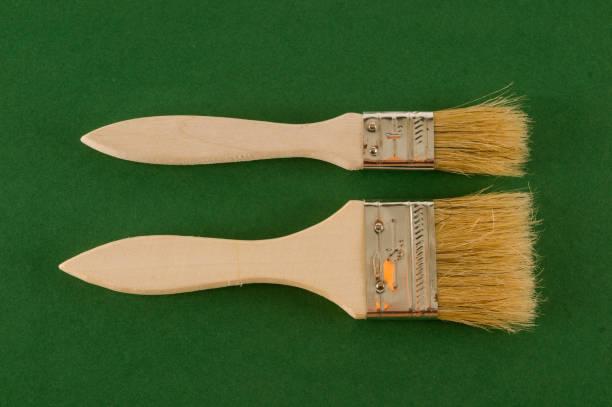
Let’s talk about the chip brush. Not glamorous. Not expensive. Definitely not the brush you hang on a pegboard to admire. But it works. And it shows up everywhere, especially when jobs get messy or rushed or both. You’ll see contractors buying chip brush bulk by the box, not because they love them, but because they make sense. These brushes are the work boots of the paint world. Cheap, rough around the edges, and surprisingly useful if you know what you’re doing. If you’ve ever wondered what a chip brush actually is, and why it’s different from your standard paint brush, let’s clear it up without the fluff.
So What Exactly Is a Chip Brush?
A chip brush is a basic, disposable-style paint brush. Usually made with natural bristles, sometimes a rough blend, stapled into a thin wood handle. No comfort grip. No fancy ferrule. No promises about long life. They come in common sizes like 1”, 2”, 3”, even 4”, and that’s about as complicated as it gets. These brushes were never designed for fine finishes or detail work. They’re meant to apply stuff you don’t want to baby. Epoxy. Glue. Resin. Oil. Stain. Sealers. The kind of materials that ruin good brushes fast. You use it, you toss it, and you don’t feel bad about it. That’s the whole point.
Where Chip Brushes Really Shine
Chip brushes earn their keep in ugly jobs. Coating bolts with rust inhibitor. Spreading epoxy in corners. Brushing adhesive where rollers won’t fit. They’re perfect for touch-ups, edges, and places where precision matters less than coverage. And because they’re cheap, you don’t hesitate. You don’t overthink it. Dip, brush, move on. That mindset alone saves time. On job sites, speed matters. Cleanup time matters too. A brush you can throw away without guilt? That’s valuable, even if it looks like it came from a bargain bin. Because, honestly, it probably did.
How Chip Brushes Differ From Standard Paint Brushes
Regular paint brushes are built to last. Synthetic or blended bristles, thicker handles, shaped grips, and better ferrules. They’re designed to hold paint evenly and leave smooth finishes on walls, trim, and cabinets. Chip brushes are the opposite. Bristles can be uneven. Some shed. Handles feel like paint sticks. And yeah, quality can vary a lot. But that’s intentional. You’re not paying for finesse. You’re paying for function. When a job will destroy a brush anyway, using a premium one is just throwing money away. Chip brushes exist so you don’t make that mistake.
Bristle Quality, or Lack of It
This is where people get confused. Chip brush bristles aren’t bad; they’re just honest. Natural bristles absorb thick materials well, which is why they work for epoxy and oil-based products. But they’re not cut for smooth paint flow. You might see brush marks. You might lose a few hairs early on. Pro tip: flex the bristles and knock them loose before using. Takes ten seconds and saves frustration. Compared to higher-end brushes, chip brushes don’t pretend to be something they’re not. They’re blunt tools. That’s fine.
Disposable by Design
A big difference between chip brushes and other paint brushes is intent. Chip brushes are meant to be disposable. Not cleaned carefully. Not stored. Not reused ten times. Could you reuse one? Sure. Sometimes. But most of the time, it’s faster to toss it. That’s why you see them sold in bulk packs, stacked high in supply rooms and trucks. When a brush costs less than the solvent needed to clean it, the decision is easy. Time wins. Always.
Why Pros Keep Buying Them Anyway
Professionals aren’t cheap. They’re efficient. There’s a difference. Using a chip brush for the right task avoids ruining better tools. It also avoids slowing down a workflow. When you’re sealing cracks, spreading resin, or touching up metal, nobody’s judging brush strokes. They’re judging whether the coating holds. Chip brushes deliver that without drama. That’s why they stay popular despite all their flaws. Or maybe because of them.
When You Should Not Use a Chip Brush
Let’s be clear. Don’t use a chip brush for finishing painting. Don’t cut in trim with one. Don’t expect smooth coats on walls or cabinets. That’s not what they’re for. You’ll fight the brush and hate the result. Use the right tool. Chip brushes are specialists. Crude specialists, sure, but still specialists. Respect that line, and you’ll save yourself a lot of frustration.
The Role of Single-Use Brushes on Real Job Sites
Near the end of most projects, there’s always a pile of brushes nobody wants to clean. That’s where single use paint brushes earn their spot. Chip brushes dominate this category because they’re predictable. You know what you’re getting. No emotional attachment. No sunk cost thinking. Use it hard, finish the task, toss it, move on. The same logic applies when crews rely on bulk paint rollers to keep jobs moving efficiently. In environments where chemicals, resins, or heavy coatings are common, disposable tools aren’t wasteful; they’re practical. Big difference.
Conclusion: Not Pretty, Just Practical
Chip brushes aren’t trying to impress anyone. They exist to solve a simple problem: how to apply nasty materials without ruining good brushes or wasting time. They’re rough, cheap, and effective. Different from standard paint brushes in almost every way that matters. And that’s why they’ve stuck around. If your job needs finesse, reach for something better. If it needs speed, coverage, and zero attachment, grab a chip brush and don’t overthink it. Sometimes the ugliest tool is the right one.

 English
 Arabic
 French
 Spanish
 Deutsch
 Turkish
 Dutch
Dutch
 Italiano
 Russian
 Romaian
 Portuguese (Brazil)
 Greek
Greek