


01/12/2026 Written by DengyueMed
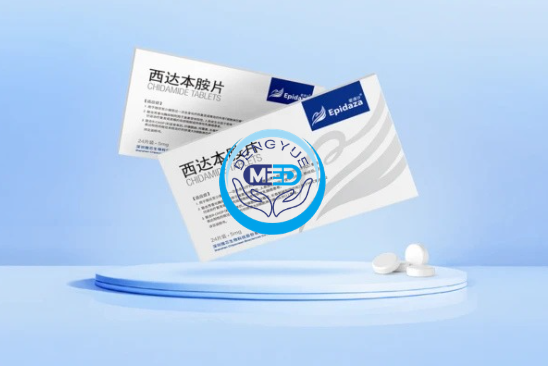
As oncology advances from conventional chemotherapy toward precision-targeted and immuno-oncology therapies, epigenetic modulators have emerged as a transformative new class of anticancer agents. Chidamide (brand name: Epidaza®), the first domestically developed original chemical new drug approved in China and the world’s first subtype-selective histone deacetylase (HDAC) inhibitor, represents a landmark achievement in China’s pharmaceutical innovation.
Beyond filling multiple gaps in China’s original drug development landscape, chidamide has demonstrated significant clinical value across several malignancies, including lymphomas and breast cancer, establishing itself as a flagship example of China’s growing capabilities in innovative biopharmaceutical research and development.
Core Mechanism: Precision Epigenetic Modulation to Reprogram the Tumor-Suppressive Microenvironment
The innovation of chidamide lies in its unique target profile and mechanism of action—subtype-selective inhibition of histone deacetylases (HDACs). Epigenetic regulation refers to the modulation of gene expression without altering the DNA sequence. Among these mechanisms, the balance of histone acetylation plays a critical role in controlling cell proliferation, differentiation, and apoptosis. In cancer cells, aberrant activation of HDACs leads to silencing of tumor suppressor genes, thereby promoting tumor initiation and progression.
Unlike traditional non-selective HDAC inhibitors, chidamide selectively targets HDAC subtypes 1, 2, 3, and 10, restoring histone acetylation levels and reactivating tumor suppressor gene expression. This, in turn, induces cell cycle arrest and apoptosis in tumor cells. Importantly, chidamide also reshapes the tumor-suppressive immune microenvironment, enhancing immune surveillance and cytotoxic activity against cancer cells. This dual mechanism—targeted epigenetic regulation combined with immune modulation—provides a strong scientific rationale for its use in combination with immunotherapies.
Expanding Indications: From Lymphoma to Breast Cancer, Addressing Unmet Clinical Needs
Since its first approval in 2014, the clinical footprint of Epidaza has continued to expand, with regulatory approvals in multiple regions and across a growing range of malignancies, precisely addressing unmet medical needs.
Peripheral T-Cell Lymphoma (PTCL): The First Breakthrough and a New Standard of Care
In December 2014, chidamide was approved in China for the treatment of relapsed or refractory peripheral T-cell lymphoma (PTCL) in patients who had received at least one prior systemic chemotherapy regimen. This approval filled a long-standing therapeutic gap in a disease characterized by high heterogeneity and poor prognosis, where conventional chemotherapy offers limited benefit.
Backed by over a decade of real-world clinical data, chidamide has been continuously included for eight consecutive years in the Chinese Society of Clinical Oncology (CSCO) Guidelines with Class I recommendation and Level 1A evidence, establishing it as a standard-of-care option for PTCL. In December 2021, chidamide monotherapy for relapsed or refractory PTCL was also approved in Japan.
Breast Cancer: Overcoming Endocrine Resistance with an Epigenetic–Immunologic Strategy
In November 2019, chidamide was approved in China in combination with an aromatase inhibitor for the treatment of postmenopausal patients with estrogen receptor–positive (ER+), HER2-negative advanced or metastatic breast cancer whose disease had relapsed or progressed following endocrine therapy.
The phase III ACE trial demonstrated significant clinical benefit in patients with endocrine-resistant disease. This indication was subsequently approved in Taiwan in March 2023. In the 2025 CSCO Breast Cancer Guidelines, the chidamide-based combination received a Class II recommendation, providing a new therapeutic option for patients with HR+ breast cancer, particularly those who have failed CDK4/6 inhibitor therapy.
Diffuse Large B-Cell Lymphoma (DLBCL): A Global First for MYC/BCL2 Double-Expressor Disease
In April 2024, chidamide in combination with R-CHOP (rituximab, cyclophosphamide, doxorubicin, vincristine, and prednisone) was approved by China’s National Medical Products Administration for the treatment of previously untreated DLBCL patients with MYC and BCL2 co-expression.
DLBCL is the most common lymphoma subtype, and patients with MYC/BCL2 double expression have particularly poor outcomes with standard R-CHOP therapy, with no established optimal treatment strategy for decades. The approval was based on the global first phase III DEB trial specifically targeting this high-risk subtype. Results showed a complete response rate (CRR) of 73%, representing an 11.1% improvement over the control group, with a 24-month event-free survival (EFS) rate of 58.9% and a 32% reduction in the risk of disease progression.
These results were selected as a Late-Breaking Abstract (LBA) at the 2024 ASCO Annual Meeting and were included in the 2025 CSCO Guidelines with Class I recommendation and Level 1A evidence, marking the only therapeutic strategy in nearly 20 years to significantly improve CR rates in this DLBCL subtype.
Adult T-Cell Leukemia (ATL): Expanding Global Reach
In June 2021, chidamide was approved in Japan as monotherapy for the treatment of relapsed or refractory adult T-cell leukemia (ATL), further extending its international clinical impact.
Clinical Evidence: Dual Validation of Efficacy and Safety
The clinical value of chidamide has been confirmed by multiple high-quality studies across different tumor types, demonstrating consistent efficacy with a manageable safety profile.
In the pivotal phase II PTCL trial, the mean duration of treatment with chidamide monotherapy was 4.4 months, with some patients receiving treatment for over one year. Common adverse events included thrombocytopenia, leukopenia, fatigue, and diarrhea, most of which were manageable with dose adjustments or supportive care.
In the DEB trial for DLBCL, the safety profile of chidamide combined with R-CHOP was consistent with known risks, with no new major safety signals identified. The proportion of patients completing six cycles of combination therapy was comparable between groups (80.6% vs. 77.8%), indicating good overall tolerability.
Notably, chidamide has also shown promising results in advanced colorectal cancer. In the CAPability-01 study led by Sun Yat-sen University Cancer Center, a triple regimen of chidamide plus sintilimab and bevacizumab was evaluated in heavily pretreated patients with microsatellite-stable/proficient mismatch repair (MSS/pMMR) metastatic colorectal cancer. The study reported an 18-week PFS rate of 64.0%, an objective response rate (ORR) of 44.0%, and a median PFS of 7.3 months. These findings were published in Nature Medicine, offering new hope for patients with immunologically “cold” tumors. The regimen has been granted Breakthrough Therapy designation, and a phase III trial is currently underway.
Dosing and Safety Considerations
Chidamide is a prescription medicine and should be administered under the supervision of experienced oncology specialists. Dosing regimens vary by indication:
-
PTCL: Recommended dose is 30 mg (6 tablets) twice weekly, with at least three days between doses, taken 30 minutes after breakfast. Treatment continues until disease progression or unacceptable toxicity.
-
DLBCL (Combination Therapy): Administered with R-CHOP every three weeks for six cycles. Chidamide is given at 20 mg (4 tablets) on Days 1, 4, 8, and 11 of each cycle, taken 30 minutes after meals. Patients achieving complete response may continue chidamide maintenance therapy for 24 weeks.
Regular monitoring of blood counts is essential. Treatment initiation requires adequate baseline hematologic parameters. Dose interruption, reduction, or discontinuation may be necessary in cases of grade ≥3 hematologic or non-hematologic toxicities. Use in patients with significant hepatic or renal impairment should be approached with caution due to limited data.
Future Outlook: Expanding the Boundaries of Cancer Treatment Through Combination Immunotherapy
As a benchmark of Chinese pharmaceutical innovation, the development of chidamide continues to evolve. In addition to approved indications, a phase II trial of chidamide combined with tislelizumab as first-line therapy for non–small cell lung cancer has completed enrollment, while a global multicenter phase III trial combining chidamide with Opdivo® (nivolumab) as first-line therapy for melanoma is ongoing.
With the continued advancement of combination immunotherapy strategies, chidamide is expected to achieve further breakthroughs across a broader range of solid tumors and hematologic malignancies, delivering meaningful survival benefits to more patients worldwide.
Conclusion
The successful development and commercialization of chidamide exemplify China’s transition from a generic-focused pharmaceutical model to true innovation. From addressing the unmet needs in PTCL to redefining treatment paradigms for high-risk DLBCL, chidamide continues to unlock new possibilities in oncology through its precise mechanism of action, proven clinical efficacy, and favorable safety profile.
As it moves onto the global stage, chidamide stands as a powerful testament to the potential of epigenetic regulation in cancer therapy and a solid foundation for the international advancement of Chinese original innovative medicines.

 English
 Arabic
 French
 Spanish
 Deutsch
 Turkish
 Dutch
Dutch
 Italiano
 Russian
 Romaian
 Portuguese (Brazil)
 Greek
Greek