


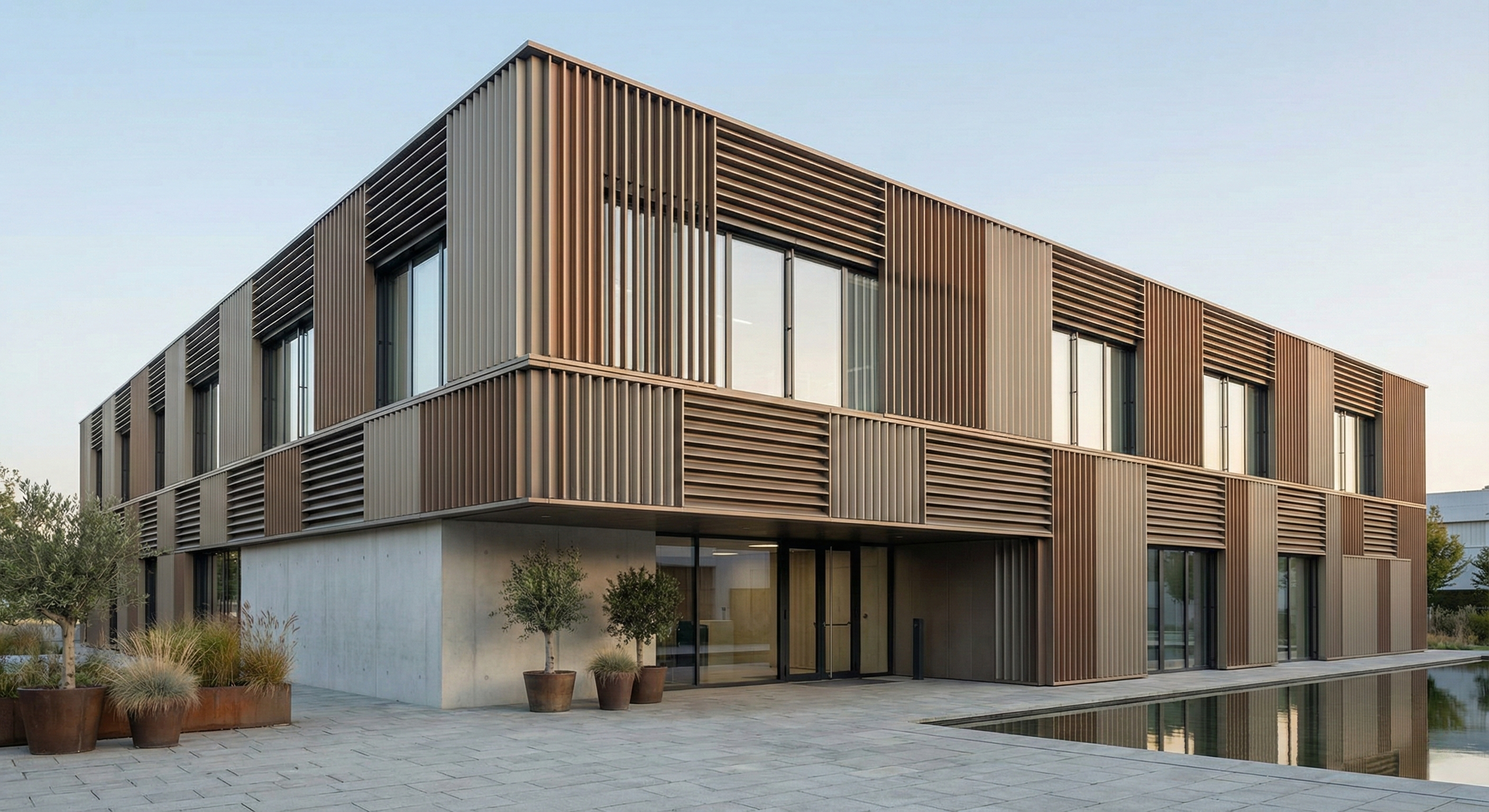
In contemporary architecture, façades are no longer static walls. They are living surfaces that regulate light, airflow, privacy, and visual identity. This is where Alstone Louvers redefine their role—not merely as façade elements, but as intelligent architectural tools designed for performance, aesthetics, and longevity.
Understanding Louvers Beyond Design Trends
Louvers have evolved significantly from their traditional role of ventilation and shading. Today, architects and planners expect them to solve multiple challenges simultaneously:
-
Reduce heat gain without blocking natural light
-
Improve façade depth and visual rhythm
-
Enhance energy efficiency
-
Complement modern material palettes
Alstone Louvers are engineered with these exact expectations in mind, making them suitable for both commercial landmarks and refined residential architecture.
The Engineering Behind Alstone Louvers
What differentiates Alstone Louvers is not only how they look, but how they are built. Manufactured using aluminium-based systems, these louvers offer a high strength-to-weight ratio, corrosion resistance, and dimensional stability across diverse climatic conditions.
From intense heat to heavy rainfall, aluminium louvers retain their form and finish, ensuring long-term façade performance without frequent maintenance. This makes them particularly relevant for Indian urban environments where weather variability is a constant architectural concern.
Design Freedom Without Structural Compromise
One of the strongest advantages of Alstone Louvers lies in their design adaptability. Architects are not forced to design around the product; instead, the product adapts to the architectural vision.
Alstone Louvers can be:
-
Installed vertically or horizontally
-
Integrated into façades, balconies, pergolas, and screens
-
Customized in spacing, profile depth, and surface finish
-
Coordinated with ACP sheets, glass, and honeycomb panels
This flexibility allows designers to maintain visual consistency across elevations while adding functional depth to the building envelope.
A Natural Balance of Light and Shadow
A well-designed façade controls light rather than blocking it. Alstone Louvers create a subtle interplay of shadow and daylight, reducing glare and heat while preserving openness. This balance enhances interior comfort and reduces dependency on artificial cooling and lighting systems.
For occupants, this translates into spaces that feel calmer, cooler, and visually connected to the outdoors—an often overlooked but deeply valuable architectural outcome.
Sustainability as a Structural Advantage
Sustainability is not an afterthought in Alstone Louvers; it is embedded in the material choice and performance characteristics. Aluminium is recyclable, durable, and efficient over its lifecycle. By improving passive shading and ventilation, louvers also contribute indirectly to energy savings over time.
For projects aiming to align with green building principles, Alstone Louvers support both environmental responsibility and architectural integrity.
Why Architects and Developers Trust Alstone Louvers
Decision-makers in architecture and construction value reliability as much as creativity. Alstone Louvers offer:
-
Consistent manufacturing quality
-
Scalable solutions for small and large projects
-
Visual sophistication aligned with modern design language
-
Long-term performance with minimal upkeep
This combination positions Alstone Louvers as a dependable façade solution rather than a decorative add-on.
Closing Perspective
Alstone Louvers represent a thoughtful convergence of engineering, design freedom, and architectural intelligence. They allow buildings to respond to climate, context, and user comfort while maintaining a strong visual identity.
For architects, developers, and planners seeking façade solutions that perform as beautifully as they appear, Alstone Louvers offer clarity, confidence, and creative control—without compromise.


 Arabic
 French
 Spanish
 Portuguese
 Deutsch
 Turkish
 Dutch
Dutch
 Italiano
 Russian
 Romaian
 Portuguese (Brazil)
 Greek
Greek