


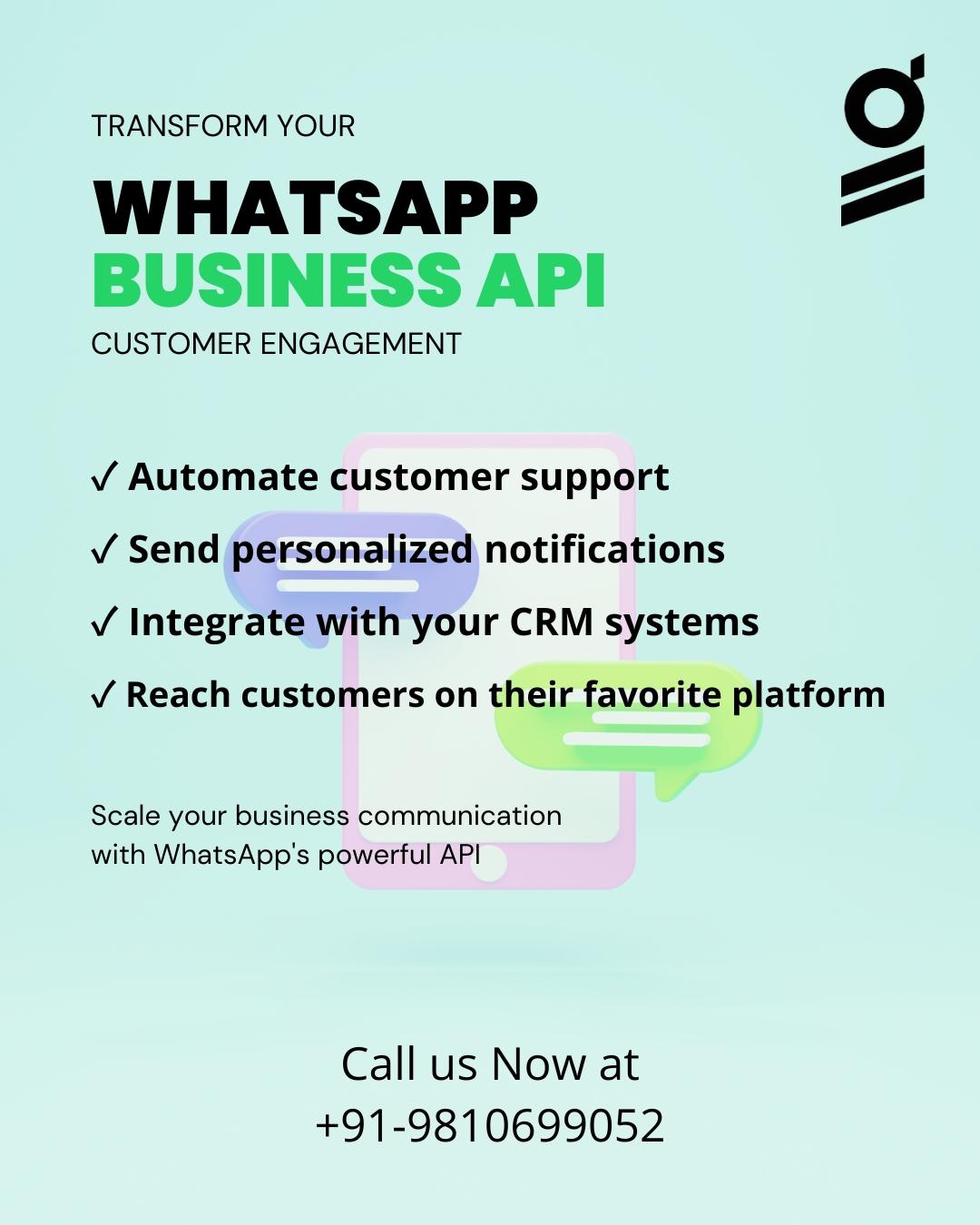
As customers increasingly prefer messaging over calls and emails, businesses are turning to automation to meet rising expectations for speed and availability. WhatsApp chatbots have emerged as a powerful solution, enabling brands to automate conversations, provide instant responses, and deliver personalized experiences on one of the world’s most popular messaging platforms.
By combining the reach of WhatsApp with intelligent automation, chatbots help businesses engage customers efficiently while reducing operational costs.
What Are WhatsApp Chatbots?
A WhatsApp chatbot is an automated conversational tool built on the WhatsApp Business API that interacts with users through predefined rules or artificial intelligence (AI). These chatbots can answer FAQs, share information, guide users through processes, and even complete transactions—24/7, without human intervention.
Unlike basic auto-replies, WhatsApp chatbots can handle complex workflows, understand user intent, and seamlessly transfer conversations to human agents when needed.
How WhatsApp Chatbots Work
WhatsApp chatbots operate through the WhatsApp Business API and are integrated with backend systems such as CRMs, payment gateways, and order management platforms. When a customer sends a message, the chatbot analyzes the input and responds with relevant information, buttons, or menus.
Businesses can design chatbots using:
-
Rule-based flows (menu-driven responses)
-
AI and NLP-powered conversations
-
Hybrid models combining automation and live agents
Key Features of WhatsApp Chatbots
1. 24/7 Instant Responses
Chatbots provide immediate replies to customer queries at any time, improving response speed and customer satisfaction.
2. Automated FAQs and Support
Common questions related to pricing, services, policies, and delivery can be handled automatically, reducing support workload.
3. Interactive Buttons and Menus
WhatsApp chatbots support quick-reply buttons and list messages, making conversations simple and user-friendly.
4. Personalized Conversations
By integrating with customer data, chatbots can deliver personalized messages based on user preferences and history.
5. Seamless Human Handover
Complex or sensitive queries can be transferred smoothly to live agents without losing conversation context.
6. Secure and Verified Communication
Messages are sent through official WhatsApp Business profiles, ensuring trust and authenticity.
Benefits of WhatsApp Chatbots for Businesses
Improved Customer Experience
Instant responses and guided conversations eliminate long wait times and frustration.
Operational Efficiency
Automation reduces the need for large support teams, lowering costs while handling high volumes of queries.
Higher Engagement Rates
WhatsApp messages have significantly higher open and response rates compared to emails, ensuring better visibility.
Scalable Customer Support
Chatbots can manage thousands of conversations simultaneously, making them ideal for growing businesses.
Increased Sales and Conversions
Chatbots can qualify leads, recommend products, send reminders, and guide users toward purchases.
Common Use Cases of WhatsApp Chatbots
-
E-commerce: Product discovery, order tracking, returns, abandoned cart reminders
-
Banking & Finance: Balance inquiries, transaction alerts, FAQs
-
Healthcare: Appointment booking, reminders, patient support
-
Education: Course inquiries, admissions support, exam updates
-
Travel & Hospitality: Booking confirmations, itinerary sharing, customer assistance
-
Real Estate: Property listings, lead qualification, site visit scheduling
WhatsApp Chatbots vs Traditional Customer Support
Traditional support channels like email and phone calls are often slow and resource-intensive. WhatsApp chatbots offer faster resolution, lower costs, and higher customer satisfaction. Unlike standalone mobile apps, WhatsApp chatbots require no downloads, making adoption effortless for users.
When combined with live agents, chatbots create a balanced support ecosystem that delivers efficiency without sacrificing human touch.
Best Practices for WhatsApp Chatbots
-
Keep conversations simple and intuitive
-
Use clear call-to-action buttons
-
Personalize messages where possible
-
Always provide an option to talk to a human
-
Monitor performance and continuously optimize flows
The Future of WhatsApp Chatbots
With advancements in AI and conversational intelligence, WhatsApp chatbots are becoming smarter and more context-aware. Future chatbots will offer deeper personalization, voice integration, and predictive responses—making customer interactions more natural and effective.
For businesses aiming to scale customer engagement while maintaining quality, WhatsApp chatbots are quickly becoming an essential part of digital communication strategies.
FAQs on WhatsApp Chatbots
1. Do WhatsApp chatbots require the WhatsApp Business API?
Yes, advanced WhatsApp chatbots are built using the WhatsApp Business API.
2. Can WhatsApp chatbots handle customer support and sales?
Yes, they can manage support queries, qualify leads, and even assist with sales processes.
3. Are WhatsApp chatbots secure?
Yes, WhatsApp uses end-to-end encryption, and business messages are sent via verified profiles.
4. Can chatbots be customized for different industries?
Absolutely. WhatsApp chatbots can be tailored to specific business needs and workflows.
5. Is it possible to switch from chatbot to human agent?
Yes, most WhatsApp chatbot solutions offer seamless handover to live agents.
6. Are WhatsApp chatbots suitable for small businesses?
Yes, they are scalable and beneficial for both small businesses and large enterprises.

 Arabic
 French
 Spanish
 Portuguese
 Deutsch
 Turkish
 Dutch
Dutch
 Italiano
 Russian
 Romaian
 Portuguese (Brazil)
 Greek
Greek