


High-risk facilities such as government buildings, military bases, airports, and critical infrastructure face unique security challenges. The stakes are high, and even minor oversights can lead to serious consequences. Traditionally, vehicle screening relied heavily on manual checks and basic surveillance methods. While these approaches were sufficient in the past, today’s security landscape demands far more advanced, precise, and reliable solutions.
In this article, we explore why traditional vehicle inspections are no longer enough for high-risk environments and how modern systems like UVIS can enhance overall security.
The Limitations of Manual Vehicle Inspections
Manual vehicle inspections involve visual checks by security personnel, sometimes complemented by basic scanning tools or mirrors for undercarriage viewing. While effective for simple threats, this method has several drawbacks:
-
Human error: Security personnel can overlook subtle anomalies due to fatigue or routine.
-
Time-consuming: Thorough checks can slow traffic and create bottlenecks at entry points.
-
Limited coverage: Manual checks cannot fully inspect concealed areas under the vehicle.
-
Inconsistent results: Different personnel may have varying levels of expertise, leading to unreliable inspection outcomes.
These limitations make traditional approaches unsuitable for high-risk environments where precision and speed are critical.
Evolving Threats Require Advanced Detection
Modern security threats are increasingly sophisticated. Vehicles can conceal explosives, contraband, smuggling compartments, or unauthorized tracking devices. Some threats are engineered to bypass basic visual inspections, making them nearly invisible to the naked eye.
High-risk facilities cannot afford to take chances. The consequences of missed threats range from operational disruptions to severe safety hazards. Automated systems offer a reliable solution by scanning and analyzing vehicles with precision that manual methods cannot achieve.
How UVIS Improves Security at Entry Points
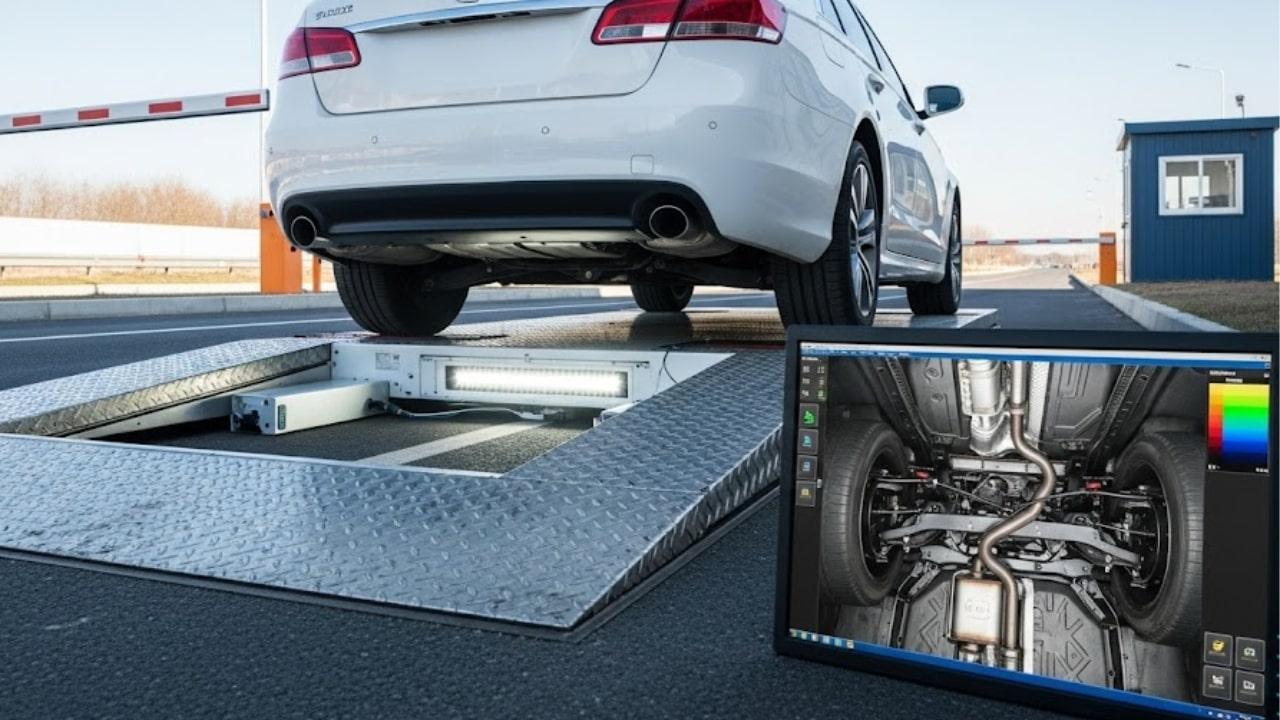
Under Vehicle Inspection Systems (UVIS) are designed to address the limitations of manual checks. These systems use high-resolution imaging, advanced lighting, and intelligent software to capture a vehicle’s undercarriage and detect anomalies. Key benefits include:
-
Comprehensive scanning: Every inch of the vehicle underside is analyzed for suspicious objects or modifications.
-
Real-time alerts: AI-enabled software instantly flags potential threats for security personnel to inspect further.
-
Reduced human error: Automation ensures consistent inspections regardless of workload or shift changes.
-
Efficient throughput: Vehicles are screened quickly without compromising safety or slowing operations.
By integrating UVIS into their security protocols, high-risk facilities gain both accuracy and efficiency.
Operational Efficiency and Traffic Flow
A critical consideration for high-risk facilities is maintaining smooth traffic flow while ensuring thorough inspections. Manual inspections can create long queues, especially during peak hours. Automated systems like UVIS streamline this process:
-
Vehicles are scanned while moving slowly over embedded scanners.
-
Data is processed instantly, reducing wait times.
-
Security personnel receive actionable alerts without manually inspecting every vehicle.
The result is a safer facility without operational delays.
Enhanced Documentation and Compliance
Maintaining accurate records is essential for audits, investigations, and compliance with security protocols. Traditional inspections often lack thorough documentation, relying instead on manual logs or memory. UVIS systems address this by:
-
Logging every scan automatically with timestamps and vehicle details.
-
Storing high-resolution images for future reference.
-
Allowing quick retrieval for audits or incident investigations.
This level of documentation strengthens accountability and regulatory compliance.
Integration with Other Security Systems
Modern UVIS can integrate with complementary technologies, creating a holistic security ecosystem:
-
License Plate Recognition (LPR) systems
-
Access control platforms
-
CCTV and video surveillance
-
Alarm and barrier systems
Integration allows security teams to monitor all aspects of facility entry in real-time, improving responsiveness and overall situational awareness.
Conclusion
High-risk facilities can no longer rely solely on traditional vehicle checks. The evolving nature of threats, combined with the limitations of manual inspections, necessitates a shift to advanced automated solutions. UVIS systems offer unparalleled accuracy, efficiency, and reliability, ensuring that every vehicle entering a high-security zone is thoroughly screened. By adopting these technologies, organizations not only enhance safety but also streamline operations, maintain compliance, and gain peace of mind knowing that potential threats are detected before they can cause harm.

 English
 Arabic
 French
 Spanish
 Portuguese
 Deutsch
 Turkish
 Dutch
Dutch
 Russian
 Romaian
 Portuguese (Brazil)
 Greek
Greek