


Agriculture is changing fast. Climate stress, shrinking arable land, water scarcity, and demand for consistent food quality are forcing growers to rethink old methods. Traditional soil farming, while proven, comes with variables that are increasingly difficult to control. Pests, pathogens, salinity, nutrient imbalance, and erosion can all reduce productivity.
Advanced farming looks for precision. It needs predictability, scalability, and efficiency. This is where soilless growing systems step in. By removing natural soil from the equation, farmers gain control over plant nutrition, moisture, oxygen, and root health. The result is higher yields with fewer resources.
What exactly is soilless soil?
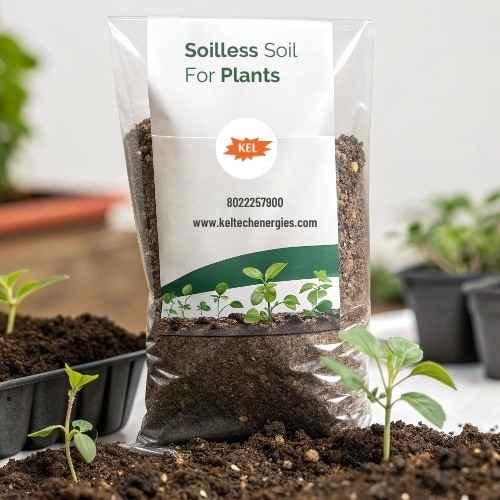
Soilless soil is a growing medium that replaces natural earth while still supporting plant roots. It does not contain field soil, yet it mimics its core functions. These include anchoring roots, holding moisture, allowing air exchange, and delivering nutrients.
Instead of relying on organic matter and minerals found in land soil, soilless systems use engineered substrates such as coco peat, perlite, vermiculite, rockwool, and peat blends. Nutrients are delivered through controlled solutions, making plant feeding precise and measurable.
The term Soilless Soil for Plants reflects this evolution. It is not about removing nature, but about optimizing it through science.
How does soilless farming improve crop performance?
Plants grown without soil experience fewer environmental shocks. Roots receive consistent oxygen levels, water availability, and nutrients. This stability accelerates growth and improves uniformity across crops.
In advanced farming environments like greenhouses and vertical farms, soilless systems allow growers to fine tune conditions for each crop stage. Seedlings establish faster. Vegetative growth becomes more vigorous. Flowering and fruiting are more predictable.
Yield per square meter increases significantly because plants waste less energy adapting to stress. Instead, they focus on growth and production.
Which advanced farming systems rely on soilless media?
Soilless media plays a critical role in several high efficiency farming models.
Hydroponics uses inert substrates to support roots while nutrients flow through water. Aeroponics suspends roots in air and delivers nutrients as mist. Vertical farming stacks plants in layers using lightweight media to reduce structural load.
Commercial nurseries also rely on soilless substrates for uniform sapling development. Controlled environment agriculture depends on consistency, and natural soil rarely provides it at scale.
Why is nutrient control a game changer?
In soil based farming, nutrients interact unpredictably with microorganisms, minerals, and pH fluctuations. Farmers often apply fertilizers without knowing how much plants actually absorb.
Soilless systems eliminate this guesswork. Nutrients are supplied in exact concentrations based on crop needs and growth stages. Electrical conductivity and pH can be monitored in real time.
This precision reduces fertilizer waste, lowers runoff pollution, and improves plant health. Crops develop stronger root systems and show fewer deficiency symptoms.
How does water efficiency improve with soilless systems?
Water is one of the most valuable inputs in agriculture. Traditional soil loses a large portion of irrigation through evaporation and deep percolation.
Soilless systems dramatically reduce water usage. Moisture is held close to the root zone and recycled when possible. Drip irrigation and closed loop hydroponics can cut water consumption by more than half compared to field farming.
This efficiency makes advanced farming viable even in water stressed regions.
Can soilless growing support sustainability goals?
Yes, and this is one of its strongest advantages. Soilless farming reduces dependency on fertile land, allowing food production closer to urban centers. Transport emissions drop. Fresh produce reaches consumers faster.
The absence of soil borne diseases reduces pesticide usage. Controlled nutrition limits chemical runoff into ecosystems. When paired with renewable energy and smart automation, soilless systems align closely with sustainable agriculture goals.
This is why many agri technology leaders, including Keltech Energies, invest in innovative material solutions that support next generation farming infrastructure.
What crops benefit most from soilless soil?
Leafy greens, herbs, strawberries, tomatoes, peppers, and cucumbers respond exceptionally well to soilless systems. These crops thrive on precise nutrient delivery and controlled root conditions.
Medicinal plants and high value horticultural crops also benefit due to improved quality consistency. Even fodder crops and flowers are increasingly grown using soilless substrates in commercial operations.
As research expands, crop diversity within soilless systems continues to grow.
Is soilless farming scalable for commercial use?
Scalability is one of its biggest strengths. Soilless systems can be designed for small urban farms or massive industrial facilities. Modular infrastructure allows easy expansion without land constraints.
Automation integrates seamlessly with these systems. Sensors, data analytics, and climate controls help operators manage large scale production with fewer labor inputs.
Consistency across batches makes supply chain planning easier for commercial buyers.
What challenges should growers consider?
Soilless farming is not without challenges. Initial setup costs can be higher than traditional methods. Technical knowledge is required to manage nutrient solutions and system maintenance.
Power dependency is another factor, especially in climate controlled environments. However, long term gains in yield, quality, and resource efficiency often outweigh these concerns.
With proper training and reliable inputs, these challenges become manageable.
What does the future hold for soilless soil technology?
Innovation is accelerating. New substrate blends improve water retention and root aeration. Smart fertigation systems use AI to adjust nutrition automatically. Biostimulants and microbial solutions are being adapted for soilless environments.
The concept of Soilless Soil for Plants will continue to evolve, blending material science, agronomy, and digital technology. As food demand rises and resources tighten, advanced farming will rely more heavily on these systems.
Final thoughts
Soilless soil is not a trend. It is a structural shift in how food is grown. By removing uncertainty and enhancing control, it empowers farmers to produce more with less.
Advanced farming demands precision, sustainability, and resilience. Soilless growing systems deliver all three. As adoption increases across commercial agriculture, they will play a central role in feeding future generations efficiently and responsibly.

 English
 French
 Spanish
 Portuguese
 Deutsch
 Turkish
 Dutch
Dutch
 Italiano
 Russian
 Romaian
 Portuguese (Brazil)
 Greek
Greek