


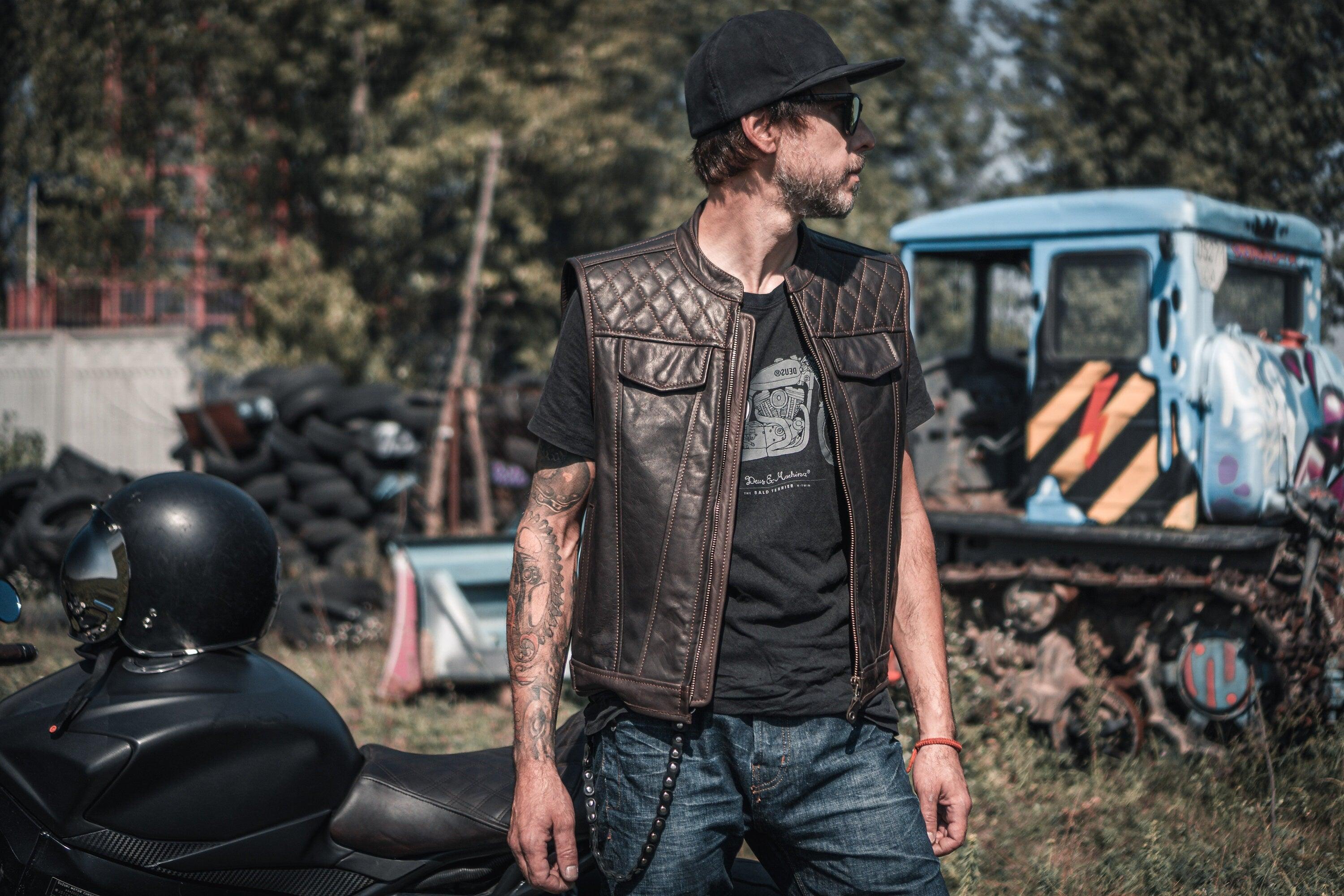
Cold-weather riding exposes a quiet contradiction many riders discover too late. Leather feels solid, protective, and dependable, yet when temperatures drop, a vest alone behaves more like a wind tunnel than a shield. This guide breaks down what riders actually experience on cold rides and how layering decisions either solve the problem or exacerbate it.
For riders who rely on a premium mens leather biker vest, the issue is rarely about the leather itself. Instead, it is about airflow, body heat escape, and how moving air interacts with the torso at speed. At highway pace, even mild cold becomes amplified. The chest cools first, then the shoulders, and eventually the core loses its ability to retain warmth.
This guide breaks down how cold affects the body while riding, why leather vests alone struggle in low temperatures, and how layering choices can either solve the problem or quietly make it worse. By understanding the mechanics behind heat loss and airflow, riders can make adjustments that improve warmth, control, and comfort without unnecessary bulk.
Limited Insulation in Open Vest Designs
Leather vests are structurally open by design. Unlike jackets, they expose the arms, sides, and sometimes the lower back. In cold conditions, these openings behave like vents that never close.
The torso generates heat constantly. When riding, that heat is pushed outward by airflow. Sleeveless construction allows cold air to circulate freely around the chest cavity, which accelerates heat loss. As a result, riders often feel chilled even when wearing thick leather.
For example, during early morning rides, the body struggles to maintain thermal balance. The vest protects against abrasion but does little to trap warmth. Over time, this imbalance leads to stiffness, slower reaction times, and mental fatigue.
Cold Air Entry at the Chest and Sides
Cold air does not simply brush past the vest. It presses inward. The chest and side panels experience direct wind pressure, especially when leaning forward.
In contrast to stationary cold exposure, riding creates forced convection. Air is driven into seams, armholes, and zipper channels. Once inside, it continuously dissipates heat. Riders often misinterpret this as poor leather quality, when in reality it is a physics problem.
On the other hand, tighter vests do not always solve this. Overly snug fits can compress inner layers, reducing their insulating ability. The goal is controlled airflow, not elimination of space entirely.
Heat Loss at Highway Speeds
Speed changes everything. At 30 mph, cold feels manageable. At 70 mph, it becomes aggressive.
Wind chill magnifies temperature loss exponentially. A vest that feels acceptable at low speeds becomes ineffective on open highways. Heat escapes faster than the body can generate it, particularly across the upper chest and collarbone area.
As rides extend, this heat deficit accumulates. Muscles tense, posture stiffens, and focus drifts. Riders often do not associate these symptoms with thermal loss, but the connection is direct.
Leather Vests Feel Colder While Riding
Leather insulates poorly without trapped air. Jackets create microclimates between layers. Vests do not.
Because leather is dense, it blocks abrasion but conducts cold efficiently when exposed to airflow. Without sleeves, the body lacks a thermal boundary at critical heat exchange points.
However, this does not mean vests are unsuitable for cold weather. It means they require intentional layering to function correctly.
Lack of Sleeves and Thermal Coverage
Sleeves play a crucial role in maintaining core temperature. Arms act as heat regulators. When they cool rapidly, the body redirects warmth away from the core to compensate.
Without sleeves, cold quickly reaches the armpits and shoulders. These areas have high blood flow, which accelerates heat loss throughout the body.
In contrast, a properly layered setup maintains warmth around these joints, allowing the vest to serve its protective role without compromising comfort.
Wind Chill Effect
Wind chill does not affect all areas equally. The upper chest, neck, and shoulders take the brunt of it.
When riders lean forward, airflow compresses against the vest’s front panel. This pressure forces cold air inward, primarily through zipper seams. Over time, this creates a persistent chill that no amount of mental toughness can ignore.
Therefore, addressing wind management becomes as important as insulation.
Body Heat Escaping During Long Rides
Short rides hide flaws. Long rides expose them.
Over time, even small heat leaks become significant. Sweat management also plays a role. Moisture trapped inside layers increases cooling once airflow penetrates.
For example, riders who overdress with non-breathable layers often feel warm initially. Later, damp fabric accelerates heat loss, worsening conditions.
Layering Issues Riders Face in Winter
Layering sounds simple, but often fails in execution. Many riders add thickness instead of strategy.
-
Excess bulk reduces mobility and strains the shoulders.
-
Poor layering traps moisture instead of heat
These mistakes compound over time, especially during touring or commuting.
Bulky Layers Restricting Movement
Heavy sweaters and thick hoodies compress under a vest. This restricts arm movement and alters riding posture.
As a result, riders unconsciously compensate by adjusting their grip and shoulder position. Over time, this leads to fatigue and discomfort that feel unrelated to temperature but actually originate from poor layering choices.
Lightweight insulation performs better than bulk. It preserves range of motion while maintaining warmth.
Poor Fit When Layering Under a Vest
Layering changes how a vest fits. A vest sized for summer may feel tight in winter, while one sized up may shift excessively.
This shifting creates gaps that funnel cold air inward. On the other hand, compressed layers lose their insulating value. The balance lies in structured layers that maintain shape under pressure.
Pressure Points
Each added layer introduces seams, folds, and compression points. These often align poorly with riding posture.
Pressure around the shoulders and neck reduces circulation, which worsens cold sensitivity. Riders often blame the vest, but the actual cause is friction from layering.
Cold Air Penetrates Leather Vests
Air behaves like water at speed. It seeks openings and forces its way through them.
-
Armholes act as intake channels.
-
Zipper seams act as a distribution path.s
Once air enters, it circulates freely unless blocked by proper layering.
Gaps Around Armholes and Zipper Lines
Armholes are the most vulnerable entry points. Cold air flows upward from the sides, reaching the chest and underarms.
Zipper lines, especially metal ones, conduct cold directly into the body. Without an insulating barrier beneath, these areas feel icy within minutes.
Loose Fit
Loose vests create turbulence. Instead of deflecting wind, they trap it.
This constant airflow prevents the body from stabilizing its internal temperature. Riders feel chilled even when layered because air still moves between garments.
Wind Forcing Cold Air
Improper layering creates channels between garments. Wind exploits these channels, stripping heat layer by layer.
Therefore, layering must function as a unified system, not as independent components stacked together.
Smart Layering Solutions
Effective layering focuses on function, not fashion.
Start with a moisture-wicking base layer that stays dry. Add a low-profile insulating mid-layer that traps air without bulk. Finally, adjust the vest fit to ensure everything is secure.
This approach enables best leather biker vests for men to perform reliably even in cold conditions.
Choosing Low-Bulk Thermal Base Layers
Modern thermal fabrics insulate without thickness. They maintain warmth while allowing sweat to escape.
These layers form the foundation of cold-weather comfort. Without them, even the best outerwear struggles.
Mid-Layer Options
Mid-layers should flex with movement. Quilted liners and insulated vests work well because they distribute warmth evenly.
Avoid rigid fabrics that bunch under leather. Smooth layers reduce friction and improve comfort over distance.
Adjusting Vest Fit
Winter riding demands slight adjustments. Side laces or adjustable panels help maintain a snug but flexible fit.
This prevents airflow while allowing layers to function correctly. When fit and layering align, the vest becomes part of the thermal system instead of a weak point.
Final Thoughts
Cold-weather riding tests preparation more than endurance. When layering is intentional, comfort becomes predictable.
Balancing warmth, airflow, and mobility allows riders to focus on the road instead of the temperature. Signs of success include steady body warmth, relaxed posture, and reduced fatigue over long distances.
Understanding these principles transforms how leather vests perform in winter conditions. Brands like First MFG Co design riding gear with these real-world dynamics in mind, reflecting how riders actually experience cold, movement, and time in the saddle rather than ideal conditions.

 English
 Arabic
 French
 Spanish
 Portuguese
 Deutsch
 Turkish
 Dutch
Dutch
 Italiano
 Russian
 Romaian
 Greek
Greek