


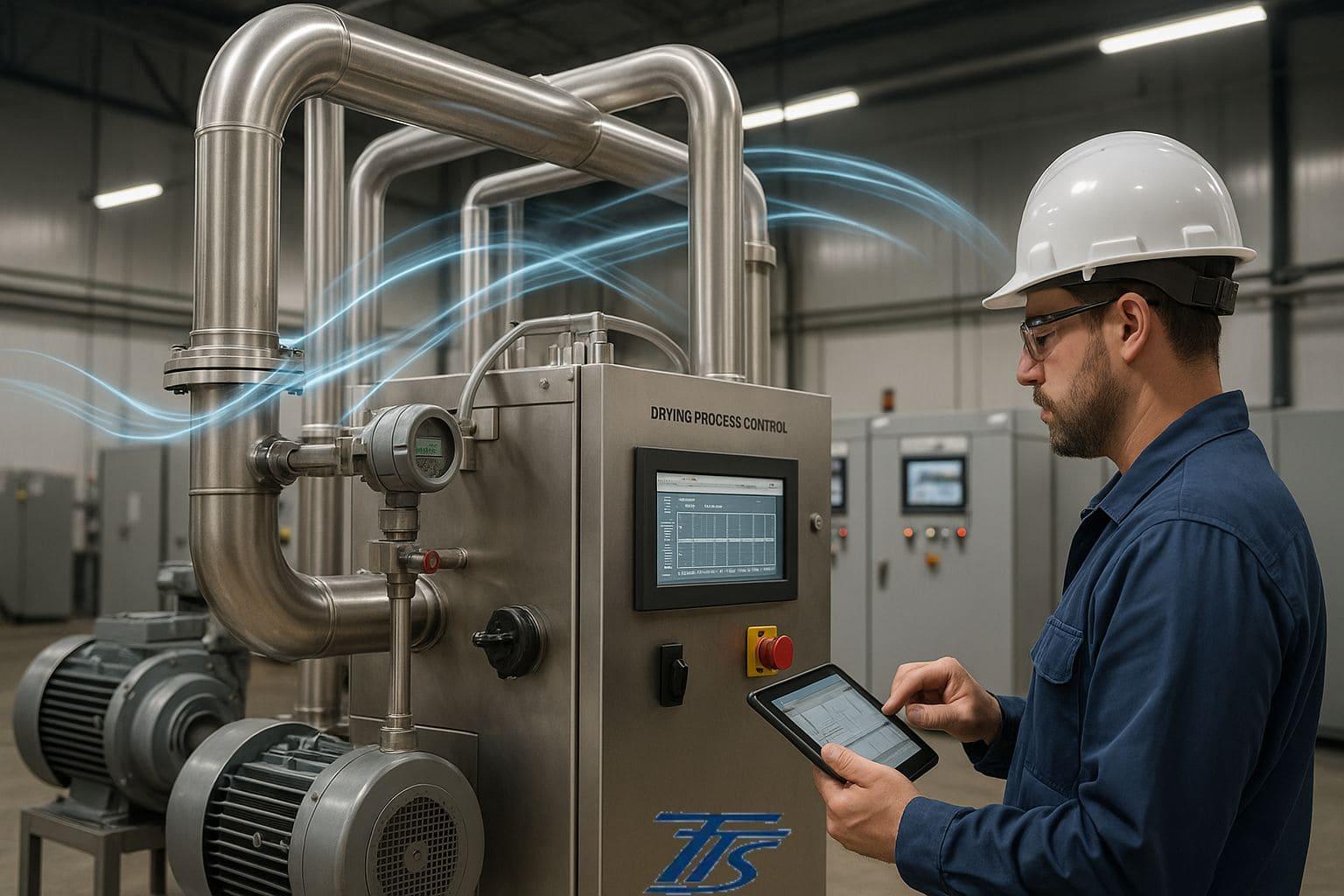
Accurate level measurement is critical in industrial processes where safety, efficiency, and product quality depend on precise control of liquids and interfaces. Many traditional level measurement technologies struggle in challenging conditions such as high pressure, temperature fluctuations, vapor presence, foam, or changing process densities. To overcome these limitations, industries increasingly rely on guided wave radar (GWR) technology.
The Rosemount 5300 Level Transmitter is a well-established guided wave radar level measurement solution designed for reliable, continuous level and interface measurement in some of the most demanding industrial environments. Known for its accuracy, stability, and ability to perform consistently under harsh process conditions, the Rosemount 5300 is widely used across oil & gas, chemical processing, power generation, and refining applications.
What Is the Rosemount 5300 Level Transmitter?
The Rosemount 5300 Level Transmitter is a guided wave radar level measurement instrument that provides continuous and highly accurate level readings. Unlike non-contact technologies, the Rosemount 5300 uses a probe that is in direct contact with the process media, allowing it to measure level reliably even in conditions with heavy vapor, foam, turbulence, or changing dielectric properties.
The transmitter sends low-energy microwave pulses along a probe. When these pulses encounter a change in dielectric constant—such as the liquid surface or an interface between two liquids—a portion of the signal is reflected back to the transmitter. By measuring the time it takes for the signal to return, the transmitter calculates the level with high precision.
Why Guided Wave Radar Technology Matters
Guided wave radar technology offers several advantages over traditional level measurement methods:
-
It is largely unaffected by changes in temperature, pressure, or vapor composition
-
Foam and turbulence have minimal impact on measurement accuracy
-
It provides stable performance in both low and high dielectric liquids
-
It allows reliable interface level measurement between two liquids
Because of these advantages, guided wave radar transmitters such as the Rosemount 5300 are commonly selected for applications where ultrasonic, differential pressure, or float-based technologies may struggle.
Key Features of the Rosemount 5300 Level Transmitter
High Accuracy and Repeatability
The Rosemount 5300 delivers highly accurate and repeatable level measurements, making it suitable for both inventory management and process control applications. Its stable signal processing ensures consistent readings over long operating periods.
Reliable Interface Measurement
One of the key strengths of the Rosemount 5300 is its ability to measure both total level and interface level simultaneously. This is particularly valuable in separator vessels, storage tanks, and oil-water interface applications.
Broad Process Compatibility
The transmitter supports a wide range of probe types and materials, allowing it to handle corrosive fluids, high-temperature processes, and high-pressure environments.
Minimal Sensitivity to Process Conditions
Changes in pressure, temperature, density, or vapor composition have little effect on guided wave radar performance. This makes the Rosemount 5300 ideal for dynamic process conditions.
Advanced Signal Processing
Sophisticated echo detection and signal filtering improve measurement reliability, even in applications with internal tank obstructions or complex vessel geometries.
How the Rosemount 5300 Works
The operating principle of the Rosemount 5300 is based on time domain reflectometry (TDR):
-
The transmitter generates microwave pulses and sends them down the probe.
-
The pulses travel along the probe until they encounter a change in dielectric constant.
-
A portion of the signal is reflected back to the transmitter.
-
The transmitter measures the time delay between transmission and reception.
-
The level or interface position is calculated based on signal travel time.
Because the signal is guided along the probe, measurement accuracy remains high even in narrow or complex vessels.
Applications of the Rosemount 5300 Level Transmitter
Oil & Gas
-
Separator vessels
-
Crude oil storage tanks
-
Interface measurement between oil and water
-
Process vessels with high pressure and temperature
Chemical Processing
-
Aggressive and corrosive liquids
-
Interface measurement in mixing and separation processes
-
Reactors and blending vessels
Refining
-
Fractionation columns
-
Storage and buffer tanks
-
Slurry and hydrocarbon applications
Power Generation
-
Boiler feedwater tanks
-
Condensate systems
-
Deaerators
Petrochemical and Specialty Chemicals
-
Inventory management
-
High-value chemical storage
-
Tanks with vapor and foam presence
Advantages of Using the Rosemount 5300
Improved Measurement Reliability
Guided wave radar technology ensures consistent performance in conditions where other technologies fail.
Reduced Maintenance Requirements
With no moving parts and minimal sensitivity to buildup, the Rosemount 5300 requires less maintenance compared to mechanical level devices.
Enhanced Safety
Accurate level and interface measurement helps prevent overfills, spills, and process upsets.
Long-Term Stability
The transmitter provides stable measurement over long periods, reducing the need for frequent recalibration.
Versatile Installation Options
A variety of probe configurations allows installation in both simple and complex vessels.
Limitations and Considerations
While the Rosemount 5300 offers excellent performance, proper application is essential:
-
Probe selection must match the process conditions
-
Very low dielectric liquids may require careful configuration
-
Buildup on probes can affect signal quality in some applications
-
Correct installation is critical for accurate interface measurement
Understanding these factors ensures optimal performance and long service life.
How to Select the Right Rosemount 5300 Configuration
When selecting a Rosemount 5300 level transmitter, consider:
-
Type of measurement required (level only or level + interface)
-
Process temperature and pressure
-
Liquid dielectric properties
-
Tank height and geometry
-
Presence of internal obstructions
-
Material compatibility for wetted parts
-
Hazardous-area certification requirements
Careful configuration ensures accurate, reliable measurement and reduces commissioning time.
Conclusion
The Rosemount 5300 Level Transmitter is a proven guided wave radar solution for continuous level and interface measurement in demanding industrial applications. Its ability to deliver accurate, stable measurements under challenging process conditions makes it a trusted choice across oil & gas, chemical, refining, and power generation industries.
By combining advanced signal processing, robust design, and flexible probe options, the Rosemount 5300 helps plants improve safety, optimize processes, and reduce maintenance costs. When properly selected and applied, it provides long-term reliability and dependable performance in critical level measurement applications.

 English
 French
 Spanish
 Portuguese
 Deutsch
 Turkish
 Dutch
Dutch
 Italiano
 Russian
 Romaian
 Portuguese (Brazil)
 Greek
Greek