


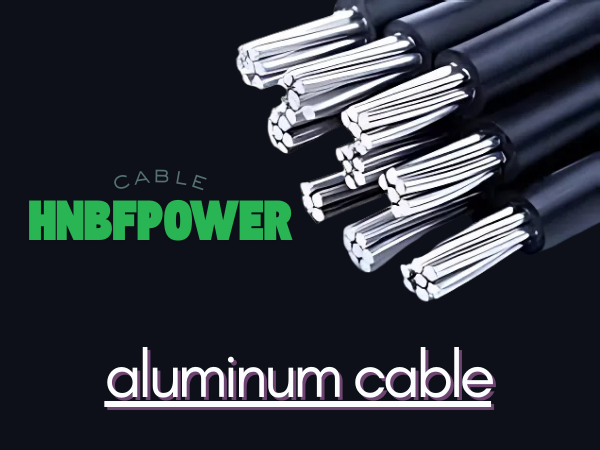
Aluminum cable plays a critical role in modern power transmission and distribution systems. For utilities, EPC contractors, and industrial buyers, selecting the right aluminum cable directly impacts network reliability, lifecycle cost, and project efficiency. This guide explains the technical advantages, applications, and selection criteria of aluminum cable, with insights relevant to engineers and procurement professionals involved in grid infrastructure projects.
What Is an Aluminum Cable?
An aluminum cable is an electrical conductor made primarily from aluminum or aluminum alloys, designed for overhead and underground power applications. Compared to copper, aluminum offers a strong balance of conductivity, mechanical strength, and economic efficiency, making it widely used in transmission and distribution networks worldwide.
HNBF Power manufactures a comprehensive range of aluminum-based conductors and power cables engineered to meet international utility standards and project-specific requirements.
Key Advantages of Aluminum Cable in Power Projects
Lightweight and High Strength-to-Weight Ratio
Aluminum is significantly lighter than copper, reducing tower loading, easing transportation, and simplifying installation—especially for long-span overhead lines and remote projects.
Cost Efficiency for Large-Scale Networks
For utilities and procurement teams managing large volumes, aluminum cable provides a lower total material cost without compromising performance, making it ideal for grid expansion and rural electrification.
Excellent Electrical Performance
Modern aluminum alloys deliver stable conductivity and thermal performance suitable for medium- and high-voltage transmission lines.
Corrosion Resistance
Aluminum naturally forms an oxide layer that protects against corrosion, supporting long service life in diverse environmental conditions.
Types of Aluminum Cables Commonly Used
AAC (All Aluminum Conductor)
AAC cables are made of pure aluminum strands and are commonly used in urban distribution networks where short spans and high conductivity are required.
AAAC (All Aluminum Alloy Conductor)
AAAC offers improved mechanical strength and corrosion resistance, making it suitable for coastal and industrial environments.
ACSR (Aluminum Conductor Steel Reinforced)
ACSR combines aluminum strands with a steel core, providing high tensile strength for long-span transmission lines and heavy-load applications.
ABC (Aerial Bundled Cable)
ABC systems enhance safety and reliability in low-voltage distribution, especially in densely populated or vegetation-prone areas.
HNBF Power supplies all these aluminum cable types with consistent quality control and compliance with IEC, ASTM, and utility specifications.
Key Considerations When Selecting Aluminum Cable
Electrical Load and Voltage Level
Engineers must calculate current-carrying capacity, voltage drop, and thermal limits to ensure optimal performance.
Mechanical Requirements
Span length, wind load, ice load, and installation tension influence conductor selection, particularly for overhead aluminum cables.
Environmental Conditions
Corrosive atmospheres, temperature extremes, and pollution levels should guide alloy and conductor type selection.
Standards and Compliance
Procurement buyers should ensure cables meet required international or national standards to avoid long-term operational risks.
Why Utilities Choose HNBF Power Aluminum Cable
HNBF Power is a trusted global manufacturer specializing in overhead conductors and power cables for utility-scale projects. With advanced manufacturing facilities and strict quality assurance, HNBF Power delivers aluminum cable solutions that support reliable power transmission, optimized installation, and long-term network performance.
FAQs About Aluminum Cable
Q1: Is aluminum cable suitable for high-voltage transmission lines?
Yes, aluminum cable—especially ACSR and AAAC—is widely used in high-voltage transmission due to its strength, conductivity, and cost efficiency.
Q2: How does aluminum cable compare to copper in power projects?
Aluminum is lighter and more economical, making it preferred for large-scale transmission and distribution, while copper is typically used for compact installations.
Q3: What standards apply to aluminum cables?
Common standards include IEC, ASTM, BS, and utility-specific specifications, all of which HNBF Power supports.
Q4: Can aluminum cable be customized for specific projects?
Yes, aluminum cables can be customized in conductor size, stranding, alloy type, and packaging based on project requirements.
Partner with HNBF Power for Reliable Aluminum Cable Solutions
Whether you are designing a new transmission line or sourcing cables for a large distribution project, HNBF Power offers engineered aluminum cable solutions tailored to utility and EPC needs. Contact HNBF Power today to discuss customized aluminum cable specifications, competitive supply options, and technical support for your next power infrastructure project.

 English
 Arabic
 French
 Portuguese
 Deutsch
 Turkish
 Dutch
Dutch
 Italiano
 Russian
 Romaian
 Portuguese (Brazil)
 Greek
Greek