


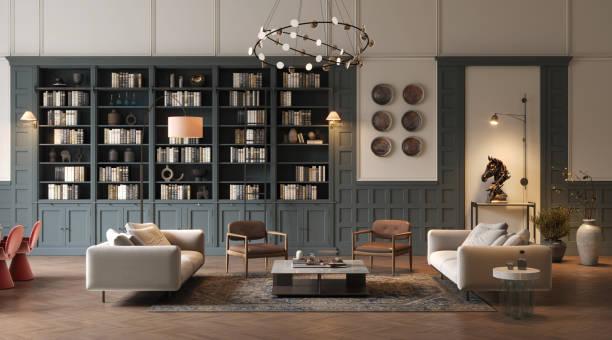
People love to assume monochrome interiors are dull. Or stiff. Or too “architect-y,” like something out of a sterile magazine spread nobody actually lives in. But spend five minutes in a well-done monochrome home and you realise it hits different. There’s a kind of quiet confidence to it. Not trying too hard. Not shouting for attention. And honestly, if you talk to any Interior Designer in Las Vegas, they’ll tell you monochrome is one of the few trends that actually ages well instead of falling apart in two years.
The funny thing is… something so simple ends up being really powerful.
Why Monochrome Isn’t the “Boring Choice” Everyone Thinks
The biggest misunderstanding about monochrome interiors is that they limit creativity. That’s backwards. They force creativity. When you pull colour out of the equation, everything else gets louder. Texture suddenly matters. Light matters. The silhouette of a chair matters. Even shadows—yes, shadows—have a role.
You start noticing the grain in the oak flooring or how your sofa's shape feels more sculptural because your eye isn’t distracted by colour noise. Monochrome is basically like zooming in on the small things that make a space feel designed, even if you didn’t intend to “design” it.
And it’s not just black and white. A room layered with creams, beiges, sand tones, off-whites, linen, chalky greys… that’s monochrome too. Or flip it and go moody: charcoals, inky blues, deep browns. There’s a whole spectrum that still counts.
People always think monochrome equals cold. But half the time it’s the warmest space in the house.
The Way a Monochrome Room Feels (This Part Sneaks Up on You)
What nobody prepares you for is the emotional shift. Because yeah, design is visual, but we forget how much a room affects our nervous system. A monochrome room has rhythm. It calms you without asking for permission. Maybe it’s because your brain stops working overtime trying to decode ten colours at once.
We don’t admit it, but most modern homes—especially in busy cities—are visually loud. Stuff everywhere. Random colours we never meant to buy. A room that sticks to one palette feels like a reset button. You walk in, and your shoulders drop a little.
It’s not monotony. It’s clarity.
A lot of people don’t understand how soothing that can be until they actually live in it.
Texture Makes or Breaks It (There’s Really No Shortcut)
If monochrome had commandments, this would be the first one: you need texture. No way around it. A flat monochrome room is… well, flat. Too matchy, too predictable. The trick is mixing materials the way a chef mixes ingredients.
Think: a rough stone vase against smooth plaster walls. A velvet sofa with a chunky wool throw. A woven rug near a metallic side table. Something shiny, something matte, something soft, something imperfect. That mix keeps the room alive.
This is where Las Vegas Home Interior Designers tend to have an edge. Vegas light is brutal in the best way. It changes hour by hour. Harsh at noon, warm at sunset. A textured monochrome space shifts with that light. The walls catch it. The fabrics catch it. The whole home slowly transforms throughout the day without you moving a thing.
It’s subtle, but once you notice it, you won’t unsee it.
Monochrome ≠ Minimalism (This Drives Me Nuts, Honestly)
People lump monochrome and minimalism into one box. As if using one palette automatically means you want an empty, museum-like space where nobody can relax. Couldn’t be further from the truth.
A monochrome room can be full of personality. Add books, imperfect pottery, layered throws, oversized art—whatever makes you happy. The palette pulls it all together.
You can mix modern pieces with heirlooms. You can keep things quirky. A monochrome home doesn’t erase personality; it frames it. It’s like putting everything you love under the same soft filter.
Minimalism is a lifestyle.
Monochrome is a language.
Totally different things.
Why More Homeowners Are Picking Monochrome Now
People are overwhelmed. That’s the honest reason. Life is noisy, work is nonstop, and phones are shouting at us all day. A calm home matters more now than ever. And monochrome gives you that calm without feeling like a design compromise.
A few more real-world reasons:
-
It won’t look outdated in two years.
-
It makes shopping easier—you don’t stress over colour matching.
-
It feels high-end without trying to flex.
-
It fits every style from Scandinavian to industrial to modern desert.
And yeah, it photographs well, but that’s just a bonus.
How to Make Monochrome Look Expensive (Without Spending Like Crazy)
There’s no rigid formula, but a few loose ideas help:
-
Mix tones—don’t match everything like a beige starter pack.
-
Add at least one dramatic element: stone, metal, oversized art.
-
Use lighting wisely. Soft lamps, warm LEDs, even candles.
-
Throw in something worn or natural so the room doesn’t feel too intentional.
-
And don’t overthink it. Overthinking kills monochrome faster than anything else.
The best monochrome rooms feel slightly undone. A little crooked. Lived in.
Where Monochrome Goes Wrong
Okay, honesty time. There are ways to mess this up.
The biggest mistake? Everything is in the same tone. It makes the room look like it came in a pre-labelled “Neutral Kit.” No depth, no energy.
Second issue: mixing warm and cool greys without noticing undertones. A cool grey sofa next to warm grey walls… they clash in a way that feels wrong, but you can’t explain why. Undertones matter a lot.
And the last mistake—trying too hard to copy a Pinterest photo. Homes work best when they reflect the people inside them. Not influencers.
Conclusion: One Palette, Surprisingly Deep Impact
Monochrome interiors aren’t about showing off. They’re about creating a space that actually feels livable, grounded, soft when you need soft, sharp when you need sharp. The power comes from the focus it brings. The ease. The quiet.
And despite what people assume, a good monochrome home isn’t plain at all. If anything, it ends up saying more with less. It holds the room together the way a good rhythm holds a song—steady, calm, confident.
That’s the part that sticks with you. The part that surprises you. The part that makes you walk into a monochrome room and think, “Yeah… this feels right.”

 English
 Arabic
 French
 Spanish
 Deutsch
 Turkish
 Dutch
Dutch
 Italiano
 Russian
 Romaian
 Portuguese (Brazil)
 Greek
Greek