


Imagine walking into a store without any signage, guidance, or clear way to find what you need. Chances are, you’d leave frustrated, and the store would lose a potential customer. Online, the experience isn’t much different. Digital users need guidance through the buying process, from first discovering a product to completing a purchase. That structured journey is exactly what marketers aim to create with a sales funnel.
From the second paragraph onward, we’ll explore Sales Funnel in Digital Marketing, its stages, practical applications, and why it’s crucial for turning casual visitors into loyal customers.
Understanding the Sales Funnel in Digital Marketing
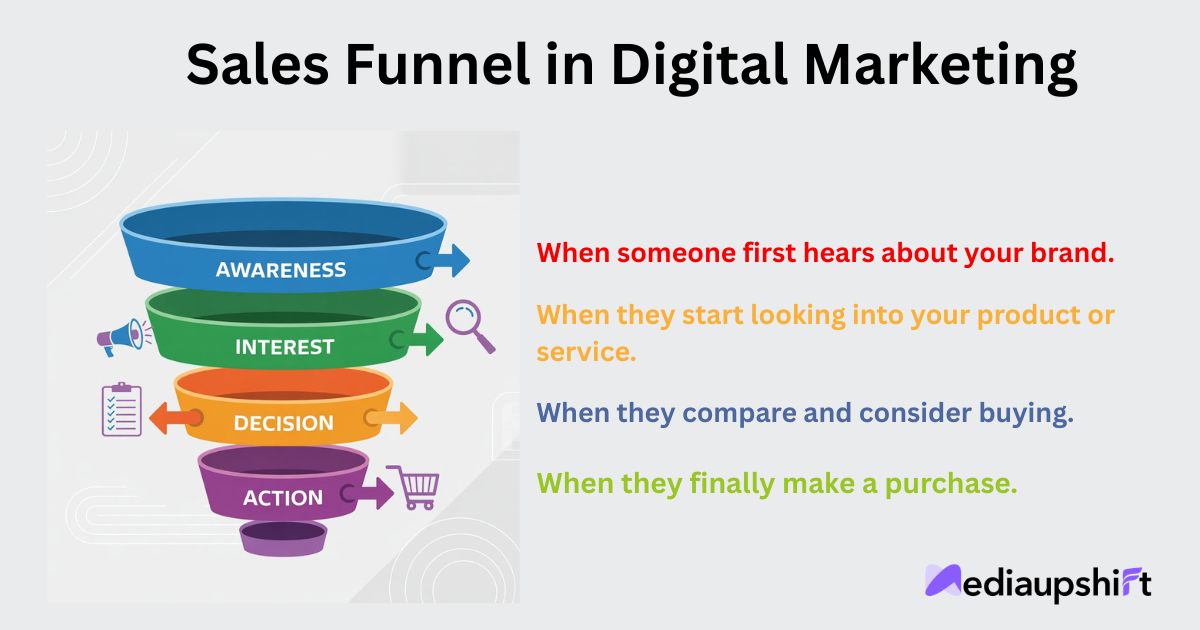
A Sales Funnel in Digital Marketing is a visual and strategic representation of the customer journey. It maps out the path a potential buyer takes—from discovering a brand to making a purchase and, ideally, becoming a repeat customer. Think of it as a funnel: the top is wide, attracting a large audience, and it gradually narrows as prospects move closer to conversion.
The goal of a digital sales funnel is not just to sell, but to guide users through a well-structured experience, building trust and providing value at every step.
Stages of a Sales Funnel in Digital Marketing
Most sales funnels consist of four main stages, each serving a distinct purpose:
1. Awareness Stage
At the top of the funnel, your goal is to make potential customers aware of your brand. Strategies include:
-
Social media campaigns
-
Blog posts and articles
-
Paid search or display ads
-
Influencer collaborations
At this stage, the focus is on educating, entertaining, or solving a problem rather than pushing for immediate sales.
2. Interest Stage
Once prospects are aware of your brand, you need to nurture their interest. This stage is about engaging them and demonstrating value.
-
Email newsletters or drip campaigns
-
In-depth guides or whitepapers
-
Webinars and videos
-
Retargeting ads
The aim is to encourage users to learn more and start considering your product or service as a viable solution.
3. Decision Stage
Now, your prospects are evaluating options. Here, you highlight why your offering is the best choice.
-
Product demos or trials
-
Comparison charts
-
Case studies and testimonials
-
Discount offers or limited-time promotions
The decision stage requires clarity, trust-building, and strong calls-to-action to encourage conversion.
4. Action Stage
At the bottom of the funnel, the prospect takes action—making a purchase, signing up, or requesting a consultation. Ensuring a seamless and reassuring process here is crucial.
-
Simplified checkout or signup process
-
Confirmation emails and thank-you messages
-
Onboarding content for new customers
A well-optimized funnel minimizes friction and maximizes conversion rates.
Why a Sales Funnel in Digital Marketing Matters
A clearly defined Sales Funnel in Digital Marketing helps businesses in several ways:
-
Improves Customer Understanding: Identifies where prospects drop off and what motivates them.
-
Optimizes Marketing Efforts: Allocates resources effectively across stages.
-
Boosts Conversion Rates: Guides users through a tailored journey that addresses their needs.
-
Enhances Retention and Loyalty: Post-purchase engagement turns buyers into repeat customers.
Using a sales funnel isn’t just for large corporations—small businesses and startups can benefit greatly from having a structured approach to digital marketing.
Practical Examples of Sales Funnels in Action
Here’s how sales funnels work in real-world digital marketing:
E-Commerce Website
-
Awareness: Instagram ad showcasing a new product line
-
Interest: Email with styling tips and product recommendations
-
Decision: Limited-time discount offer or product demo
-
Action: Seamless checkout and thank-you email
Software as a Service (SaaS)
-
Awareness: Blog post or webinar about industry challenges
-
Interest: Free trial sign-up or downloadable guide
-
Decision: Customer testimonials and feature comparison
-
Action: Subscription signup with onboarding emails
Hospitality Industry
Hotels or resorts can guide potential guests:
-
Awareness: Social media posts highlighting amenities
-
Interest: Virtual tours or blog posts about local attractions
-
Decision: Exclusive booking offers
-
Action: Booking confirmation and post-stay follow-up
In every scenario, a structured sales funnel helps convert casual visitors into paying customers while building trust and loyalty.
Optimizing Your Sales Funnel in Digital Marketing
To make the most of a Sales Funnel in Digital Marketing, follow these actionable tips:
-
Use Analytics to Track Behavior: Identify drop-off points and optimize content accordingly.
-
Segment Your Audience: Deliver personalized messages based on demographics, behavior, or stage in the funnel.
-
Test and Refine: A/B test landing pages, emails, and ads to maximize conversions.
-
Integrate Across Channels: Ensure consistent messaging across social media, email, and website.
-
Focus on Value: Offer helpful content and resources at each stage rather than hard selling.
A smartly optimized funnel can dramatically increase ROI and create long-term customer relationships.
The Role of Automation and Tools
Automation tools simplify the management of a sales funnel. For example, email marketing platforms can automatically send personalized follow-ups, while analytics tools monitor user behavior and conversions. Agencies like Mediaupshift emphasize how combining automation with strategy helps businesses scale marketing efforts without sacrificing personalization or customer experience.
Common Mistakes to Avoid
Even with a well-designed sales funnel, mistakes can derail conversions:
-
Neglecting top-of-funnel content, resulting in low awareness
-
Overly aggressive selling too early
-
Ignoring user feedback or analytics
-
Complicated checkout or sign-up processes
-
Failing to nurture post-purchase engagement
Being mindful of these pitfalls ensures your funnel works smoothly from start to finish.
Conclusion
A Sales Funnel in Digital Marketing is more than a marketing concept—it’s a roadmap that guides potential customers through awareness, interest, decision, and action. When implemented effectively, it not only increases conversions but also strengthens customer relationships and loyalty. From e-commerce to SaaS to hospitality, understanding and optimizing your sales funnel can transform casual visitors into devoted, repeat buyers.
Whether you’re a small business or a global brand, investing in a structured digital marketing funnel is essential for long-term growth.

 English
 Arabic
 French
 Spanish
 Portuguese
 Turkish
 Dutch
Dutch
 Italiano
 Russian
 Romaian
 Portuguese (Brazil)
 Greek
Greek