


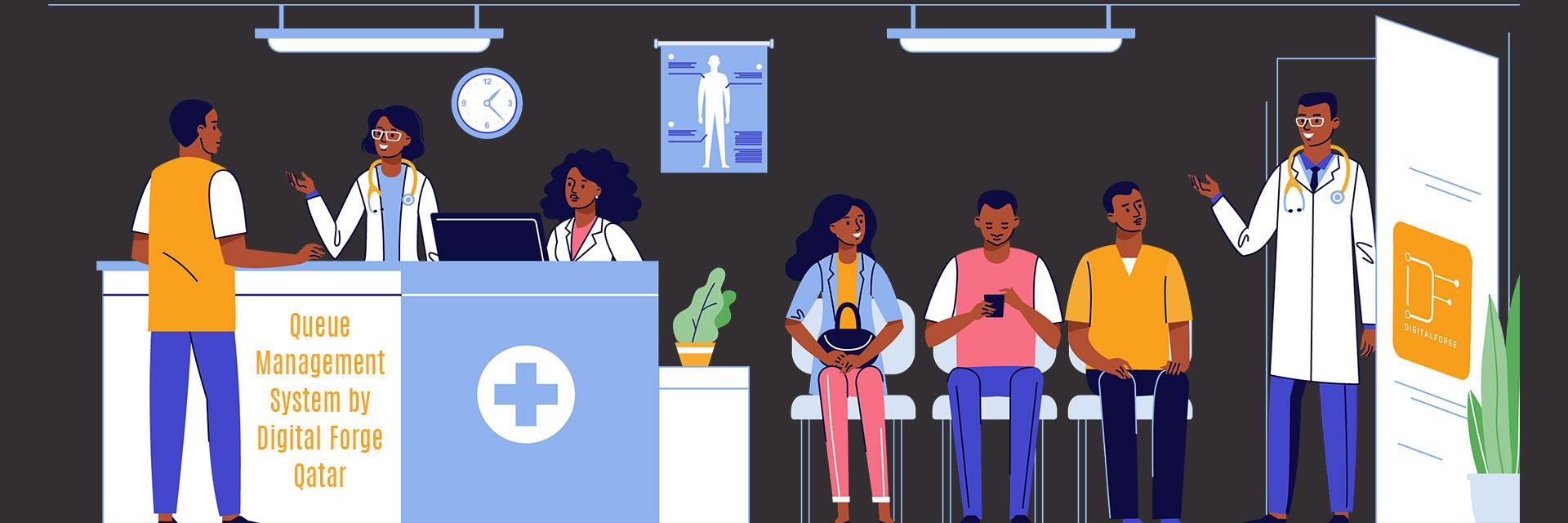
Crowds move fast in Doha. Banks fill up at salary time. Clinics see walk ins and booked visits at the same hour. Service centers host families, students, and visitors who all need clear guidance. An advanced Queue Management System turns that mix into an orderly flow. It shortens waits, reduces stress, and helps teams serve more people without rushing.
Why a Queue Management System is now essential
People judge service long before they reach the counter. If the lobby feels chaotic, trust drops. A Queue Management System sets a calm rhythm from the door. Visitors take a ticket at a kiosk or join from a phone. Screens show who is next and where to go. Staff focus on each case instead of managing lines by hand.
Mobile first queues that respect people’s time
Most customers in Qatar carry a smartphone. Let them join a virtual queue with a QR code, WhatsApp link, or a short form. The system sends a ticket number and live updates. If the visitor steps out for coffee at Msheireb or parks the car at The Pearl, they still know their place. Fewer crowding points mean a quieter waiting area and a better first impression.
Appointments and walk ins in one view
Mixing booked slots and drop ins is where many sites struggle. A strong Queue Management System places them on the same timeline. Late arrivals move to a flexible slot. Urgent cases get priority with manager approval. The screen shows estimated waits that adjust in real time. This keeps expectations honest and prevents repeated questions at the desk.
Clear signage that guides without shouting
Large screens list counters, numbers, and brief instructions in Arabic and English. Smaller displays at each desk confirm who is being served. The style stays simple. High contrast, large type, and plain wording. When people can see progress, they stay patient and staff answer fewer “how long” questions.
Smart routing that matches skill to service
Not every request takes the same time. New accounts, visa help, and medical intake all differ. A Queue Management System tags ticket types at the kiosk, then routes each to staff who can solve it fastest. Supervisors add or remove counters with a tap when demand shifts. The result is steady throughput and fewer bottlenecks.
Data that turns busy hours into smooth hours
Good decisions need facts. The dashboard shows arrivals by hour, average handling time, no shows, and first time resolution. Leaders can compare West Bay to Al Wakrah or weekdays to weekends. With this view, you adjust staff breaks, open extra counters ahead of a spike, and plan promotions around calmer periods. Over a month, small changes add up to shorter queues.
Service messages that lower anxiety
Simple, timely messages make waiting feel fair. “You are fifth in line. Estimated wait 12 minutes.” “Your turn at Counter 4.” SMS and WhatsApp alerts reduce missed calls and cut down on name shouting. For clinics, a reminder can include fasting notes or document lists. For banks, it can explain the documents needed for a loan so the officer can finish in one sitting.
Accessibility and family friendly options
Qatar’s public spaces welcome families and older visitors. A Queue Management System helps by offering priority tickets, clear audio prompts, and seating zones that match call orders. Strollers and wheelchairs move through wider lanes. Staff can call the next ticket only when they see the customer is ready, which keeps movement safe and predictable.
Integrations that keep work tidy
The queue should talk to the tools you already use. Tie ticket data to CRM so repeat visitors get context at the counter. Connect to appointment calendars and EMR systems for clinics. Link with payment and document scanners to close tasks in one flow. With these ties, staff stop retyping details and the visit ends faster.
Security and reliability built for real life
Service data is sensitive. A strong setup uses role based access and encrypted records. Backups run often. If the network drops, counters keep working and sync when the line returns. Hardware is rated for heat and dust, which matters in outdoor or semi open spaces. Reliability is invisible when it works, yet it shapes every visit.
Where the impact shows up first
-
Lobbies look calmer within a week
-
Average wait time drops as routing improves
-
Staff handle more cases with fewer escalations
-
Complaints decline because updates are clear
-
Branch managers plan shifts with confidence
These are practical gains that customers and teams can feel.
Industries in Qatar that benefit most
Banking uses precise ticket types for teller, advisory, and compliance checks.
Healthcare manages labs, pharmacy, and consultations without hallway crowds.
Government services keep documents in order and move families through logical steps.
Telecom and retail speed device swaps and billing disputes with clear paths.
Conclusion
Queues will never vanish, but confusion can. An advanced Queue Management System gives Qatar’s banks, clinics, and service centers a calm, fair, and efficient way to serve. Make it mobile friendly, bilingual, and data driven. Your customers will feel the respect in every visit and your numbers will show the lift in throughput and satisfaction.

 English
 Arabic
 French
 Spanish
 Portuguese
 Deutsch
 Turkish
 Italiano
 Russian
 Romaian
 Portuguese (Brazil)
 Greek
Greek