


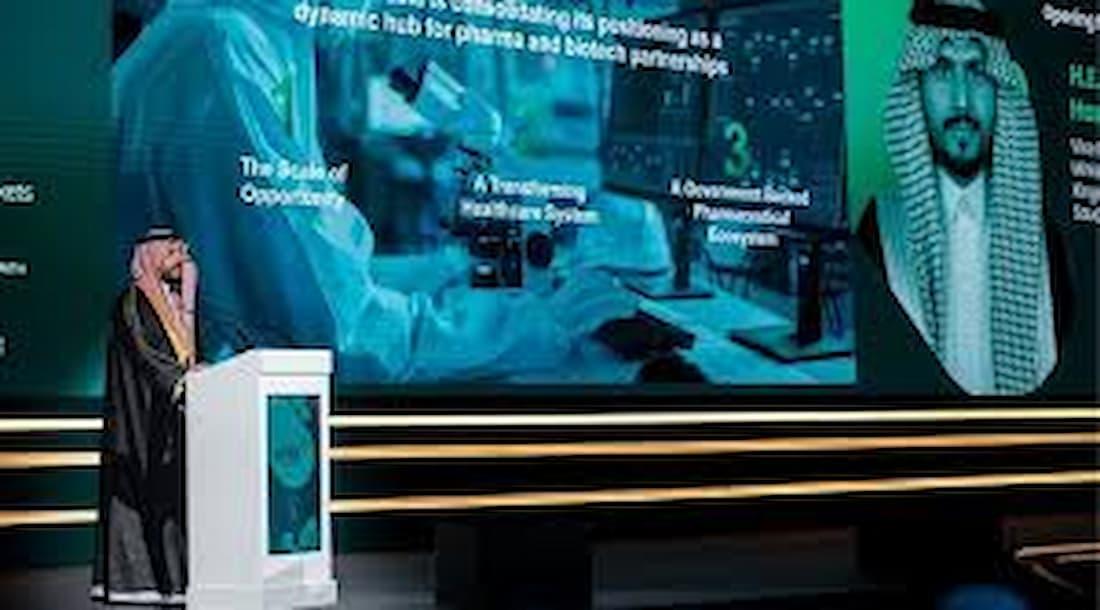
Once viewed merely as an oil-rich capital, Riyadh now commands international attention as one of the fastest-emerging pharmaceutical hubs on the planet. Massive public investment, bold regulatory reform, and strategic geographic positioning converge to create an ecosystem that global industry leaders can no longer ignore. As CPHI Middle East 2026 approaches, executives worldwide recognize that understanding Riyadh’s ascent has become essential for any serious growth strategy in the decade ahead.
This transformation did not happen accidentally. Deliberate policy decisions, multi-billion-dollar commitments, and an uncompromising focus on self-sufficiency propel the Kingdom toward pharmaceutical sovereignty. The following analysis reveals the forces driving this remarkable shift and explains why attendance at CPHI Middle East 2026 Riyadh represents a strategic imperative.
Vision 2030 Ignites an Unprecedented Industrial Renaissance
Saudi Arabia launched Vision 2030 with the explicit goal of reducing dependence on oil while creating high-value knowledge economies. Within this framework, the pharmaceutical sector received targeted priority status. Authorities established the Local Content and Government Procurement Authority (LCGPA) and mandated that 40 % of medicines consumed domestically must originate from local production by 2030. Consequently, international companies scramble to establish footprints before preferential access solidifies.
Moreover, the Ministry of Investment (MISA) streamlined licensing processes and introduced incentive packages that often cover 50 % of capital expenditure for strategic projects. These measures attracted more than USD 4 billion in announced investments between 2022 and 2025 alone. New mega-facilities in Sudair Pharma City and King Abdullah Economic City now produce everything from oncology injectables to advanced biologics at global standards.
Furthermore, the Public Investment Fund (PIF) actively acquires stakes in domestic champions such as SPIMACO, Jamjoom Pharma, and Tabuk Pharmaceuticals. This sovereign backing provides local players with capital depth rivaling that of mid-sized European firms. Investors therefore witness the birth of regional powerhouses capable of competing far beyond GCC borders.
Regulatory Agility Creates a Fast-Track Gateway to 400 Million Consumers
The Saudi Food and Drug Authority (SFDA) transformed itself from a conservative gatekeeper into one of the world’s most progressive regulators. It adopted reliance pathways that accept approvals from stringent authorities such as the EMA, FDA, and Health Canada within weeks rather than years. Additionally, the SFDA pioneered a “regulatory sandbox” for cell and gene therapies — the first in the MENA region — allowing controlled market access while data accumulate.
These innovations extend beyond speed. The authority actively harmonizes standards with the International Council for Harmonisation (ICH) and now chairs the GCC’s pharmaceutical committee. Companies that secure SFDA approval effectively unlock seamless registration across all six GCC states plus Yemen, creating an addressable market exceeding 65 million lives under unified requirements.
Additionally, Riyadh positions itself as the natural re-export hub for the wider Middle East and Africa. Modernized cold-chain infrastructure at King Khalid International Airport and the upcoming Riyadh Dry Port ensures temperature-controlled shipments reach sub-Saharan Africa faster than from traditional European hubs. Logistics giants already reroute strategic stock accordingly.
Mega-Investments Build World-Class Capacity from the Ground Up
Saudi Arabia deliberately constructs pharmaceutical cities designed for the 21st century rather than retrofitting aging plants. Sudair Pharma City, located just 120 km north of Riyadh, spans 26 million square meters and hosts dedicated clusters for APIs, biologics, and medical devices. Tenants benefit from on-site solar power plants, recycled water systems, and direct rail connectivity — advantages few legacy sites worldwide can match.
Major global players responded decisively. Pfizer broke ground on a 250,000-square-foot facility in 2024, while Sanofi, AstraZeneca, and Hikma either expanded existing plants or announced new ones. Domestic champion SPIMACO now operates one of the largest insulin cartridge lines outside Europe. Collectively, these projects will add more than 60 new production lines by 2028.
Moreover, contract manufacturers sense opportunity. Leading CDMOs such as Catalent, Lonza, and Saudi Biotech established or expanded presence to serve both local license holders and multinational firms seeking dual-source strategies post-COVID. This influx of expertise accelerates knowledge transfer and elevates quality standards across the entire ecosystem.
Talent Magnetism and Knowledge Clusters Complete the Ecosystem
Historically, the Kingdom relied on expatriate expertise. Today, it systematically builds domestic capability. King Abdullah University of Science and Technology (KAUST) launched specialized master’s programs in pharmaceutical engineering, while the new Saudi Biotech Academy trains hundreds of technicians annually on single-use systems and viral vector production. Simultaneously, repatriation programs lure Saudi PhD holders from Boston and Basel with competitive packages and leadership roles.
The Exhibition Company in Saudi Arabia plays a pivotal role by organizing targeted reverse trade missions and training symposia that accompany major events. These initiatives ensure that local workforce development stays perfectly aligned with industry requirements. Companies therefore discover talent pools that combine youthful energy, multilingual capabilities, and hunger for rapid advancement.
Furthermore, Riyadh emerges as the preferred location for regional headquarters. Novartis, Roche, and MSD already relocated their Near East hubs to the King Abdullah Financial District, citing proximity to regulators, modern infrastructure, and quality of life improvements. This clustering effect creates daily interaction opportunities that foster partnerships and accelerate decision-making.
Riyadh Awaits – Will You Claim Your Place?
By every objective measure — investment volume, regulatory sophistication, infrastructure quality, and talent development — Riyadh has vaulted into the top tier of global pharmaceutical hubs within a single decade. CPHI Middle East 2026 will serve as the ultimate showcase of this achievement and the launchpad for its next chapter.
Executives who still perceive the Kingdom primarily through the lens of oil revenues underestimate the scale and irreversibility of this transformation. Those who act now secure preferred partnerships, prime manufacturing slots, and regulatory goodwill that later entrants will envy. The window of maximum opportunity narrows with each passing month.
Reserve your presence at CPHI Middle East 2026 today. Return from Riyadh not merely informed, but positioned at the very center of the next great pharmaceutical success story.

 English
 Arabic
 French
 Portuguese
 Deutsch
 Turkish
 Dutch
Dutch
 Italiano
 Russian
 Romaian
 Portuguese (Brazil)
 Greek
Greek