


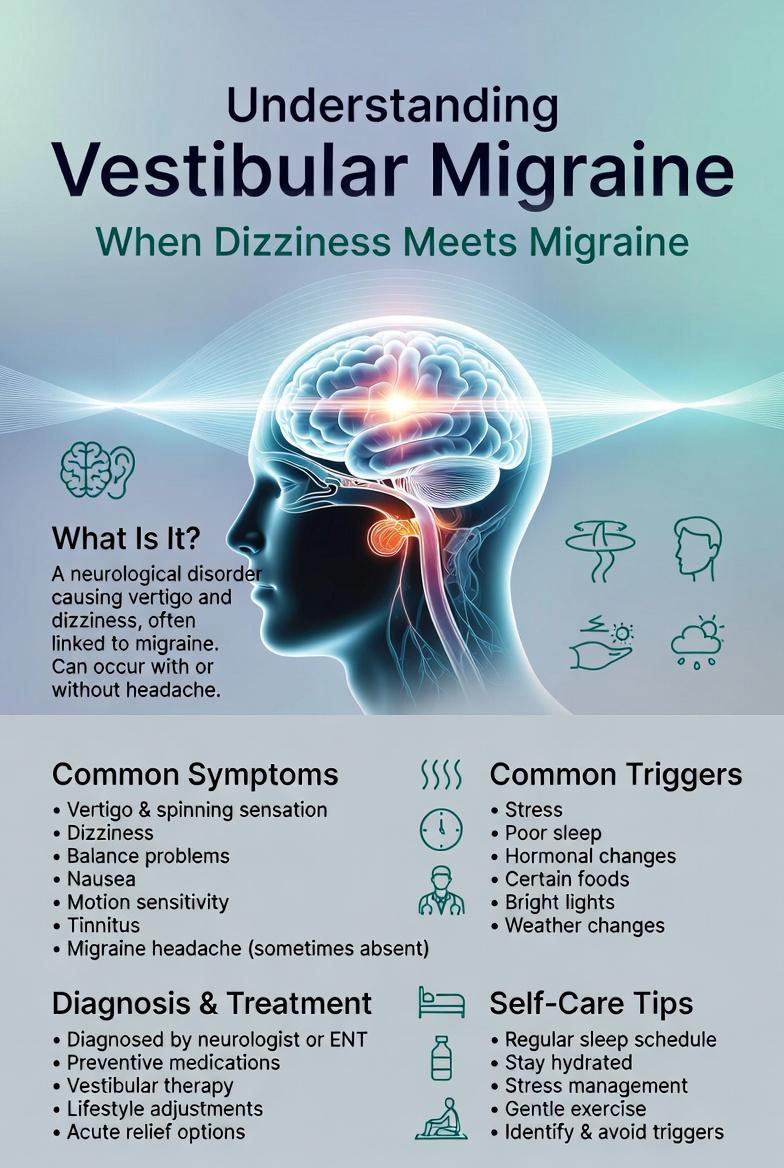
Vestibular migraine is a neurological condition that affects balance, spatial orientation, and sometimes hearing, often without the classic intense head pain associated with traditional migraines. Instead, it primarily involves dizziness, vertigo, and sensory disturbances that can be just as disabling.
Understanding the progression of common vestibular migraine symptoms is important because the condition does not always occur as a single event. Like many types of migraine disorders, vestibular migraine often unfolds in stages, each with its own set of symptoms and challenges.
This blog breaks down each stage of a vestibular migraine, what happens in the body during these phases, and how symptoms evolve from early warning signs to recovery.
Understanding Vestibular Migraine
Vestibular migraine is a type of migraine that primarily affects the vestibular system, which controls balance and spatial awareness. Unlike typical migraines, it may or may not involve head pain.
Key Characteristics
People with vestibular migraine often experience:
-
Vertigo (spinning sensation)
-
Dizziness or lightheadedness
-
Imbalance while walking
-
Sensitivity to motion
-
Nausea
-
Sensory overload (light or sound sensitivity)
These common vestibular migraine symptoms can vary in intensity and duration from person to person.
Stage 1: The Prodrome Phase (Early Warning Stage)
The prodrome stage occurs hours or even days before the actual vestibular symptoms begin. It is the brain’s early warning system that a migraine episode is approaching.
What Happens During Prodrome
During this stage, subtle neurological and hormonal changes begin in the brain. The nervous system becomes more sensitive, and certain triggers may start influencing brain activity.
Common signs include:
-
Fatigue or unusual tiredness
-
Mood changes (irritability or anxiety)
-
Neck stiffness
-
Food cravings or loss of appetite
-
Difficulty concentrating
-
Increased sensitivity to light or sound
These early common vestibular migraine symptoms are often overlooked or mistaken for stress or fatigue.
Why Prodrome Matters
Recognizing this stage is important because early intervention can sometimes reduce the severity of the full migraine episode.
Stage 2: The Aura Phase (Not Always Present)
Not everyone with vestibular migraine experiences an aura, but when it occurs, it involves temporary neurological disturbances.
What Happens in the Brain
During aura, there is a wave of abnormal electrical activity in the brain, often called cortical spreading depression. This affects visual processing, balance systems, and sensory perception.
Symptoms of Aura
Possible symptoms include:
-
Visual disturbances (flashing lights, zigzag patterns)
-
Blurred vision
-
Tingling sensations in the face or limbs
-
Temporary confusion
-
Difficulty speaking in some cases
-
Mild dizziness or imbalance
In vestibular migraine, aura may also involve early balance disturbances even before full vertigo begins.
Duration of Aura
Aura symptoms typically last between 5 to 60 minutes and gradually fade before the next stage begins.
Stage 3: The Vestibular Attack Phase (Main Episode)
This is the most intense stage of vestibular migraine and the phase where balance-related symptoms dominate.
What Happens During This Stage
The vestibular system in the brain becomes dysregulated, affecting how motion and balance signals are processed. This leads to a mismatch between what the eyes see and what the inner ear senses.
Core Symptoms
During the attack phase, individuals may experience:
-
Severe vertigo (spinning sensation)
-
Loss of balance or unsteadiness
-
Difficulty walking straight
-
Nausea and vomiting
-
Motion sensitivity (even small movements feel overwhelming)
-
Head pressure or mild headache in some cases
These are the most disruptive common vestibular migraine symptoms and can last from minutes to hours or even days.
Impact on Daily Life
During this phase, individuals often cannot perform normal activities such as:
-
Driving
-
Working
-
Reading or screen use
-
Walking without support
Many people need to rest in a dark, quiet environment until symptoms ease.
Stage 4: Postdrome Phase (Recovery Stage)
After the main vestibular attack subsides, the brain enters a recovery phase known as the postdrome stage.
What Happens in the Brain
The nervous system remains temporarily sensitive even after major symptoms reduce. The brain is recovering from overstimulation and sensory imbalance.
Symptoms of Postdrome
Common experiences include:
-
Fatigue or exhaustion
-
Mild dizziness
-
Brain fog or difficulty concentrating
-
Emotional sensitivity
-
Head heaviness
-
Light lingering imbalance
Although the severe vertigo has passed, individuals may still feel “off” for several hours or days.
Why Recovery Feels Slow
The vestibular system takes time to recalibrate, especially after intense sensory disruption. This is why recovery can feel gradual rather than immediate.
Triggers That Can Influence Each Stage
Vestibular migraine stages can be triggered or worsened by specific factors.
Common Triggers
-
Stress and anxiety
-
Sleep disturbances
-
Hormonal changes
-
Dehydration
-
Bright lights or screens
-
Strong smells
-
Certain foods (processed foods, caffeine, alcohol)
Understanding triggers can help reduce the frequency of episodes.
How Vestibular Migraine Progresses Over Time
Not every episode follows the same pattern. Some people may skip certain stages, while others experience them more distinctly.
Variation Between Individuals
-
Some experience strong prodrome symptoms
-
Others may only notice sudden vertigo
-
Aura may or may not occur
-
Postdrome fatigue can vary in duration
This variability makes diagnosis and management more complex.
Managing Vestibular Migraine Symptoms
While there is no permanent cure, symptoms can often be managed effectively.
Lifestyle Management
-
Maintain regular sleep schedule
-
Stay hydrated
-
Manage stress levels
-
Avoid known triggers
-
Eat balanced meals regularly
Medical Treatment Options
Doctors may prescribe:
-
Anti-nausea medications
-
Vestibular suppressants
-
Preventive migraine medications
-
Calcium channel blockers or beta-blockers (in some cases)
Treatment is often personalized based on symptom severity.
Vestibular Rehabilitation Therapy
Some individuals benefit from physical therapy designed to:

 Arabic
 French
 Spanish
 Portuguese
 Deutsch
 Turkish
 Dutch
Dutch
 Italiano
 Russian
 Romaian
 Portuguese (Brazil)
 Greek
Greek