


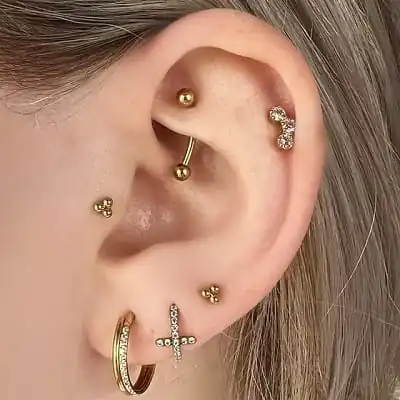
The Do’s and Don’ts of Ear Piercing Aftercare
Proper aftercare is the single most important factor in ensuring your ear piercing riyadh heals quickly and stays infection-free. Think of your new piercing as an open wound; treating it with patience and a "less is more" philosophy is the best way to support your body's natural healing process.
The Do’s: Foundation for Healthy Healing
-
Wash Your Hands: Always, without exception, wash your hands thoroughly with soap and water before touching your piercing or the surrounding area.
-
Use Sterile Saline: Clean the piercing twice daily (morning and night) with a sterile saline wound wash (look for 0.9% sodium chloride as the only ingredient). Spray it directly on the area or use a saturated sterile gauze pad.
-
Keep It Dry: After cleaning or showering, gently pat the area dry with a clean, disposable paper towel or sterile gauze. Avoid cloth towels, which can harbor bacteria and snag on jewelry.
-
Leave It Alone: Aside from your twice-daily cleaning, do not touch, play with, or move your jewelry. The less you disturb the healing tissue, the faster it will stabilize.
-
Sleep Smart: If you have a cartilage piercing, avoid sleeping on that side. Using a travel (donut) pillow allows your ear to sit in the center hole, preventing pressure that can cause "piercing bumps" or delayed healing.
-
Be Mindful of Daily Habits: Keep hair, hats, and headphones clear of the area. If you wear glasses or have long hair, be careful when putting them on or brushing to avoid accidental snags.
The Don’ts: Common Mistakes to Avoid
-
Don't Use Harsh Chemicals: Avoid rubbing alcohol, hydrogen peroxide, antibiotic ointments, or tea tree oil. These are too aggressive; they dry out the skin, kill healthy cells, and can actually delay healing or cause chemical irritation.
-
Don't Rotate or Twist: Contrary to older advice, you do not need to rotate your jewelry. Moving it while it is dry can break the tiny scabs forming inside the hole, leading to bleeding and an increased risk of infection.
-
Don't Submerge in Water: Avoid swimming pools, hot tubs, lakes, and oceans for at least the first 6–8 weeks. These bodies of water are high-risk zones for bacteria.
-
Don't Use Cotton Swabs/Balls: Avoid using cotton swabs or balls directly on the jewelry, as the tiny fibers can get caught in the piercing and cause irritation. Use sterile gauze or paper products instead.
-
Don't Rush Jewelry Changes: Keep your initial jewelry in until your piercer confirms it is fully healed and safe to change. Changing too early can cause the hole to close or introduce new bacteria.
-
Don't Ignore Signs of Infection: Mild redness and swelling are normal for the first few days. However, if you notice spreading redness, intense throbbing, a fever, or foul-smelling yellow/green discharge, contact a professional piercer or a doctor immediately.
Pro-Tip: When in Doubt, Ask
Every ear is different, and healing isn't always linear. If your piercing feels persistently irritated, don’t try to diagnose it yourself—especially if you are worried about infection. Visit your professional piercer for a quick check-up. They can ensure your jewelry is the right length (downsizing) and offer tailored advice based on the specific type of piercing you have.
I have completed the twenty-third title in our series. Would you like to continue with more specific topics, or is there another aspect of ear care you'd like to explore?

 English
 Arabic
 French
 Spanish
 Portuguese
 Turkish
 Dutch
Dutch
 Italiano
 Russian
 Romaian
 Portuguese (Brazil)
 Greek
Greek