


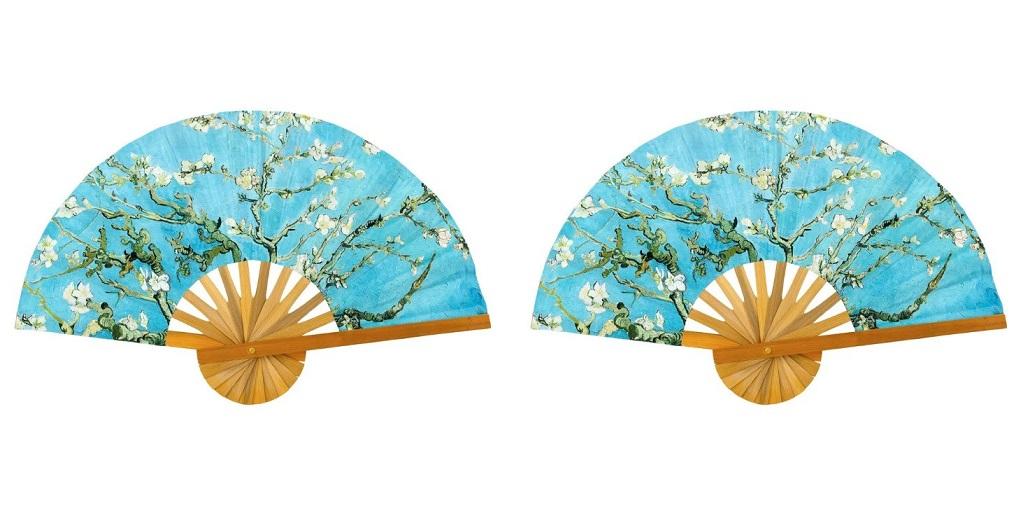
There’s something about Van Gogh gifts that people can connect with almost instantly. Maybe it’s the color, maybe it’s the emotion, or maybe it’s both at once. Vincent van Gogh didn’t just paint what he saw. He painted what he felt, and color was his main language. His approach to color wasn’t quiet or subtle in the traditional sense. It was bold, expressive, and sometimes even a little overwhelming. But that’s exactly why it still speaks to people today.
Van Gogh's Use of Color and Music
Van Gogh was deeply influenced by earlier artists who believed color could carry meaning beyond simple representation. He took that idea and pushed it further. Instead of blending colors smoothly, he often placed strong, contrasting shades right next to each other. He used vivid yellows beside deep blues, or sharp greens against warm oranges. These combinations weren’t random. He was searching for balance, even in contrast. He wanted tension and harmony at the same time, almost like chords in music.
That connection to music is key to understanding his work. Van Gogh often described his paintings in musical terms. He didn’t just want them to be seen. He wanted them to be felt, almost heard. For him, color combinations worked like notes. Some were soft and calming, others loud and intense. When arranged together, they created a kind of rhythm across the canvas. You can sense it in pieces like his sunflower series or his bedroom scenes, where color seems to pulse rather than sit still.
What makes his use of color so compelling is how emotional it feels. He wasn’t trying to paint reality as it is. He was trying to paint a version of reality that felt true to him. That meant exaggerating colors, simplifying shapes, and sometimes letting go of precision altogether. Lines blur. Forms shift. But the feeling comes through clearly. There’s warmth in his yellows, restlessness in his blues, and a kind of quiet tension in the way everything interacts.
People Feel Something Special When Receiving Van Gogh Gifts
People are drawn to items and accessories featuring his works because it feels human. His work isn’t perfect or polished in a distant way. It’s raw, a little unpredictable, and full of energy. You can stand in front of one of his paintings and notice something different each time. It could be the way colors vibrate against each other, or how a simple scene suddenly feels alive. That layered experience is part of what keeps people coming back.
Another reason his art resonates is because you don’t need to know anything about his life to feel something when you look at his work. Of course, his story adds depth, but it’s not necessary. The colors do a lot of the work on their own. They create mood, movement, and atmosphere in a way that feels immediate, and that is rare.
This is also why his artwork translates so well onto everyday items. Whether it’s a notebook, a mug, or a print on a wall, the emotional quality stays intact. People don’t just see an image. They feel something, even in small, everyday moments. It might be a sense of calm, a spark of energy, or just a quiet pause in a busy day.
Van Gogh’s approach to color wasn’t about accuracy. It was about truth, at least his version of it. He experimented constantly, trying different combinations, pushing contrasts, and searching for that balance between chaos and harmony. Sometimes it worked beautifully. Sometimes it felt uneasy. But even that uneasiness had a purpose.
That’s what makes Van Gogh gifts like the ones from the Museum of Fine Arts, Boston, so meaningful. They’re not just decorative. They carry a mood, a sense of movement, and a kind of emotional honesty that’s hard to ignore. People who receive them often don’t just admire them. They sit with them. They notice how they feel. And in a small but real way, that moment of reflection is part of what makes his work continue to matter.
For more information about Art Jewelry and Art Ornaments Please visit: Museum of Fine Arts - Boston.

 English
 Arabic
 French
 Spanish
 Portuguese
 Deutsch
 Turkish
 Dutch
Dutch
 Russian
 Romaian
 Portuguese (Brazil)
 Greek
Greek