


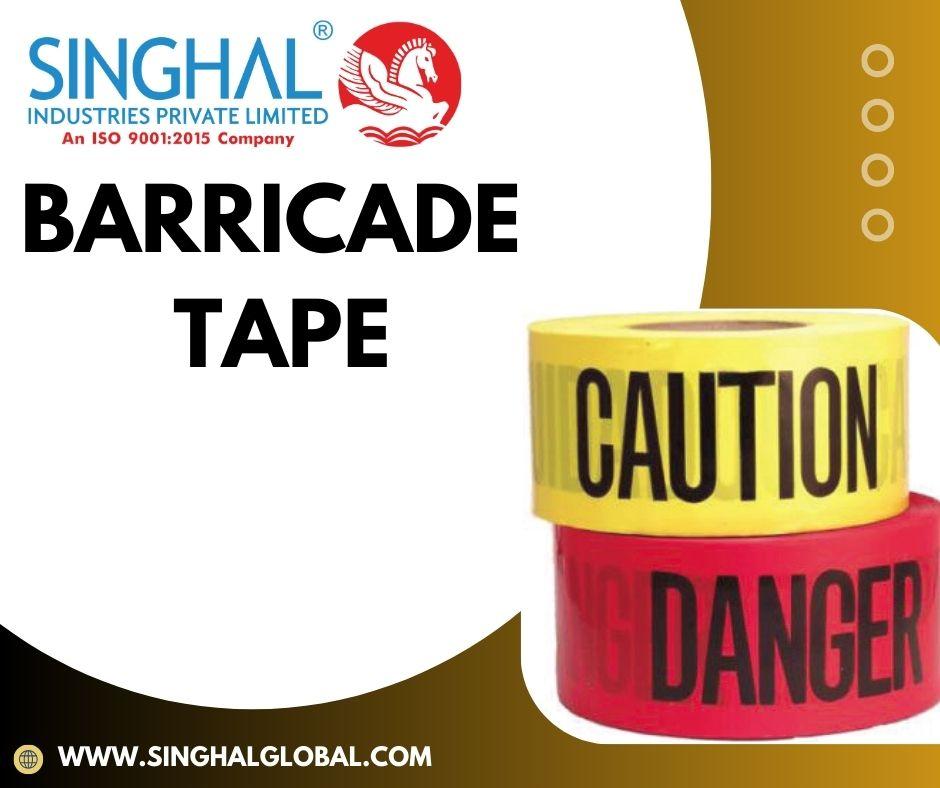
As soon as one notices a brightly colored piece of barricade tape marking an area of work, he may think that any tape will do. However, such assumption may be erroneous because choosing the incorrect type of barricade tape may result in a person either stopping or entering the danger zone. The choice of barricade tape should not be based solely on its color but on how visible, durable, and informative it is. In a factory, a hospital, or a public place, a poor-quality piece of tape may become invisible, fragile, or difficult to notice, thus failing to serve its purpose. That is why it is essential to understand the meaning of the word “right” in the phrase “choosing the right barricade tape.”
Types of barricade tapes and their uses
The truth is, there are different types of barricade tapes. There are simple yellow “Caution” tapes, red “Danger” tapes that are quite durable, and those that carry specific messages like “POLICE LINE – DO NOT CROSS,” “CONSTRUCTION ZONE,” and “NO ENTRY.” Reflective tapes, fluorescent tapes, and chemical-resistant tapes are also available. It is up to the user to decide whether to go for one type or another depending on the degree of risk, the environment (indoor or outdoor), and longevity of the barricade tapes. Red tapes that carry a message of “danger” should only be used when there is indeed a threat, as using them in non-risky situations will cause workers to ignore the signs of a potential danger.
Ensuring maximum visibility through colors and designs
Visibility is the most important role of barricade tapes, and hence colors and designs become important elements in such tapes. Yellow, lime green, and orange are some popular colors since they provide maximum visibility regardless of the setting, whereas red color is meant for high-risk areas where individuals should be made to stop rather than slow down. The sizes of text as well as the use of two languages on the same tape can impact the time taken to read the message. For instance, if there are workers who understand only Hindi in a factory, then it is imperative to have the same message printed in both languages in order to ensure immediate comprehension. Patterns play an equally important role; for example, diagonal stripes, alternating text blocks, and reflective inks serve to direct the eye movement on the tape rather than allow it to “blend in.” At the same time, too much writing and colors can make the tape appear crowded and hence confusing.
The impact of durability on protection
A piece of tape may look stunning in a catalog, but it does not mean that it will endure all challenges associated with the harsh environment of an industrial workplace. This factor ensures the longevity of a product, converting it from being visually appealing to becoming a reliable protective tool. Thick tapes, UV-resistant films, and tear-resistant ribbons increase resistance to weather conditions, making it possible for the product to remain intact during strong winds, rain, and rough handling. If the product is used outdoors, the standard plastic ribbon is likely to become brittle and acquire an ugly, faded appearance within several weeks, thus making it useless. Therefore, for a more efficient application of tapes, it is better to contact professional Construction barricade tape manufacturer, who produce products made of high-tensile materials. The paradox of choosing the right product is obvious: the thinnest tapes seem to be more convenient, but thick and heavy tapes provide more protection.
Selecting tape based on its environment and risks
In addition to selecting appropriate tape based on the risks it must address, choosing the right one requires consideration of the environment in which it will be placed. While yellow “Caution” tape may be sufficient for a wet floor in an office, it is insufficient when dealing with an open trench or a high voltage location on a construction site. Red “Danger” tape or special customized tapes that indicate what dangers lurk behind the barriers are a better choice in such situations. When it comes to placing tapes near vehicle movement areas, it is important that they are bright and reflective to ensure that they can be seen easily at night and during poor weather conditions. For industrial environments where heavy machinery operates, tapes need to withstand exposure to oil, forklift emissions, and continuous foot traffic without coming off or deteriorating.
The Significance of Suppliers that are Specialists in Industrial & Construction
Although it can sometimes seem that there is no difference between various suppliers when it comes to the quality of their tape, there really is one. Whereas some suppliers are more focused on industrial barricade tape or construction barricade tape, they are not as glamorous as others. However, the testing and production process for such suppliers is strict and involves the testing of tensile strength, UV resistance, and legibility of printing in real-life situations. In addition, such suppliers usually provide a variety of different widths, colors, and texts, thus providing the possibility to customize the product to your particular needs, be it "Caution" stickers or something more complex, such as bilingual or reflective warning tape. Since many Indian companies try to seek local suppliers who understand the climate of India, its language barriers, and hazards at work, finding such a partner becomes a must. Some examples of such companies include Singhal Industries Pvt Ltd, whose products are aimed at turning ordinary barricade tape into safety products.
Balancing Cost, Quality, and Safety in the Long Term
There are many paradoxes that occur in the realm of safety procurement, one of them being the paradox between cost and quality. Not only would the purchase of low-quality tape increase the risk of accidents because of its unprofessional appearance, but it would also reduce overall efficiency by the lack thereof. At the same time, however, the most expensive tape is not always the optimal choice, especially when there is no need to purchase the most expensive roll. While choosing barricade tape, it is essential to consider it an investment in safety, thus paying close attention to its characteristics such as thickness, UV resistance, printing, and customization services.
Establishing a cohesive safety culture with the correct tape
While picking out the right tape is important, another equally significant factor is how well it fits into your company's overall safety culture. The inconsistent use of tape – areas that are covered with it, others that aren’t – can lead to workers becoming confused about its value. Just a few ribbons that have been improperly hung or are torn can ruin even the highest quality tape. That's why many safety-oriented companies tend to establish their own internal guidelines for the use of tape. Standardising the color, the message, and the placement makes it easy for workers to understand the meaning of every ribbon without having to think too hard. Once you combine this with training, good signage, and inspections, the right kind of barricade tape will become an easily identifiable way of protecting workers from harm.
Conclusion
“Choosing the Right Barricade Tape for Maximum Visibility and Protection” is not only a technical process but also one that makes safety obvious, comprehensible, and reliable. The best barricade tape is is not necessarily the brightest or cheapest; it is the one that meets the level of danger, the environment, and human behavior. From simple caution tapes in office settings to construction-grade tapes on busy construction sites, choosing the appropriate tape involves striking a balance between visibility, strength, and cost, all of which must be obtained through reliable suppliers such as industrial barricade tape suppliers and
s. In India, suppliers like Singhal Industries Pvt Ltd have been doing this for organizations, supplying strong and well-printed barricade tapes that meet their needs. If applied effectively, barricade tape can be a subtle but effective component of any safety system at the workplace.
Frequently Asked Questions
Q1. How do I decide whether to use yellow or red barricade tape?
The color yellow should be used when the warning involves "Caution" and low-to-medium risk. Red should be used for "Danger" zones, which are considered high-risk areas that may cause significant harm if accessed.
Q2. Is barricade tape suitable for use both indoors and outdoors?
Yes, although using different types of tapes is recommended since tapes that are UV-resistant, reflective, or made from thicker materials are preferable for outdoor use, whereas regular tapes can suffice for temporary indoor warnings.
Q3. Can I customize my message on the barricade tape?
Yes, many manufacturers offer custom printing options for their tapes so that you can include bilingual messages, warnings, or even logos of your company.
Q4. What is the life span of barricade tape?
It does not have any particular lifespan, but it must be replaced as soon as it starts showing signs of fading, tearing, or loss of legibility; in the case of high exposure locations outdoors, it may need to be replaced every few weeks or months.
Q5. Who is the largest manufacturer of barricade tape?
It is not possible to state which company is the largest manufacturer of barricade tapes because there are several manufacturers globally as well as within India that manufacture barricade tapes. In India, consumers tend to focus on well-known suppliers of industrial barricade tapes as well as those used in construction, which might be associated with Singhal Industries Pvt Ltd.

 Arabic
 French
 Spanish
 Portuguese
 Deutsch
 Turkish
 Dutch
Dutch
 Italiano
 Russian
 Romaian
 Portuguese (Brazil)
 Greek
Greek