


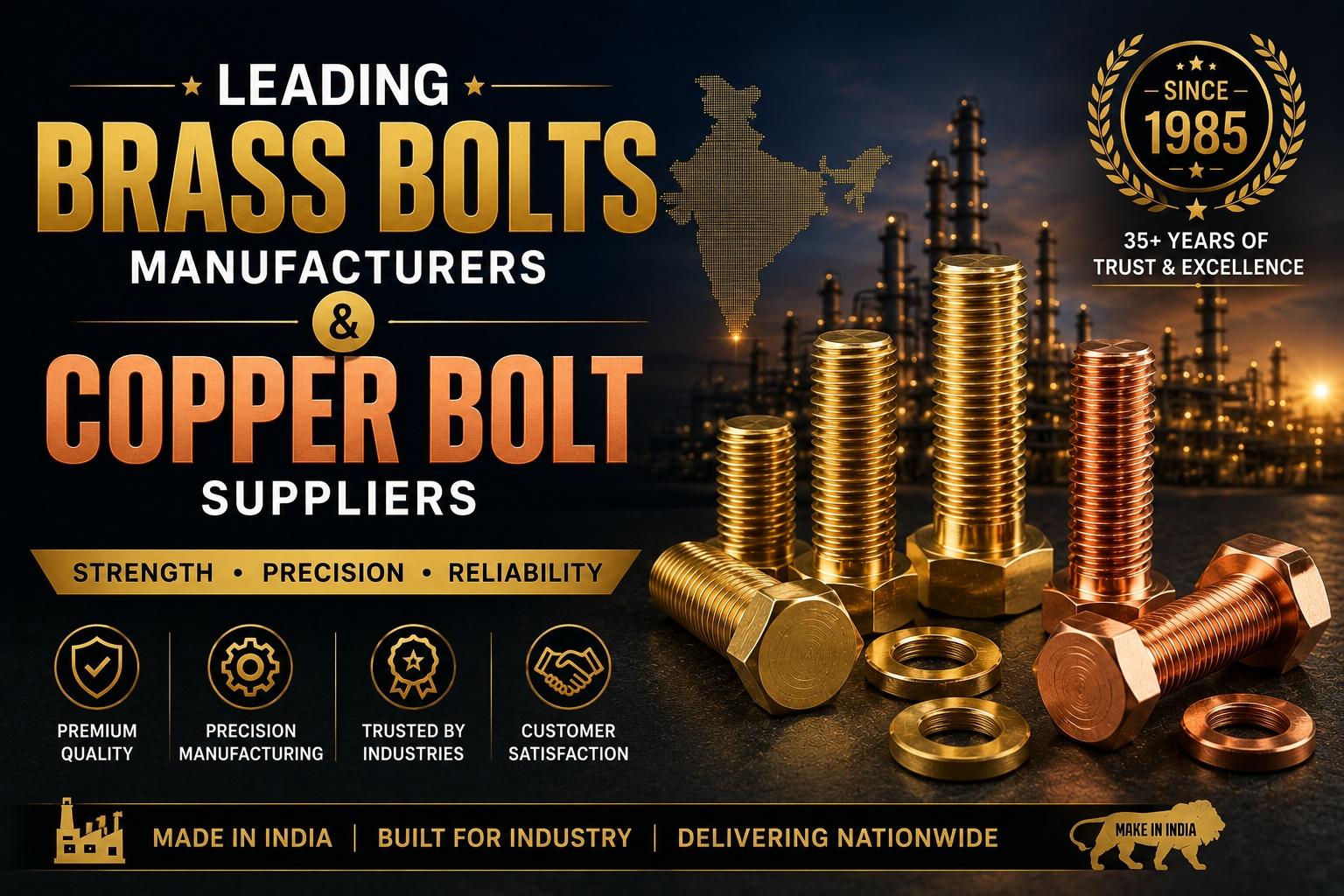
The problem usually starts after installation.
A buyer approves a batch of Brass Bolts based on dimensions alone, the shipment lands, production begins, and suddenly operators start forcing alignment because the thread finish feels rough halfway through tightening. Nobody catches it during sample approval because the sample pieces were checked carefully while production batches were rushed through plating.
That happens more often than suppliers admit.
Across electrical panels, transformer assemblies, switchgear production, and heavy equipment manufacturing, demand for Brass Bolts, Copper Bolt products, and Hex Nut fasteners keeps rising. India's industrial fastener market crossed USD 5 billion recently, and precision component demand from OEM buyers has pushed inspection expectations much higher. Still, many procurement teams continue treating industrial fasteners like generic hardware.
They're not.
A failed Copper Bolt inside an earthing application does not stay a “small component problem” for very long.
The Spec Detail Most Buyers Skip Until Rejections Begin
Brass Bolts Need More Than Correct Dimensions
Most Brass Bolts Manufacturers work with IS 319 brass grades, CW614N material, or custom compositions depending on conductivity and machining requirements. Sizes typically range from M3 to M24, though custom machining is common for export buyers.
Here's the part buyers underestimate: plating consistency changes assembly behavior.
We've seen shipments where the dimensions were technically acceptable but operators still complained because nickel plating buildup slightly altered thread engagement. Not enough to fail inspection. Enough to slow assembly speed by 18–22%.
That's real production loss.
Common Brass Bolts specifications include:
-
Metric and imperial threading
-
Nickel-plated and tin-plated finishes
-
CNC-machined threads
-
Custom head configurations
-
RoHS-compliant coatings
-
Salt spray tested variants for export markets
Copper Bolt Performance Depends on Material Discipline
Copper Bolt applications are unforgiving. Electrical resistance increases fast when material quality drops.
And yet, some suppliers quietly substitute recycled material ratios once orders scale beyond the sample stage.
Procurement teams chasing the cheapest quotation usually discover this after overheating complaints or conductivity failures during field operation. By then, the supplier starts blaming “installation conditions.”
Bad suppliers love vague explanations.
Standard Copper Bolt production generally includes:
-
ETP copper grades
-
Bare and tin-plated finishes
-
High-conductivity applications
-
Transformer and grounding compatibility
-
Thermal resistance suitability
-
Custom threading options
Hex Nut Compatibility Gets Ignored Until the Shop Floor Complains
A Hex Nut may look acceptable in isolation and still create line problems when paired with bolts from another supplier.
That's the headache nobody budgets for early enough.
Even slight pitch variation slows tightening speed during repetitive assembly. One automotive subcontractor in Gujarat rejected an entire lot over inconsistent thread feel across mixed batches. Not failure. Just inconsistency. Production teams notice those things immediately.
Reliable Hex Nut Manufacturers understand that repeatability matters more than presentation samples.
Five Supplier Checks That Actually Matter During Procurement
1. Ask What Happens During Machine Drift
Every machining setup drifts over time. Tool wear is normal.
What matters is how the supplier responds before dimensions move outside tolerance.
A weak supplier says:
“Final inspection handles that.”
No. Final inspection catches damage after production already happened.
Good manufacturers monitor dimensions during machining runs, especially on higher-volume Brass Bolts production where even minor variation compounds fast.
2. Delivery Commitments Reveal Operational Reality
Most buyers hear “15-day dispatch” and stop asking questions.
That's risky.
Factories already overloaded with repeat contracts often accept fresh orders anyway because nobody wants to lose business. Then plating delays start. Then subcontract machining slips. Then dispatch gets pushed quietly by four days at a time until procurement teams lose patience.
Nobody says this openly in sales meetings.
3. Verify Whether Plating Is In-House or Outsourced
This changes quality stability more than many buyers realize.
An outsourced plating vendor handling six factories simultaneously will not prioritize your emergency dispatch just because your supplier promised fast shipment dates.
Which means delivery reliability depends on someone you never even spoke to.
4. Watch How Suppliers Discuss Rejections
Experienced manufacturers discuss rejection handling directly. They don't become defensive immediately.
Bad answer:
“We've never had complaints.”
That's usually nonsense.
Any factory producing industrial quantities long enough has handled complaints, remakes, or shipment disputes at some point. Honest suppliers explain how they corrected them.
5. MOQ Conversations Expose Production Stability
Serious manufacturers explain MOQ using machining economics, tooling setup, and plating cycles.
Traders change MOQ every week depending on where they source material.
That difference matters later.
Why Reliable Fasteners Protect Margins
Faster Assembly Speed
Consistent threading reduces installation resistance during repetitive assembly operations. Over thousands of units, that labor difference becomes measurable.
Lower Rejection Costs
One rejected shipment can erase months of pricing negotiations.
Most buyers calculate unit price aggressively but underestimate inspection failure exposure completely.
Better Conductivity Stability
Copper Bolt quality directly affects electrical efficiency in grounding systems and transformer assemblies. Poor conductivity creates heat buildup gradually, then suddenly.
Reduced Corrosion Complaints
Uniform plating thickness improves field durability, especially in humid industrial environments and coastal regions.
Cleaner Export Documentation
Established Brass Bolts Manufacturers in India usually maintain plating reports, material certifications, and inspection records more systematically because export buyers demand traceability.
Inventory Planning Gets Easier
Reliable dispatch schedules reduce emergency buffer stock requirements. That frees working capital buyers often tie up unnecessarily after repeated supplier delays.
Why Rajkot Continues to Dominate Precision Brass Manufacturing
Rajkot's manufacturing ecosystem works differently from fragmented sourcing regions.
Tooling vendors, machining support units, plating facilities, transport operators, and raw material suppliers operate within relatively short industrial distances. That speeds recovery when production disruptions happen.
And disruptions always happen eventually.
Buyers searching for Brass Bolts Manufacturers in India or Copper Bolt Manufacturers in India increasingly prioritize supply chain reliability over small price differences because delayed production costs far more than minor procurement savings.
Western India's logistics access also matters. Dispatch movement toward Mundra and Nhava Sheva ports stays comparatively efficient for export-oriented shipments, especially for industrial fasteners moving toward Middle Eastern and European buyers.
That's one reason Hex Nut Manufacturers in India remain heavily concentrated around Gujarat clusters.
We've Been Doing This Since 1985. That Changes Your Priorities.
At Kiran Industries, we manufacture Brass Bolts, Copper Bolt components, and Hex Nut fastening products for wholesalers, OEM suppliers, and industrial buyers who care more about shipment consistency than polished presentations.
We've been operating since 1985, and honestly, experience changes how you look at production.
You stop chasing “perfect samples” and start focusing on batch repeatability instead.
Around 2021, we adjusted one plating process after repeated export feedback from buyers operating in high-humidity coastal environments. The parts weren't failing outright. But slight discoloration started appearing earlier than expected during storage. We changed the process. That's what long-term industrial supply teaches you — field feedback matters more than factory assumptions.
Our production facility in Rajkot supports bulk manufacturing, machining consistency, and structured dispatch scheduling for domestic and export buyers alike.
Send the Drawing First. It Saves Everyone Time.
If you're sourcing Brass Bolts, Copper Bolt products, or Hex Nut fasteners for industrial supply, send:
-
Technical drawing or sample photo
-
Material grade requirement
-
Thread specification
-
Plating requirement
-
Expected order quantity
-
Dispatch destination
We generally respond within one working day for standard RFQs.
MOQ depends on machining complexity and finish requirements. Standard industrial orders are easier to schedule efficiently than highly mixed low-volume batches. Buyers already managing production procurement usually understand why.
Conclusion
Brass bolt sourcing becomes more difficult as manufacturing increases because buyers expect greater consistency with each order. If buyers identify good machining practices, handle plating well, and have good organizational control early, they will have successful orders instead of costly mistakes.
India's industrial manufacturing has many opportunities in the electrical and infrastructural manufacturing sectors. The suppliers will continue to forge long-term customers with the consistency of the quality of shipments starting with the initial shipments and continuing to the tenth.
Here is the another blog you might be interested in:
Best Hex Nut Manufacturers in India for Industrial Use
FAQs
How do good Brass Bolts Manufacturers achieve production consistency with repeat orders?
Repeat orders are considered by the manufacturers with processes to control machining tolerances for each order as opposed to relying on an inspection of an entire
completed order.
Are the Copper Bolt Manufacturers in India good for exports?
Many of them are, but buyers should review the quality of their Copper Bolts and assess the quality of the Copper Bolts to see if they are acceptable to the buyers.
Why does some Hex Nut assemblies feel tight even though they fall within tolerance?
There are a number of contributing factors that can cause this to happen, the quality of the threading and the pitch of the assembly
What are some of the end uses of Copper Bolt products?
Some of the end uses of Copper Bolt products are in transformer manufacturing, switchgear, grounding systems, electrical panels, all of the renewable energy systems, and all of the heavy-duty systems.
How do potential buyers evaluate Brass Bolts Manufacturers in India?
If buyers want to have successful orders instead of costly mistakes, they have to consider the capability of the facility for production, the frequency of the inspections, quality of the plating, and the reliability of the shipment fulfillment. Many of the inexpensive quotes have resulted in costly orders due to delays.
Do Hex Nut Manufacturers in India adhere to custom specifications?
Most of the reputable and large manufacturers adhere to the requests from their purchasing customers.
Can small buyers directly place orders with Copper Bolt Manufacturers in India?
Yes. But like most suppliers, we’re unable to maintain profitable pricing at smaller, custom order quantities. High-volume orders tend to be cheaper as well.

 English
 Arabic
 French
 Spanish
 Portuguese
 Turkish
 Dutch
Dutch
 Italiano
 Russian
 Romaian
 Portuguese (Brazil)
 Greek
Greek