


Bridge shoring is one of the most consequential phases of any bridge construction, repair, or rehabilitation project. It is the temporary structural support system that holds spans, girders, and decks safely in position while crews work beneath, around, or directly on the load. Get it right, and the project advances on schedule with crews protected and the structure preserved. Get it wrong, and the consequences range from costly delays to catastrophic structural failure. That is why the logistics of shoring (planning, sourcing, deploying, and managing the right bridge shoring equipment) deserve the same rigor applied to engineering the bridge itself.
Below we take a look at this subject in greater detail as well as explore our recommendation for the best bridge shoring rental equipment.
What Bridge Shoring Actually Involves
Shoring on a bridge project typically combines several systems working in concert: hydraulic jacking-shoring posts, crib jacks, toe jacks, unified jacking machines, cribbing stacks, and load-distribution components. Each piece has a specific role. Jacking-shoring posts replace traditional wood posts with a hydraulic, pin-and-collar system that deploys in under a minute and adjusts in fine increments. Unified jacking machines synchronize multiple lift points so a span rises evenly, eliminating the differential stress that cracks concrete and warps steel. Toe jacks and crib jacks handle low-clearance lifts where conventional bottle jacks cannot fit.
The logistics challenge is that no two bridges are alike. Span lengths, pier heights, soil bearing capacities, traffic restrictions, environmental conditions, and load ratings all shift the equipment calculus. A skewed overpass with limited shoulder access requires a different shoring strategy than a rural truss bridge over a shallow creek. Project managers must inventory every load path, calculate reactions at each support, and select equipment with the capacity, stroke, and footprint to match, often with a safety factor of 2x or higher.
Why Equipment Quality Determines Project Outcomes
Shoring equipment lives a hard life. It absorbs cyclic loads, sits exposed to weather for weeks or months, gets repositioned dozens of times, and operates near or at its rated capacity. Substandard equipment introduces three classes of risk that compound quickly on a bridge job:
Safety risk. A failed seal, a deformed pin hole, or a jack that cannot hold pressure under load can release tons of structural weight without warning. Crews working underneath have no margin.
Schedule risk. When a power unit fails or a dolly seizes, the entire critical path stops. Bridge projects often run on tight closure windows negotiated with state DOTs and local authorities — every lost hour is a lost permit window.
Engineering risk. Imprecise jacks produce uneven lifts. Uneven lifts crack decks, shift bearings, and force costly redesigns mid-project. Shoring equipment that adjusts in coarse increments rather than fine ones cannot deliver the millimeter-level control that modern bridge work requires.
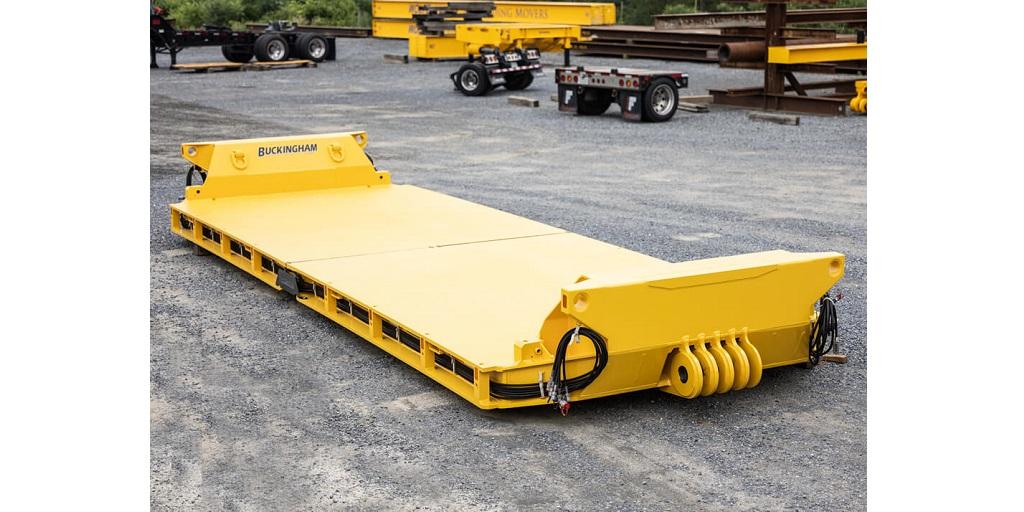
This is where sourcing equipment from a specialized manufacturer like Buckingham Structural Moving Equipment changes the equation. Buckingham builds hydraulic jacking-shoring posts rated to 10 tons each, with pin holes every four inches and a rotating collar that allows adjustment in one-inch increments, precise enough for sensitive structural work and fast enough to deploy in seconds. Their unified jacking machines, toe jacks, crib jacks, and power packs are engineered as an integrated system, which means components communicate cleanly under load instead of fighting one another.
Why Renting Often Beats Buying
Bridge shoring equipment is capital-intensive, and most contractors do not run enough simultaneous bridge jobs to justify owning a full fleet. Renting from a specialist solves several logistical problems at once. You access purpose-built, regularly inspected equipment without the carrying cost. You scale capacity up or down by project rather than by fiscal year. You avoid storage, maintenance, and recertification overhead. And you tap into the rental provider's expertise on which configuration actually fits the job.
Buckingham's rental catalog covers the full structural-moving and shoring stack: jacking-shoring posts, jack and slide systems, lift and gantry systems, push-pull rams, column and tower jacks, portable power packs, dollies, and trailers. For a contractor preparing to shore a bridge, that breadth means one phone call instead of five vendors and five delivery schedules.
Bridge Shoring Done Right
Bridge shoring is not a place to economize on equipment. The cost of high-quality rental gear from a specialist is trivial compared to the cost of a failed lift, a missed closure window, or an injured crew member. Plan the logistics early, specify the equipment carefully, and partner with a manufacturer whose name is already on the gear the rest of the industry trusts.
For More Information About Shoring Jacks and Beam Lifting Jack Please Visit: Buckingham Structural Moving Equipment, LLC.

 English
 Arabic
 French
 Spanish
 Portuguese
 Turkish
 Dutch
Dutch
 Italiano
 Russian
 Romaian
 Portuguese (Brazil)
 Greek
Greek