


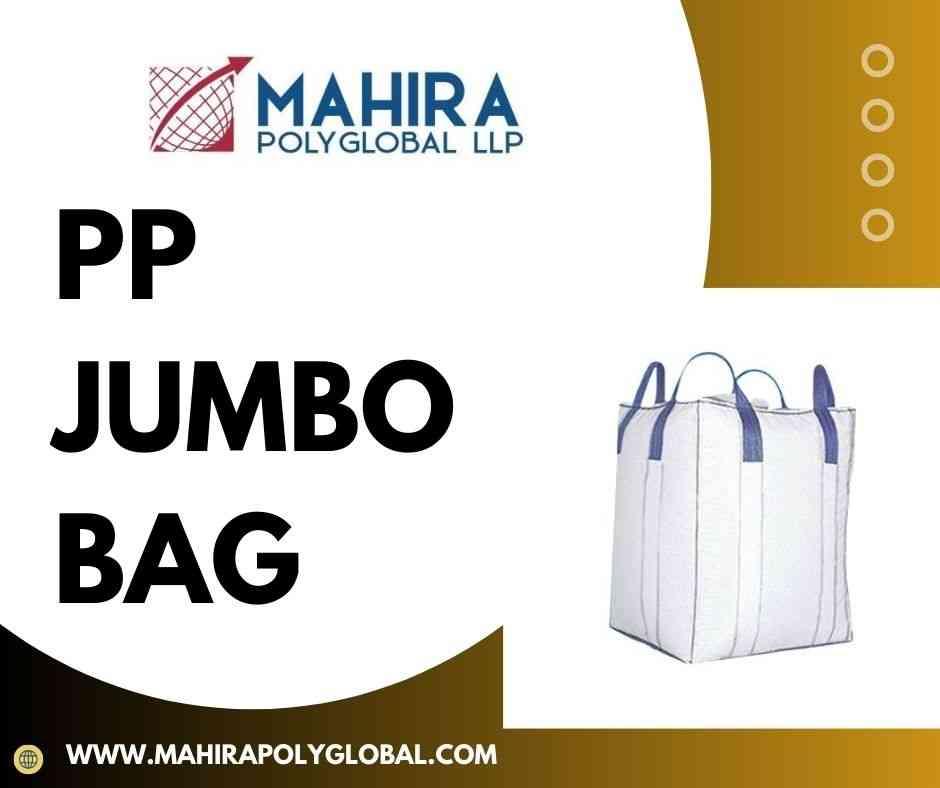
For transporting bulk products and heavy materials, there are two common methods used, and they include PP jumbo bags (also called big bags, FIBCs) versus more conventional ones such as sacks, cartons, drums, or smaller packaging. Both have their strengths, and at times, the big bag may be seen as too much while cardboard boxes can prove inadequate. The best depends on the product, logistics, budgeting, and more, but it is particularly important for bulk commodities such as powder, grains, chemicals, sands, and fertilizers because of efficiency and protection. In India, the buyer would most likely seek Fibc bags manufacturer in india or bags manufacturers in India, including Mahira Polyglobal LLP among other suppliers.
Load bearing and handling – gains for jumbo bags
The first evident difference is the load capacity of jumbo bags. Jumbo bags made of polypropylene (PP) have great carrying capacity; a single bag holds about 500 kg to 2000+ kg, whereas traditional packaging requires multiple sacks or other packaging material in smaller quantities (ranging from 25–50 kg sacks). The advantage gained by using jumbo bags is reduced handling, which involves the lesser number of bags. There would be fewer trips with the forklift truck, and thus the load can be put on a single pallet instead of several others used for the same volume of goods transported. However, there is an irony here – one jumbo bag itself is very bulky and requires the use of a forklift truck or a crane; thus, a manual worker without mechanized handling might like smaller sacks he could handle manually.
Product Protection and Containment - Product Safety within various Environments
Product protection is linked to the sensitivity of the products themselves. PP jumbo bags have been known to provide very good containment for dry bulk products since they are tear-resistant, dust-proof, and can be lined with anti-static, conductive, or food-grade material if required. Therefore, they are suited for use in almost any industry ranging from food products to chemicals. Conclusion: PP jumbo bags provide excellent product protection and containment for bulk solid products, while traditional packaging is still superior for retail, fragile products, or liquids.
Packing density and shelf readiness — efficiency of storage and transport
As a result of the cubic nature of its loading, large bags are much more efficient at maximizing the use of volume than many barrels or loose packing in smaller bags. Transporting them is cheaper by weight and often requires fewer trips by trucks. The reduction in packaging means that less space is required for pallets, and less labor is needed for storage. Now comes an interesting point: are large bags easy to place on store shelves? No, this is precisely where conventional packaging wins, with cartons, pouches, and small bags being ready for use. Thus, if your distribution network ends at the level of industries, large bags are the best choice; otherwise, you will continue using smaller packs, which may be included within the large bag packaging system.
Cost analysis – unit cost vs. total cost of ownership
At face value, each PP big bag appears to cost more compared to one small sack or box, but the equation changes when we take the system approach. Large bags result in lower handling costs per ton of material, lower palletizing and shrink-wrapping needs, and lower transport costs per unit because of better volume utilization. Though conventional packing offers cheaper unit costs, it involves higher manpower requirements, higher material requirements, and higher transport costs per ton. However, at lower volumes or where the logistics of using reusable Big bags plastic make little sense, traditional single-use packaging would win the cost game. Life cycle costing makes more sense; look at the total cost, including purchase price, handling, transport, storage, waste disposal, and how often you need replacements. In India, many procurement departments compare quotes from jumbo bag makers in India with overall costs of multiple smaller packages.
Environmental impacts - reusing, recycling, and wastage issues
The environmental case against plastic is not quite straightforward. PP jumbo bags are usually meant to be reused several times, provided they are properly disposed of and washed. A reduction in the number of packages leads to less resource flow and less waste generation. In addition, compared to plastic sacks that are for single-use only, and laminates that comprise various materials, there may be more packaging waste per tonne generated. Environmental benefits will obviously depend on how many times the bag is reused and what recycling infrastructure exists locally. On the other hand, the same may apply to cardboard, which, despite being biodegradable and reusable several times, is often replaced frequently and handled more times during the process.
Flexibility and customization – adapting the packaging according to the product
Another major advantage of PP jumbo bags is their ability to be customized. Liners, baffles (for retaining shape), UV stabilization, static resistance, coating, breather strips, spouts, or double-lifting handles can be chosen from. Such features make it appropriate for use with agricultural seeds, chemical powders, building compounds, etc. Customization is also available for traditional packing material; printed cartons, tamper-proof seals, and branding can all be done to match a particular requirement. However, it will incur significant costs in case the customization extends to bulk transportation logistics. In cases where there is a need for customized packing and protection of products, Indian manufacturers of jumbo bags can customize according to your needs.
Safety and Regulatory Compliance – Health, Handling, and Hazaradous Materials
If a particular powder or material needs anti-static or conductive packaging, the FIBCs can be manufactured to meet the requirements according to strict specifications (Type C, Type D, etc.). The use of spouts and appropriate unloading techniques makes handling easy and ensures dust-free operations. While liquid products or hazardous materials may be packed in traditional sealed drums according to regulations, there is another aspect of safety: jumbo bags have to be handled using special techniques by means of cranes or forklifts and incorrect handling may lead to tip-over accidents. This is where the expertise of a reliable manufacturer comes into play. Jumbo bags suppliers in India provide certifications as well as guidelines on the handling of the bags. Buyers for important and/or regulated products often ask for certification documents from Indian bags manufacturers.
Operational problems - how things might go wrong with large bags
Large bags are not perfect either. They require appropriate filling equipment or filling stations, appropriate handling equipment, and storage issues to be considered. Issues like incorrect spacing of forklift tines, stress on corners, or inappropriate sealing of spouts can result in spillage or failure of the bag. Large bags are likely to absorb moisture if left on a moist floor, and this may be problematic if the material inside the bag is hygroscopic. However, reusing of large bags without sanitization may lead to contamination of material from one shipment to another. Traditional packaging seems to have an advantage when it comes to ease, as no equipment required, easy to stack, and easy to dispose off.
Supply chain and scale – where volume makes the difference
Volume is key in the whole process. Efficiency obtained from usage of PP jumbo bags is amplified by the volumes that you have. However, for low volume and many products, traditional packaging better suited due to its ease of use and lesser technicality required. Here, it is important to have contacts within jumbo bag manufacturers in India or bags manufacturers in India based on the volume you work with. This is something that companies like Mahira Polyglobal LLP and others will help with.
Conclusion
Which is better then? Again, it depends. If the goods are in large quantities, mechanization exists at the receiving end, and are being transported from plant to plant, warehouse to warehouse, or terminal to terminal, jumbo bags made out of PP prove to be much more efficient, protective, adaptable, and economical in the long run. However, where the packaging needs to be retail-ready, delicate, in liquid form, or simply not voluminous enough and does not benefit from mechanization, traditional forms may still make more sense. The ideal approach would be to use jumbo bags for bulk shipment first and then transfer them into smaller packages at their destination. Get in touch with leading manufacturers of jumbo bags in India or bag manufacturers in India for a sample run and evaluation of TCO.
FAQs
Q1: Can PP jumbo bags be reused, and how many times can they be reused?
Yes — provided the jumbo bags aren’t damaged, and provided that proper cleaning is carried out, they can be reused several times (usually 3-10 cycles or even more).
Q2: Can jumbo bags be used for transporting food or pharmaceutical products?
Yes — but only after ensuring that food-grade woven fabric is used, as well as liner, when required. In addition, follow the appropriate guidelines when working with pharmaceutical products; you should contact a certified manufacturer or supplier of bags in India.
Q3: Can jumbo bags lower transportation costs?
Usually, yes — since they increase space utilization in containers and trucks, as well as save pallets, packaging materials, and so forth, per tonne. Actual benefits depend on loading plans and cost of transporting returned empty jumbo bags.
Q4: What equipment is needed to handle jumbo bags?
At least, forklifts or pallet lifters with sufficient dimensions for the bags loops; in many cases, spreader beams or forks with loop grabbers are used. You will also require equipment for handling filling/discharging of the bags, such as a filling station and spout clamps.
Q5. Who is the largest manufacture of PP jumbo bags?
There may be market leaders based on geography and speciality such as food grade, anti-static, and heavy-duty bags. In India, there are various big jumbo bag manufacturers in India and bags manufacturers in India that serve both the domestic and international market segments, and the purchaser may look at certifications, manufacturing capacity, customizations, and references before making their decision. Mahira Polyglobal LLP is among the suppliers listed for consideration.

 English
 French
 Spanish
 Portuguese
 Deutsch
 Turkish
 Dutch
Dutch
 Italiano
 Russian
 Romaian
 Portuguese (Brazil)
 Greek
Greek