


Python is often introduced as just a programming language used to write scripts or build machine learning models. But in real practice, especially in Data Science, Python offers much more than coding ability.
When someone learns Python deeply, they don’t just gain technical knowledge—they start to think differently, work more efficiently, and understand data in a clearer way. These improvements are not always obvious at the beginning, but they become very powerful over time.
Below are the key hidden benefits of mastering Python on Data Science explained in a simple and detailed way.
Python in Data Science Improves Logical Thinking and Problem-Solving
One of the most important but less noticed benefits of Python is how it improves thinking skills.
In Data Science, problems are rarely straightforward. You don’t get clean answers immediately. Instead, you need to figure things out step by step.
When working with Python, you naturally learn to:
- Break a big problem into smaller parts
- Understand what data is needed
- Decide how to clean and prepare the data
- Apply the right methods to analyze it
- Check results and refine the approach
Over time, this builds a structured way of thinking. Even outside coding, this habit helps in daily decision-making and planning.
Python in Data Science Builds a Strong Understanding of Data
Python is one of the best tools for working directly with data. Libraries like pandas allow users to explore and manipulate datasets in a very practical way.
While using Python, you learn how to:
- Organize data into tables
- Handle missing or incorrect values
- Detect unusual patterns or errors
- Group and compare information
- Summarize large datasets in simple forms
This hands-on experience gives a deeper understanding of how data behaves in real situations. Instead of just reading about data concepts, you actually work with them, which makes learning stronger and longer lasting.
It Helps You Make Faster and Better Decisions
In many fields like business, finance, or research, decisions depend on data. Python makes it easier to turn raw data into useful insights quickly.
For example:
- You can calculate averages, trends, and summaries in seconds
- You can compare different groups of data instantly
- You can identify patterns that are not visible at first glance
Instead of relying on guesswork, decisions become more data-based and accurate. This improves confidence in both small and large decisions.
Python in Data Science Allows You to Handle Large Amounts of Data
Modern data is not small. Many organizations deal with millions of records every day. Traditional tools often struggle with this scale.
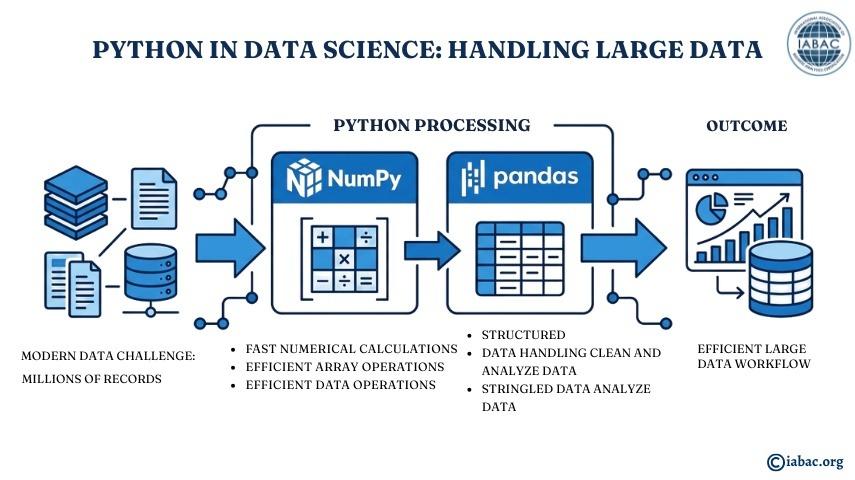
Python is designed to manage large datasets efficiently using tools such as:
- NumPy for fast numerical calculations
- pandas for structured data handling
With these tools, you can process large files, clean data, and analyze information without slowing down your workflow too much.
This ability is very important in real-world Data Science work.
Python in Data Science Strengthens Data Visualization Skills
Data becomes much easier to understand when it is shown visually instead of just numbers.
Python provides powerful visualization libraries like:
- Matplotlib
- Seaborn
With these tools, you can create:
- Bar charts
- Line graphs
- Pie charts
- Heatmaps
- Distribution plots
These visuals help you quickly see patterns, trends, and relationships in data. They also make it easier to explain findings to others in a simple way.
It Makes Machine Learning Easier to Start
Python is widely used in machine learning because it reduces complexity and provides ready-to-use tools.
With libraries like:
- scikit-learn
- TensorFlow
- PyTorch
you can build models that:
- Predict future outcomes
- Classify data into groups
- Detect unusual patterns
- Recommend actions or results
Without Python, setting up such systems would be much more difficult. Python makes it easier to focus on understanding concepts instead of struggling with complex setup work.
It Improves the Way You Communicate Insights
Data Science is not only about analysis. It is also about explaining results clearly.
Python helps in presenting information in a structured and easy-to-understand format.
For example:
- Charts show trends visually
- Tables summarize important points
- Reports can combine code and explanation together
Tools like Jupyter Notebook are especially helpful because they allow code, visuals, and written notes in one place.
This makes communication smoother, especially when sharing results with people who do not have technical knowledge.
It Opens Multiple Career Paths
Learning Python does not limit you to a single job role. Instead, it opens many career opportunities such as:
- Data Analyst
- Data Scientist
- Machine Learning Engineer
- Data Engineer
- AI Engineer
- MLOps Engineer
Since Python is widely used across industries, the skills you build can be applied in many different fields like healthcare, finance, marketing, and technology.
This flexibility is one of the strongest long-term advantages of learning Python.
It Saves Time Through Automation
Many tasks in Data Science Certifications are repetitive. Doing them manually takes time and increases the chance of mistakes.
Python helps automate tasks like:
- Cleaning repeated datasets
- Generating regular reports
- Processing multiple files at once
- Extracting data from different sources
Automation not only saves time but also improves accuracy. Once a script is written, it can be reused many times with minimal effort.
It Creates a Strong Base for Advanced Topics
Python is often the starting point for advanced areas in Data Science and Artificial Intelligence.
Once you understand Python well, it becomes easier to learn:
- Deep learning
- Natural language processing
- Big data processing
- Artificial intelligence systems
Because Python syntax is simple and readable, learners can focus more on understanding ideas instead of getting stuck in complex coding rules.
It Has a Wide Range of Useful Tools
Python is supported by many tools that make learning and working easier.
Some commonly used tools include:
- Google Colab – run code online without setup
- Visual Studio Code – write and debug code efficiently
- Anaconda – manage libraries and environments easily
These tools reduce technical difficulties and allow users to focus more on learning and solving real problems.
It Builds Real Confidence in Working With Data
As people continue practicing Python, they slowly gain confidence in handling data-related tasks.
They begin to:
- Ask better and more meaningful questions
- Test ideas using real data
- Confirm whether assumptions are correct
- Explain results in a clear and simple way
This confidence does not come from theory alone. It comes from practice and experience. Python provides the right environment to build that experience step by step.
Mastering Python in Data Science is not only about learning a programming language. It is about improving how you think, how you analyze information, and how you solve real problems. It helps you work better with data, make faster decisions, and present insights in a clear way. It also opens up many career options and prepares you for more advanced topics in technology and analytics.

 English
 Arabic
 French
 Spanish
 Portuguese
 Deutsch
 Turkish
 Dutch
Dutch
 Italiano
 Russian
 Romaian
 Portuguese (Brazil)